Woodpecker Review 2026: The Cold Email Tool That Bills You Per Reply-able Prospect
A 2026 Woodpecker.co review: the new pay-per-prospect pricing, deliverability tools, LinkedIn and Lead Finder add-ons, and who should pick Instantly or Smartlead instead.
Expert Review

Woodpecker stopped selling seats
For most of its life Woodpecker sold you a plan and a slot count. In 2026 it tore that up. Open the pricing page today, checked on 12 August 2026, and there is no "Starter / Growth / Max" ladder to squint at. There is one number: $7 per 100 contacted prospects, billed monthly, with unlimited email accounts, unlimited team members, and free warm-up thrown in underneath.
That is a genuinely unusual way to price a cold email tool, and it inverts the old grievance. The recurring knock on Woodpecker used to be that a two-person agency paid for capacity it never used. Now you pay for outreach you actually send. Contact 500 people in a month and the base cost is $35. Contact nobody and the meter stays near zero. It rewards the careful sender and quietly punishes the spray-and-pray one, which is refreshing.
What Woodpecker actually does
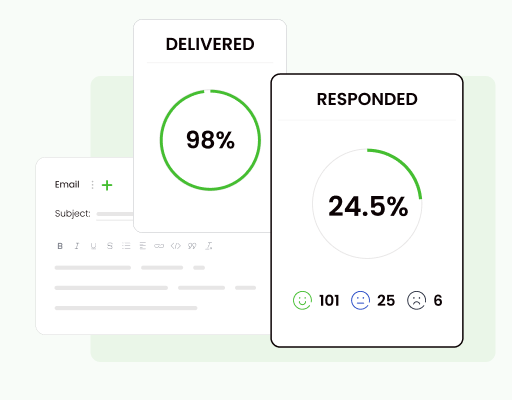
Strip the marketing and Woodpecker is a B2B cold email sequencer that grew a second and third arm. The core is what it has always been good at: you load a list, write a sequence with follow-ups, and it sends one-to-one style messages from your own mailboxes on a human-looking schedule. Its signature has been reply detection since the early days. It watches for answers coming from a different address, a forward, or an autoresponder, and pulls those threads out of the follow-up queue so you do not email someone who already wrote back. That sounds small. It is the feature people quietly stay for.
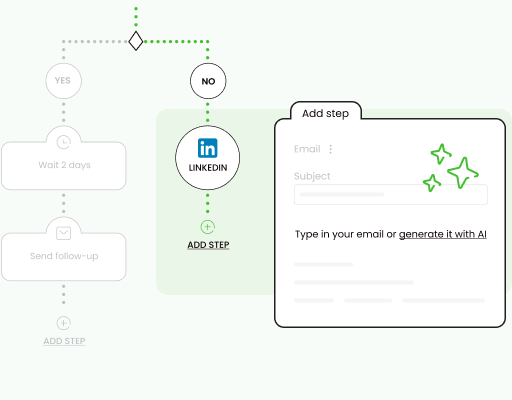
The two newer arms are LinkedIn outreach and a lead database. You can now drop LinkedIn steps (a profile visit, a connection request, a message) into the same sequence as your emails, so a prospect gets a multichannel touch instead of five identical emails. The Lead Finder sits on a database Woodpecker markets as over a billion contacts, letting you build a list without leaving the app.
The company behind it is not a fly-by-night. Woodpecker.co was founded in 2015 in Wrocław, Poland, by Matt Tarczynski and Maciej Cieśla, and it now trades on the Warsaw Stock Exchange under the ticker WPR. That matters less for features than for stickiness: a listed company with roughly 90 staff and 15,000-plus users is not the kind of tool that vanishes over a weekend.
The deliverability stack
Cold email lives and dies on whether the message lands in the inbox, and this is the part of Woodpecker that has clearly had the most engineering attention. Four things do the heavy lifting.
- Free warm-up: included on every account, not sold as a $30 add-on the way rivals like to. It ramps a fresh mailbox's reputation by trading real-looking mail with a peer network before you send anything cold.
- Inbox rotation: spread one campaign across several connected mailboxes so no single address carries a suspicious volume. Because email accounts are unlimited, this is free to scale.
- Adaptive sending: the send rate throttles itself when it detects deliverability slipping instead of blindly firing your daily cap.
- Deliverability monitoring and domain audits: it checks SPF, DKIM and DMARC and flags a misconfigured domain before it burns.

The warm-up being free is the honest differentiator here. On several competitors, warm-up is either a paid tier or a separate subscription, and it is the single most important thing standing between you and the spam folder. Woodpecker treats it as table stakes.

Pricing: doing the math
Here is where you need a calculator, because the low headline number is only half the story. Base rate, checked on the pricing page on 12 August 2026:
- $7 per 100 contacted prospects monthly, or roughly 33% off if you commit annually.
- Free trial: 14 days or 100 cold emails, whichever runs out first, no credit card.
- Bundled free: unlimited email accounts, unlimited team members, catch-all verification, four warm-ups, and 100 Lead Finder credits to start.
So a solo founder emailing 300 new prospects a month pays about $21. That is legitimately one of the cheapest serious entry points in the category. The catch is the add-on menu, and it is a long one:
- LinkedIn Outreach: $29/month per connected LinkedIn account.
- Lead Finder credits: from $10 for 500 credits.
- Extra warm-ups: $5/month each beyond the free four.
- Managed email addresses: $6/month each for Google or Microsoft, $4 for Maildoso or Mailforge.
- Agency panel: $27/month per active client.
- Dedicated servers: $59/month each; API and integrations: $20/month.
None of those are unreasonable on their own. Stacked, they change the picture completely, which is the next section.
Where the bill gets away from you
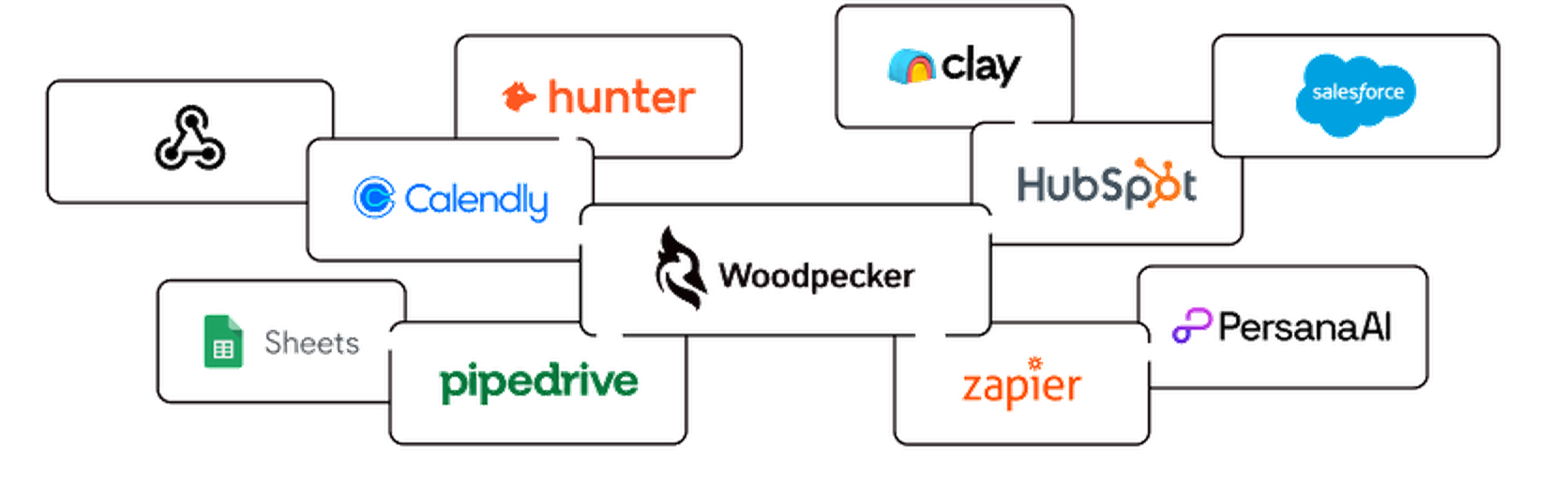
Take that "$7 per 100" and build the setup an agency actually runs. Say you want the multichannel pitch Woodpecker sells on its homepage: two LinkedIn accounts ($58), the API to sync your CRM ($20), a couple of managed mailboxes ($12), and you contact 2,000 prospects a month ($140). You are at roughly $230 before the agency panel and any Lead Finder top-ups. The pay-per-prospect base was cheap; the working configuration is not, and that is exactly the complaint that shows up in G2 reviews, where the product holds a 4.3 out of 5 but reviewers repeatedly note the pricing is "on the higher side" once you scale.
The pricing model also punishes volume rather than rewarding it. Most SaaS gives you a lower unit cost as you grow. Woodpecker's per-prospect rate does not fall off a cliff at scale the way a flat unlimited plan from a competitor would, so a high-volume sender can end up paying more here than on a tool that charges a fixed monthly rate for unlimited sends. If you contact tens of thousands of prospects a month, run the annual-discount math against a flat-rate rival before you commit.
One more practical limit: the platform does not auto-upgrade when you blow past a bundled allowance, so a campaign can stall mid-send if you have not topped up. That is arguably safer than a surprise overage charge, but it means someone has to be watching the meter.
Verdict: who it's for
Woodpecker is the right pick for a B2B sales team or a lead-gen agency that values deliverability over raw volume and sends measured, personalized campaigns rather than blasting six figures of email a month. The free warm-up, the unlimited mailboxes for inbox rotation, and reply detection that genuinely works are worth paying for, and the per-prospect base is kind to anyone still finding product-market fit. Its ten years, public listing and 15,000 users mean it will still be here next year.
Skip it if your model is high-volume outreach where every prospect counts against a per-100 meter — a flat-rate unlimited tool like Instantly or Smartlead will almost certainly come out cheaper once you cross a few thousand sends a month. And if you want an all-in-one where LinkedIn, a lead database and CRM sync are included rather than bolted on at $20–$29 each, price the full stack out first: Snov.io bundles more of that into a single number. Woodpecker's honesty is that it charges you for exactly what you use. Its trap is that a real campaign uses a lot of things.
Start Woodpecker's 14-day free trial and send 100 cold emails before you decide. No card required, and it is the fastest way to see whether the deliverability tooling earns its keep on your own domain.
Ready to try Woodpecker?
Visit the official website to see the latest plans, pricing, and special offers.
Get Started - Woodpecker* Affiliate link - we may earn a commission at no extra cost to you.