Capsule CRM Review: Sales Pipeline and Projects in One App, If You Pay for Growth
Capsule CRM review: real plan prices checked in November 2026, what Starter leaves out, the AI features on Growth, an export without attachments, US data hosting, and who should buy it.
专家评测

The $18 plan is not the one you will buy
Capsule CRM leads its pricing page with Starter at $18 per user per month. Look at what Capsule shipped in 2026 and a different number appears. AI Meeting Prep (July 2026), the ChatGPT plugin and Claude connector (October 2026) and two-way Email Sync and Reply (also October) all require Growth or above. So does workflow automation. So does a second sales pipeline.
Starter, in other words, is a tidy shared contact book with one pipeline and nothing that runs on its own. The plan most teams end up on is Growth at $36 per user per month billed annually - double the headline. For five people that is $2,160 a year, not $1,080.
That is not a reason to dismiss it. Capsule, made by Zestia Ltd in Manchester, does one thing most small-business CRMs skip: a won deal turns straight into a project board, so the people who sell and the people who deliver work from the same record. For a consultancy or agency that alone can replace a second tool. The question is if that is worth Growth prices to you.
Pricing, plan by plan
Capsule's pricing page draws its dollar figures in the browser, so the numbers below come from a reading of that page on 14 October 2026 reported by Dupple, and checked in November 2026 against other price trackers. Starter and Growth agree across every source. Advanced and Ultimate do not: CostBench listed them at $60 and $75 on annual billing in June 2026. Confirm those two on the page before you budget.
| Plan | Annual (per user/mo) | Monthly | Contacts | Storage | What it adds |
|---|---|---|---|---|---|
| Free | $0 | $0 | 250 | 50MB total | 2 users max, 1 pipeline, 5 custom fields |
| Starter | $18 | $22 | 30,000 | 10GB/user | 50 custom fields, basic reporting, 10 AI content assists a month, 5 email templates, Xero and Zendesk |
| Growth | $36 | $40 | 60,000 | 20GB/user | Multiple pipelines and project boards, workflow automation, dashboards, Looker Studio connector, the AI suite, 1,000 AI assists |
| Advanced | $54 (or $60) | $60 | 120,000 | 30GB/user | Up to 50 teams, pipelines and boards, 300 custom fields, 5 shared outboxes |
| Ultimate | $72 (or $75) | $75 | 240,000 | 50GB/user | Dedicated Customer Success Manager, sales-led trial |
Even the discount is fuzzy. The billing toggle promises "up to 18%" for paying annually; the FAQ further down the same page says "up to 15%". On Growth the real saving works out at 10%.
Two billing rules deserve more attention than they get. Capsule charges for every user who is active, suspended or pending, so an invite nobody accepted still costs a seat until you delete it. And Transpond, the email marketing tool Capsule owns, is a separate add-on from $11 a month - newsletters are not in any CRM plan.
The current plan line-up dates from October 2023. Accounts older than that may sit on the legacy Professional or Teams plans, which can no longer be bought.
What signing up gets you
The trial is genuinely low-friction: 14 days on Starter, Growth or Advanced, no card required. Ultimate is different - you request a trial and a salesperson calls. Capsule's billing documentation says billing starts automatically once the trial ends, so decide before day 14 rather than after.
The free plan is permanent but small. Two users, 250 contacts and 50MB of storage is enough to try the interface with real data, not to run a business on. HubSpot and Zoho both give away far more for nothing, and if a free tier is the point, start there.
Where Capsule earns its price
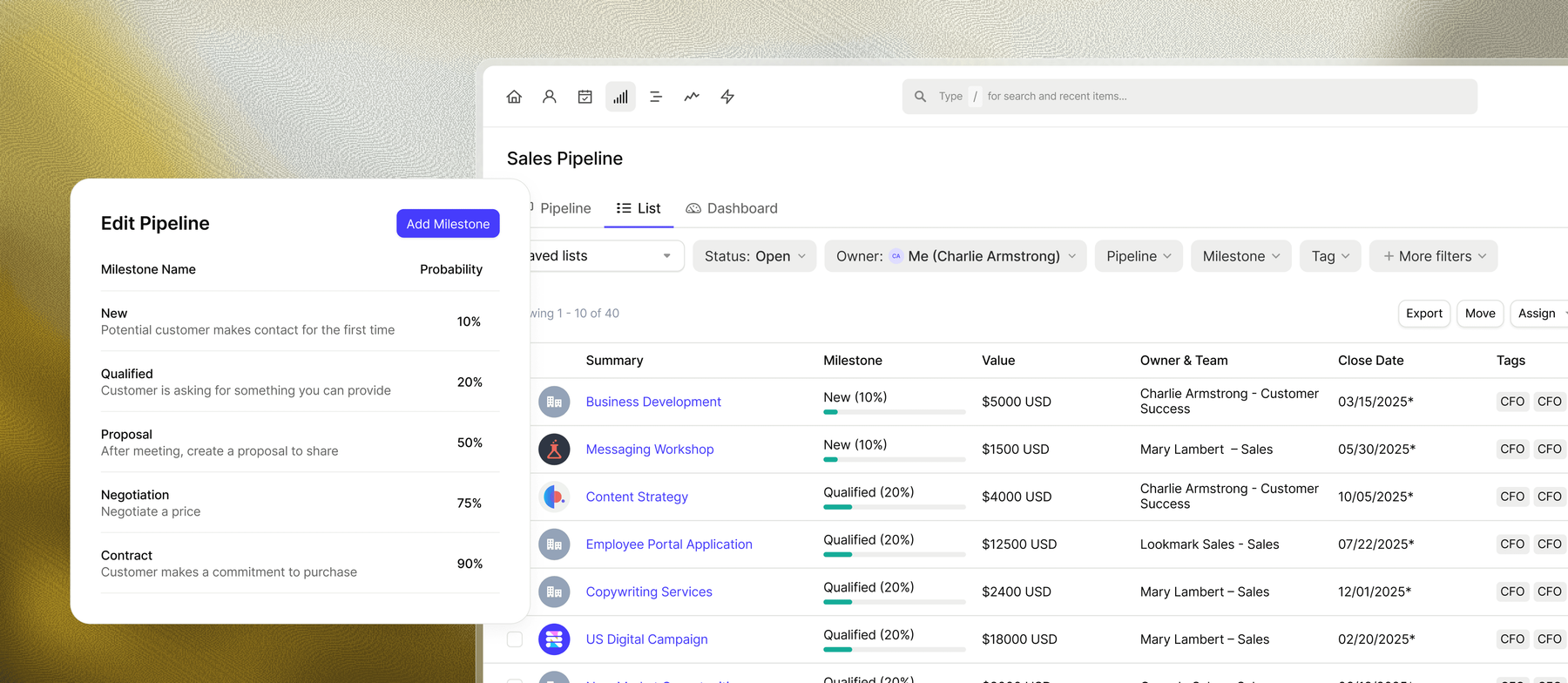
The sales pipeline is a familiar kanban with Pipeline, List and Dashboard tabs. Each milestone carries a win probability you set yourself - New at 10%, Qualified 20%, Proposal 50%, Negotiation 75%, Contract 90% in Capsule's own example - and the forecast is weighted by them. Opportunity records show expected value, close date, history and tasks, and with QuickBooks connected an invoice panel sits on the same screen.
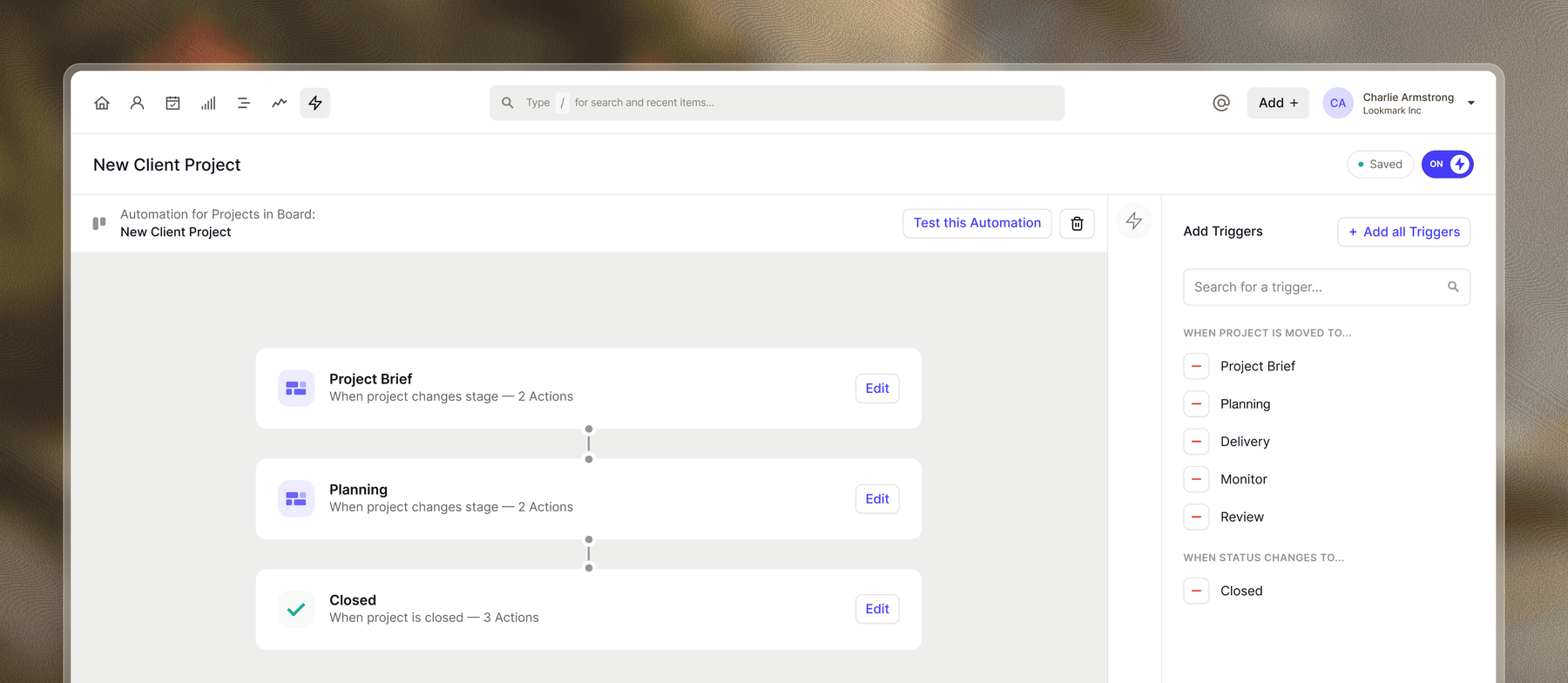
Projects are the differentiator. Boards run in stages just like the pipeline, and on Growth an automation can fire a set of tasks, emails or stage changes the moment a project or deal moves. Win a deal, open a "New Client Project" board, and the kickoff checklist writes itself. Pipedrive and Close are built for the sale and leave delivery to someone else's app; Capsule is one of the few cheap CRMs that does not.
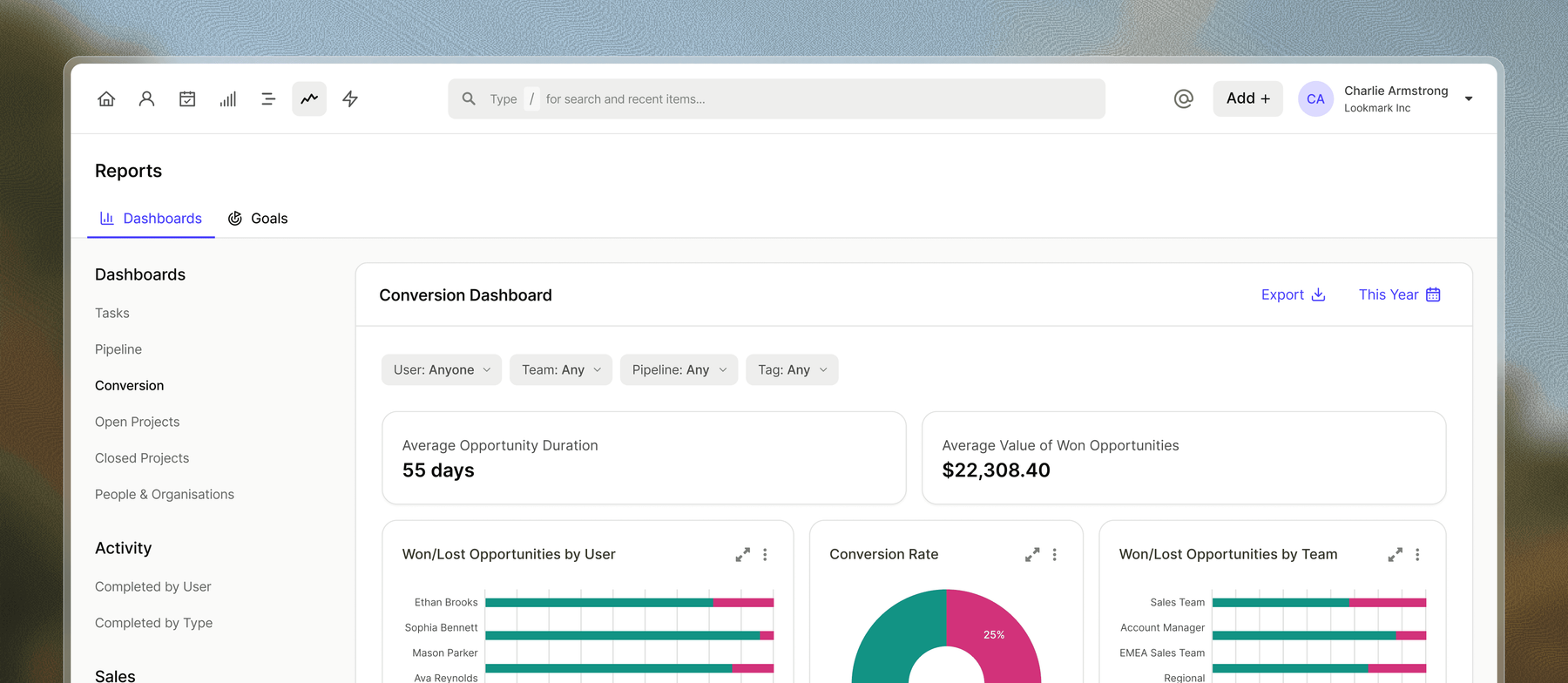
Reporting on Growth covers a conversion dashboard (average deal duration, won and lost by user and team, conversion rate), goals and a Looker Studio connector. Integrations number 60-plus, with Zapier for the rest. QuickBooks, Mailchimp, Google and Microsoft 365 work on every plan, including Free; Xero and Zendesk need a paid one. There is no native Shopify integration, so e-commerce teams will be routing orders through Zapier.
The AI, and which plan it needs
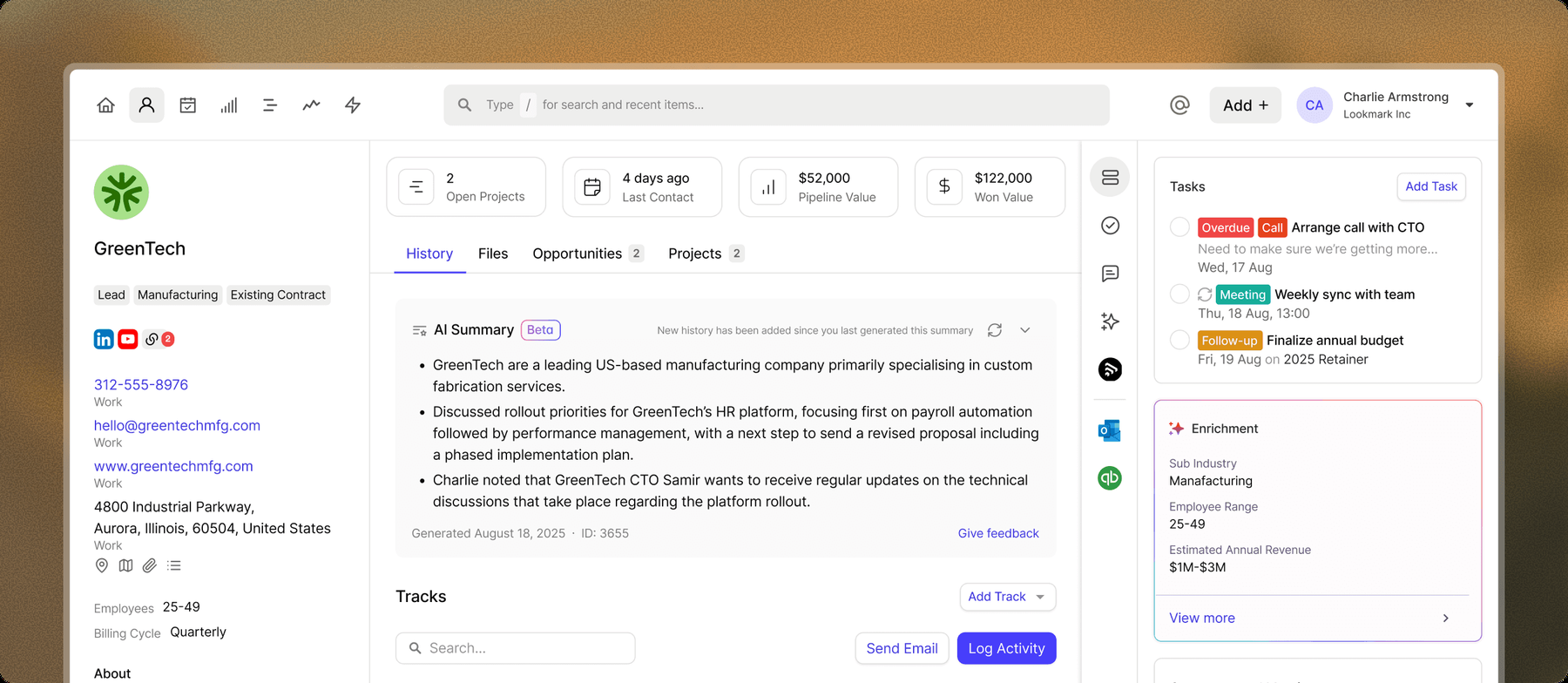
Capsule's AI is a set of assistants, not an agent. Starter gets the AI Pipeline Generator, which suggests stages for a new pipeline, and 10 AI writing assists a month - roughly one email every three working days. Growth raises that to 1,000 and adds summaries of a record's last 50 activities, contact and company enrichment, and Meeting Prep, still labelled beta, which drafts a briefing before a call.
The October connectors are the more useful part: ChatGPT and Claude can query and update Capsule records directly, on Growth and up. Capsule says every AI feature can be switched off at any time. What you will not find is anything like the autonomous AI agent Close now sells, which does follow-up work on its own.
What leaving looks like
Export is available on every plan, including Free, and it is quick: a ZIP of three UTF-8 CSV files for contacts, opportunities and projects, with a download link that expires after 12 hours. It is also incomplete in two ways that matter.
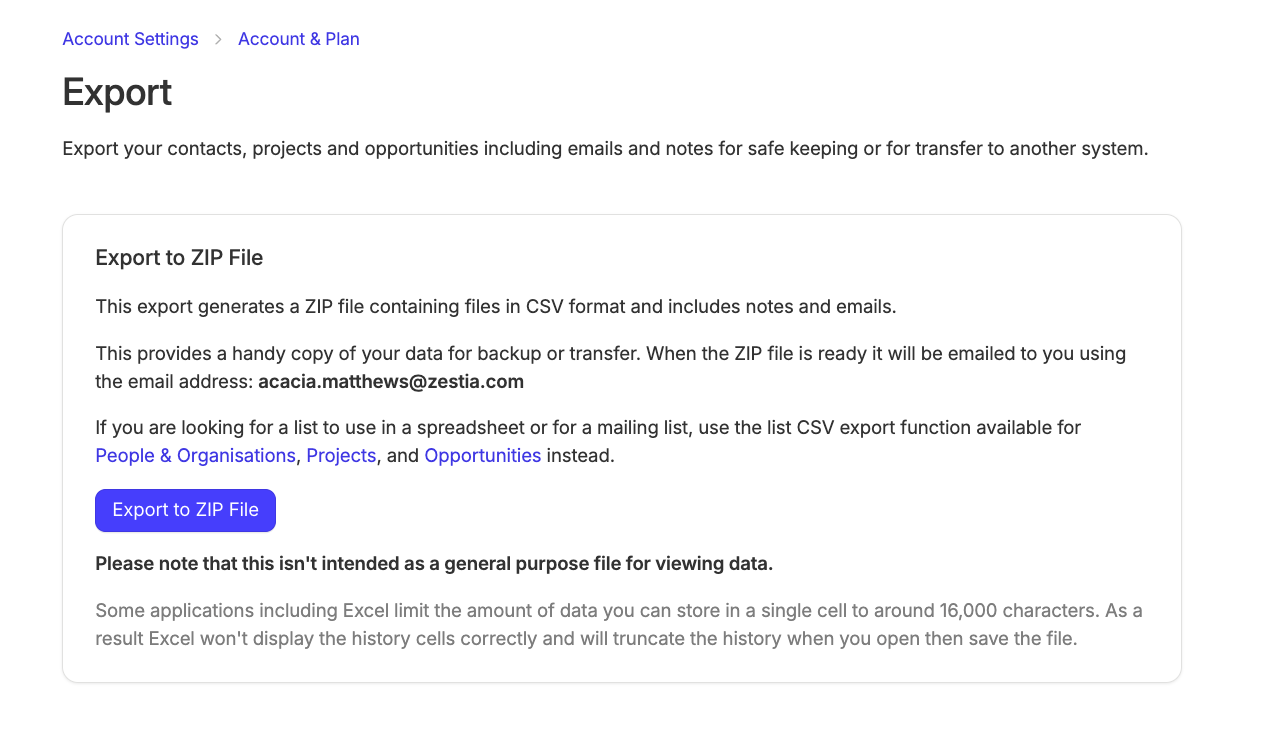
All note and email history is packed into the last column of each CSV, so your next CRM's importer will see one very long text field per record rather than a timeline. And the full export contains no file attachments at all. Capsule's own support page says they "always have to be downloaded one at a time from each record". A team with three years of proposals attached to deals should budget a long afternoon of clicking, or a developer with the API, which allows 4,000 requests per user per hour.
After you cancel, the account's data is permanently deleted after 14 days. Export first.
Hosting, support and what users complain about
Capsule is a British company, but its data is not in Britain: everything is stored on AWS in the United States. A DPA and sub-processor list are available for GDPR purposes. If your clients insist on UK or EU data residency, that rules Capsule out before features do. Uptime leans on Amazon's EC2 service level of 99.95%.
Support response times per plan are not published. Capsule's own claim is that 80% of responses arrive within 12 hours; Ultimate adds a named Customer Success Manager.
Capsule displays a 4.7 rating from G2. On Trustpilot it holds 4.5 from 68 reviews. The one-star reviews cluster around billing and service. One reviewer wrote in February 2026: "I was not given the option to select a monthly subscription, and then was refused a prorata refund when I cancelled." Capsule replied that monthly billing was explained in onboarding emails. Another, in April 2025, called the support "abysmal" and the integrations weak. The lesson is simple: choose monthly billing deliberately at signup, because an annual plan is not refunded pro rata.
Verdict: who should buy Capsule CRM
Buy Capsule on the Growth plan if you run a 2-15 person agency, consultancy or service business where a won deal becomes a project, and you want both in one place without configuring Salesforce-grade software. At $36 per user it is fairly priced for that, and the 14-day trial with no card makes it cheap to find out.
Buy Starter only if you need a shared contact book and a single pipeline, and nothing will ever need automating.
Skip it if your team lives on the phone or sends outbound sequences - Close has calling built in, and Pipedrive goes deeper on the pipeline itself. Skip it if you want a generous free tier; HubSpot and Zoho CRM give away far more. And skip it if your data has to stay in Europe.