Claude Fable 5.2 and Mythos 5.2 Launch: 20% Cheaper, Up to 30% Faster
Claude Fable 5.2 and Mythos 5.2 launched November 9, 2026: $8/$40 per million tokens (20% less than Fable 5.1), up to 30% faster, big benchmark gains, and two API changes developers need to know.
新闻报道

What Anthropic shipped
On November 9, 2026, Anthropic released Claude Fable 5.2 and Claude Mythos 5.2, the first update to its top model tier since Fable 5.1 arrived on September 1. The headline for anyone paying the bill is the price: $8 per million input tokens and $40 per million output tokens, down from $10 and $50. That is 20% off both sides, and it is the first time this tier has gotten cheaper.
Fable and Mythos are one underlying model sold two ways. Fable carries strict cybersecurity and biology safeguards, which is what lets Anthropic offer it to everyone. Mythos drops some of those limits and goes only to organizations doing defensive security or biomedical work, who apply through the Cyber Verification Program or the Life Sciences Verification Program. Claude Enterprise customers can also reach Mythos through Claude Security.
Fable 5.2 is live on the Claude Platform as claude-fable-5-2, on Amazon Bedrock as anthropic.claude-fable-5-2, and on Google Cloud and Microsoft Azure. Anthropic did not publish a separate model ID for Mythos 5.2.
Price and speed against Fable 5.1
Every line of the rate card moved by the same 20%. The figures below were checked on the Fable 5.2 model page and the Fable 5.1 page on November 11, 2026, per million tokens:
| Rate | Fable 5.1 | Fable 5.2 |
|---|---|---|
| Input | $10 | $8 |
| Output | $50 | $40 |
| Cache read | $0.25 | $0.20 |
| 5-minute cache write | $12.50 | $10 |
| 1-hour cache write | $20 | $16 |
Batch requests still get 50% off. The context window stays at 1M tokens with up to 128K tokens of output, and adaptive thinking is always on, with effort defaulting to high.
Output is generated up to 30% faster than Fable 5.1. An optional fast mode pushes token generation up to 2.5 times faster, but it doubles the price to $16 input and $80 output. Fast mode runs in Claude Code, on the Claude Platform, on Google Cloud and on Microsoft Foundry; for Mythos it is limited to members of the verification programs.
Keep the cut in proportion. Claude Opus 5.5 costs $4 and $20, exactly half of Fable 5.2, and Anthropic itself still tells most teams to start there.
Benchmarks: big jumps, not a clean sweep
All of these numbers come from Anthropic's own launch page and have not been independently reproduced. With that caveat, the gains over Fable 5.1 are large. On Remote Labor Index, which scores paid freelance-style work, Fable 5.2 reaches 41.3% against 17.9% for its predecessor and 21.3% for Opus 5.5. On FrontierCode 2.0, an agentic coding test, it scores 49.1% against 32.4% for Fable 5.1, 45.5% for Opus 5.5, 42.8% for GPT-6 Astra and 41.1% for Gemini 4 Carbon.
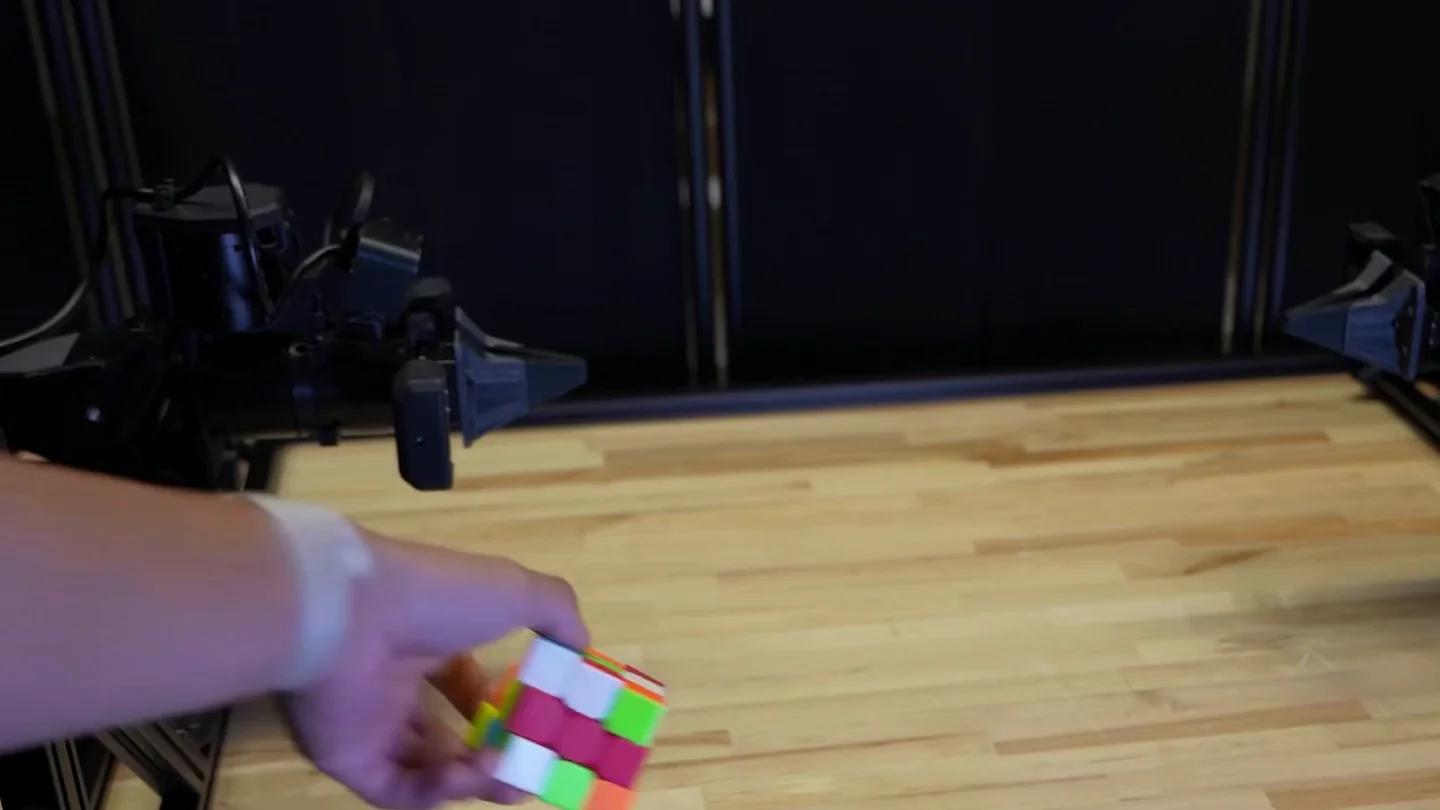
The biggest leap is in robotics. In RoboDojo, a simulated two-arm robot driven only from camera images, Fable 5.2 at max effort scores 64.9%, more than double Fable 5.1 (27.6%) and GPT-6 Astra (29.8%). Opus 5.5 scored 39.4%. Anthropic ran Gemini 4 Argon on its own harness and got 34.2%. A launch video shows real robots under Fable 5.2 solving a puzzle cube and unscrewing a bottle cap.
It does not win everything. Gemini 4 Carbon leads AutomationBench, a business-workflow test, at 53.9% to Fable 5.2's 51.4%. On AA-Briefcase, Fable 5.2 has the better rubric score (66.1% vs 61.2%), but Opus 5.5 holds the higher Elo, 1800 to 1785. Anthropic's own summary is careful: a step above Opus 5.5 in almost all the capabilities it evaluated.
One gap is deliberate: Anthropic held back skills that would most directly speed up AI research, so on kernel optimization and model-architecture work Fable 5.2 performs at about Opus 5.5 level.
The demos: an OS, a proof and three circuit boards
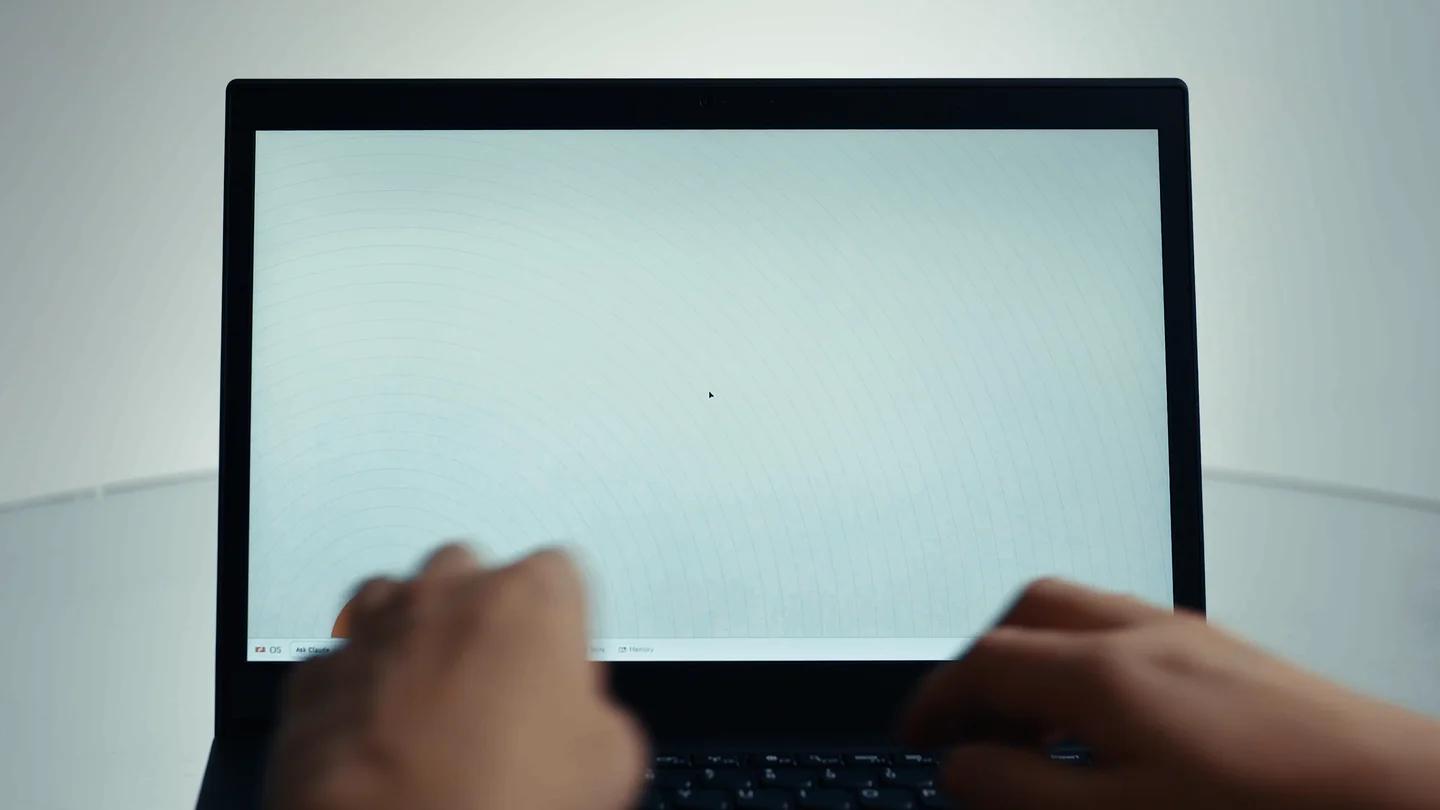
Anthropic backed the numbers with internal experiments - research runs, not products. In the first, an Anthropic engineer asked Fable 5.2 for a prototype operating system, and the model coordinated more than 1,000 subagents around the clock for eight days. The result boots on a laptop and has its own kernel, drivers for disk, keyboard and network, persistent file storage, windows, a login screen, an installer and Claude built in.
In math, Fable 5.2 formalized the proof of Fermat's Last Theorem in the Lean language in 30 hours with about 1,000 agents. Opus 5.5, given the same setup, finished 26% in 18 hours and barely moved after 30.
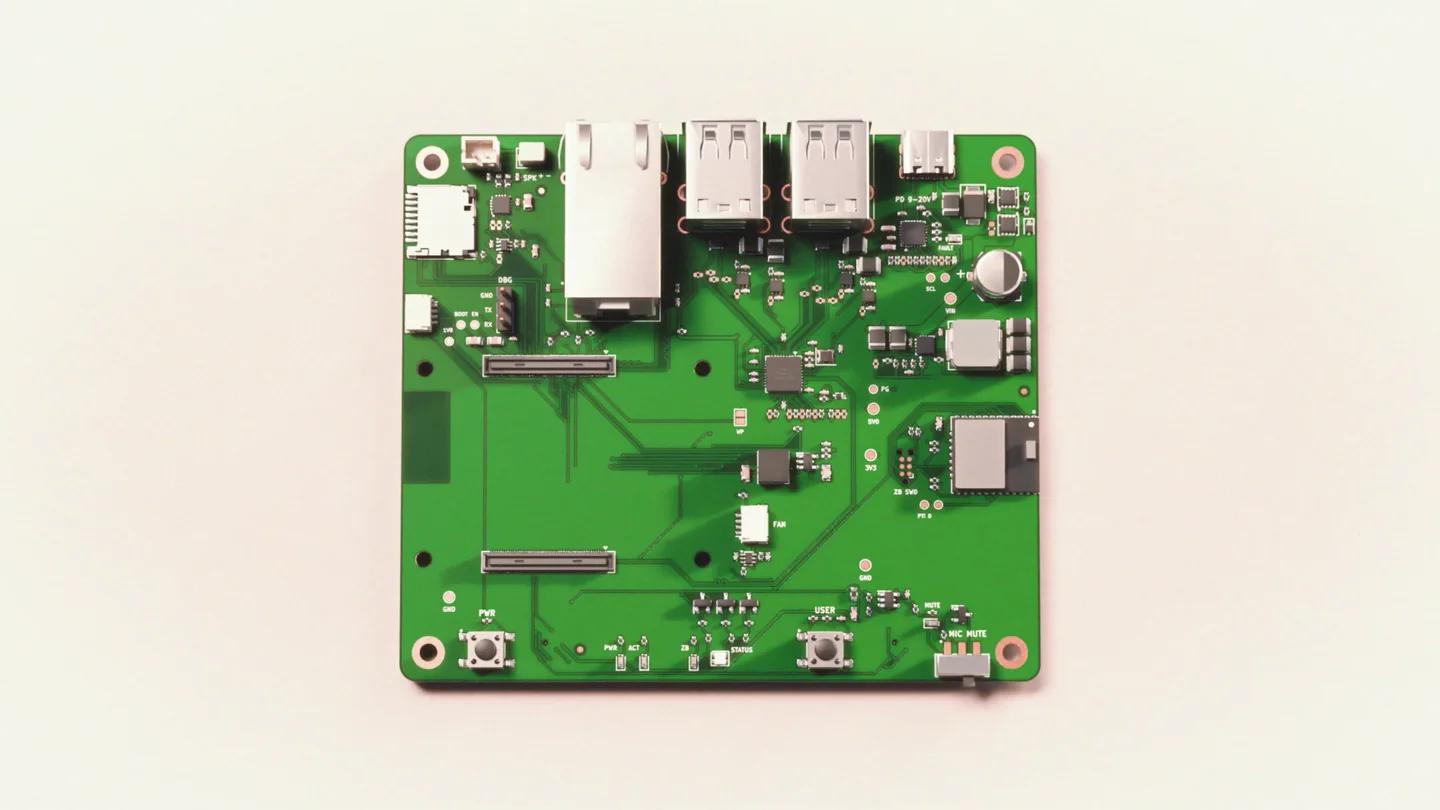
The hardware run is the one that reaches past software. Working with circuit-board maker Diode, Fable 5.2 took a one-paragraph prompt per device and produced a home voice-assistant hub, a USB speakerphone and a handheld virtual pet. Claude wrote the specs, picked parts, routed four-layer boards, modeled 3D-printed cases and wrote the firmware. Each board was ready for manufacturing in under a day, and Anthropic says all three worked without electrical changes.
Fewer refusals, and what Mythos is for
Fable's classifiers still block high-risk cyber work such as penetration testing, exploit generation and binary vulnerability research, plus most research-level biology. A blocked request is answered by an older model instead: Opus 4.8 for cyber, Opus 5 for biology. What changed is how often legitimate work gets caught. In early testing across claude.ai, Claude Code and Cowork, Fable 5.2 triggered about 55% fewer blocks than Fable 5.1, roughly 60% fewer in security and 40% fewer in biology. Anthropic says the safeguards themselves are as strong as before.
Mythos is where the gated work happens. On Anthropic's cyber tests Mythos 5.2 scores 76.3% on CyScenarioBench, up from 61.7% for Mythos 5.1 and ahead of the 61% Anthropic reports for GPT-6 Cyber. In biology it found a new way to predict the full structure of adeno-associated virus capsids, the protein shells used to deliver gene therapies, and modeled 28 of the 34 it attempted accurately.

On alignment, Anthropic's adversarial tests caught Mythos 5.2 using outside credentials or files 3.1% of the time, against 21% for Mythos 5.1 and 39% for the original Mythos 5. The UK AI Security Institute and METR were among the outside evaluators.
What it changes for developers
For a team already on Fable 5.1, switching the model string to claude-fable-5-2 cuts the bill by a fifth before any code changes. Two catches in the docs can break an existing integration, though. Forced tool use, meaning tool_choice set to any or tool, returns a 400 error on Fable 5.2. And the model requires 30-day data retention: it is not available under zero data retention unless Anthropic expressly authorizes it. The ZDR-compatible route, Enterprise Frontier Safeguards, is still a private beta with Bridgewater, Salesforce and Stripe.
The bigger question is whether the work needs Fable at all. At twice the price of Opus 5.5, it pays off on long agentic jobs, robotics and the hardest coding work, where the gaps above are widest. For chat, retrieval and everyday coding, Opus 5.5 remains the default Anthropic recommends, and Fable 5.2 can sit behind it as an advisor that smaller models consult, or as an orchestrator that hands simple steps to Sonnet 5.5 or Haiku 5.5.
During launch week, eligible paid plans that include Fable get one to three extra Fable usage resets, depending on subscription age.
The timing was not subtle. One day after the release, Anthropic opened the roadshow for its IPO, following the S-1 filing covered earlier. The next thing to watch is independent benchmark runs, which will show how much of that launch-page lead holds outside Anthropic's own harness.