Anthropic's Claude Ship Lets an AI Agent Approve Your Pull Requests
Anthropic's Claude Ship adds PR Steward and Claude Approvals to Code Review. What each agent may do, how it bills, and the settings that let code merge unreviewed.
News Report

What Anthropic launched
On Monday, November 23, 2026, Anthropic announced Claude Ship, three agents that work on GitHub pull requests once they are open. One reviews, one fixes, and one decides whether a change has met the team's rules for merging. That third job is the new part. AI code review is already a crowded feature. An AI that posts the approving review is not.
The three pieces are at different stages, checked on Anthropic's Claude Ship docs on November 26, 2026.
| Agent | Status | What it does |
|---|---|---|
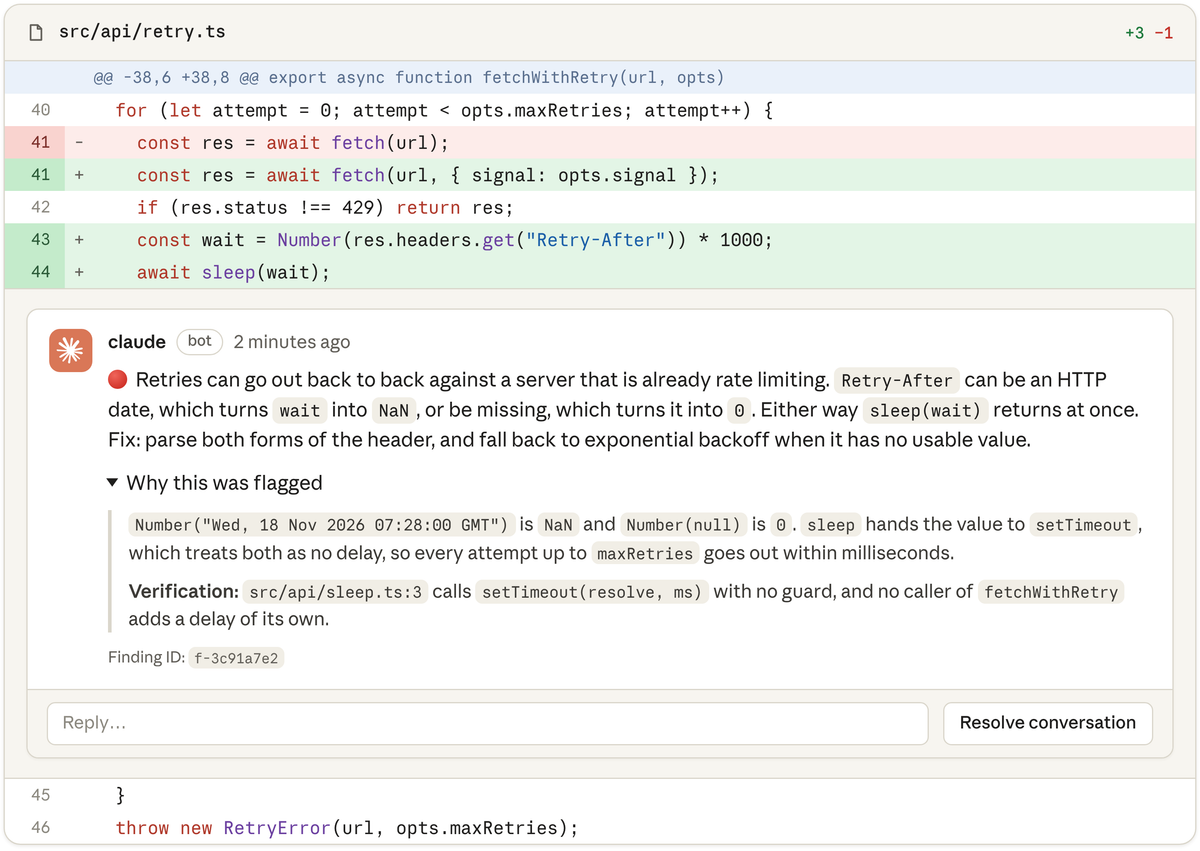
| Code Review | Generally available since October 15, 2026 | Reads the change alongside the surrounding code and posts inline comments, ranked by severity, on logic errors, security vulnerabilities and broken edge cases. Quick, Standard or Deep, set per repository. |
| PR Steward | Public beta | Works on failing CI checks, merge conflicts and review comments, pushes commits with its fixes, then comments on what it changed and how to undo it. |
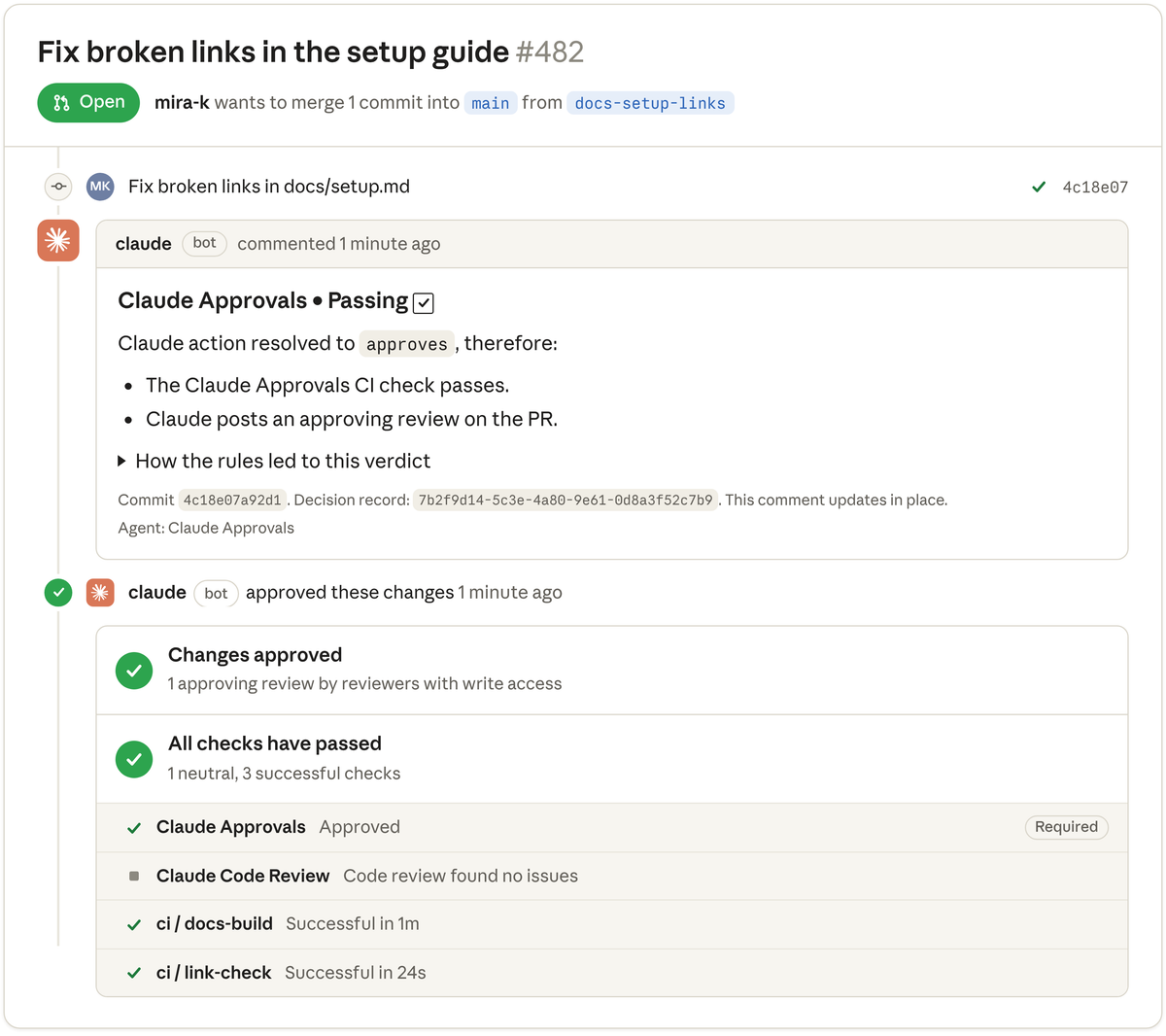
| Claude Approvals | Public beta | A GitHub check that reports who still has to approve, following a policy file the team commits. Where the policy allows, Claude posts the approving review itself. |
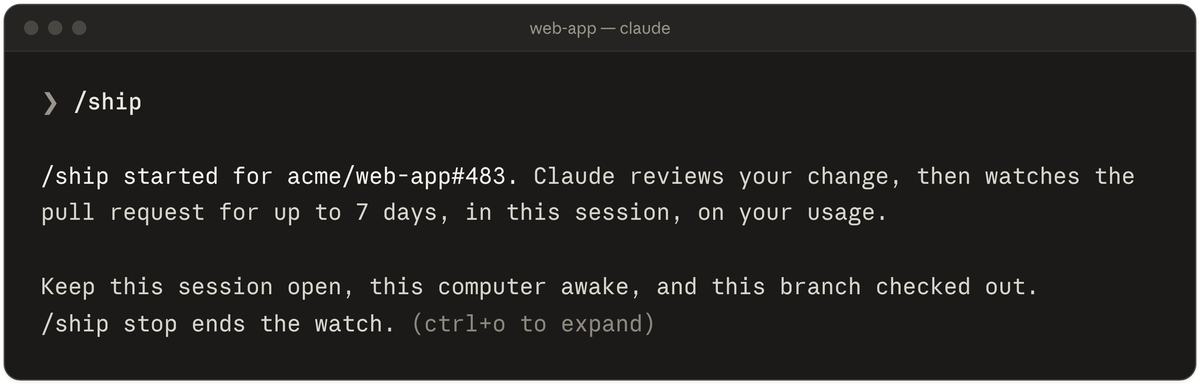
Developers get a fourth way in. Running /ship in Claude Code pushes the branch, opens the pull request, runs review and works through feedback and failing checks. Whether it then merges depends on the developer's own permissions and branch rules. It is rolling out in Claude Code and the desktop app from November 23, counts as ordinary Claude Code usage and works without an admin enabling Claude Ship.
Why Approvals changes who signs off
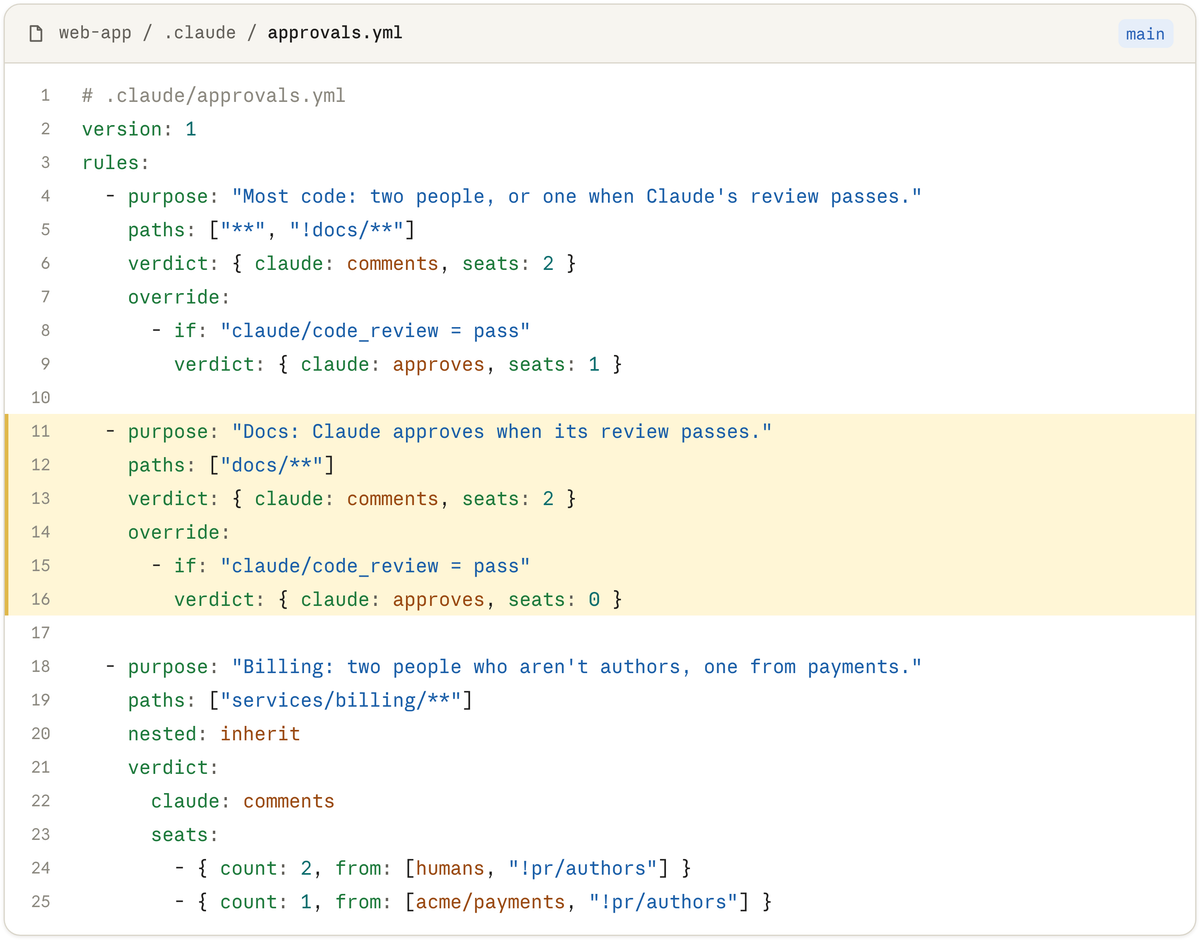
Until now an AI reviewer's comments were advice, and a person still clicked Approve. Claude Approvals moves that click into a policy file at .claude/approvals.yml. A rule can set how many people must approve changes to a path and where Claude may approve on its own. The Approvals documentation gives the example of billing code that needs two people, next to test fixtures that need one once Code Review passes.
The check reports in plain language, with titles such as "Waiting on human review from any person (1/2)". An "(observe mode)" prefix means it is watching, not enforcing. Rules can read facts about the pull request - lines changed, who opened it, the target branch - and classifier answers such as how risky the change looks. They cannot read CI results. CI has to stay its own required check.
The approving review comes from claude[bot], or from claude-approvals[bot] on a pull request that claude[bot] opened itself, once that separate GitHub App is installed. Anthropic's internal numbers are the pitch: on the Claude Code team, merged pull requests more than doubled from June to September, and the share that got reverted fell by more than 40%. TechCrunch singled out the approval agent as the notable piece.
How code can merge with nobody looking
Anthropic is unusually direct about the failure modes. Its docs list the ways a pull request can now merge without human review.
- The Approvals check blocks a merge only if GitHub is told to require it, which in observe mode it normally is not.
- The author can fill a seat. A rule with seats: 1 means nobody else looks, and with seats: 0 a bot-written pull request can merge with no person involved.
- A GitHub branch rule requiring one approval is satisfied by Claude's approving review.
- A rule set to "claude: approves" starts no Code Review by itself, so Claude can approve a change that nothing reviewed.
Add GitHub auto-merge or a merge queue to any of those and, in Anthropic's own warning, a change can merge without anyone acting.
A quieter trap sits in the rollout itself. Once a policy file reaches the default branch, even in observe mode, automatic Code Reviews normally stop for the files it covers unless a rule lists claude/code_review as advisory. A team trialling Approvals can lose the reviews it already had and not notice. And anyone who can merge that file into the default branch can turn Approvals on, while only an Owner of the Claude organization can switch it off org-wide.
What PR Steward is barred from
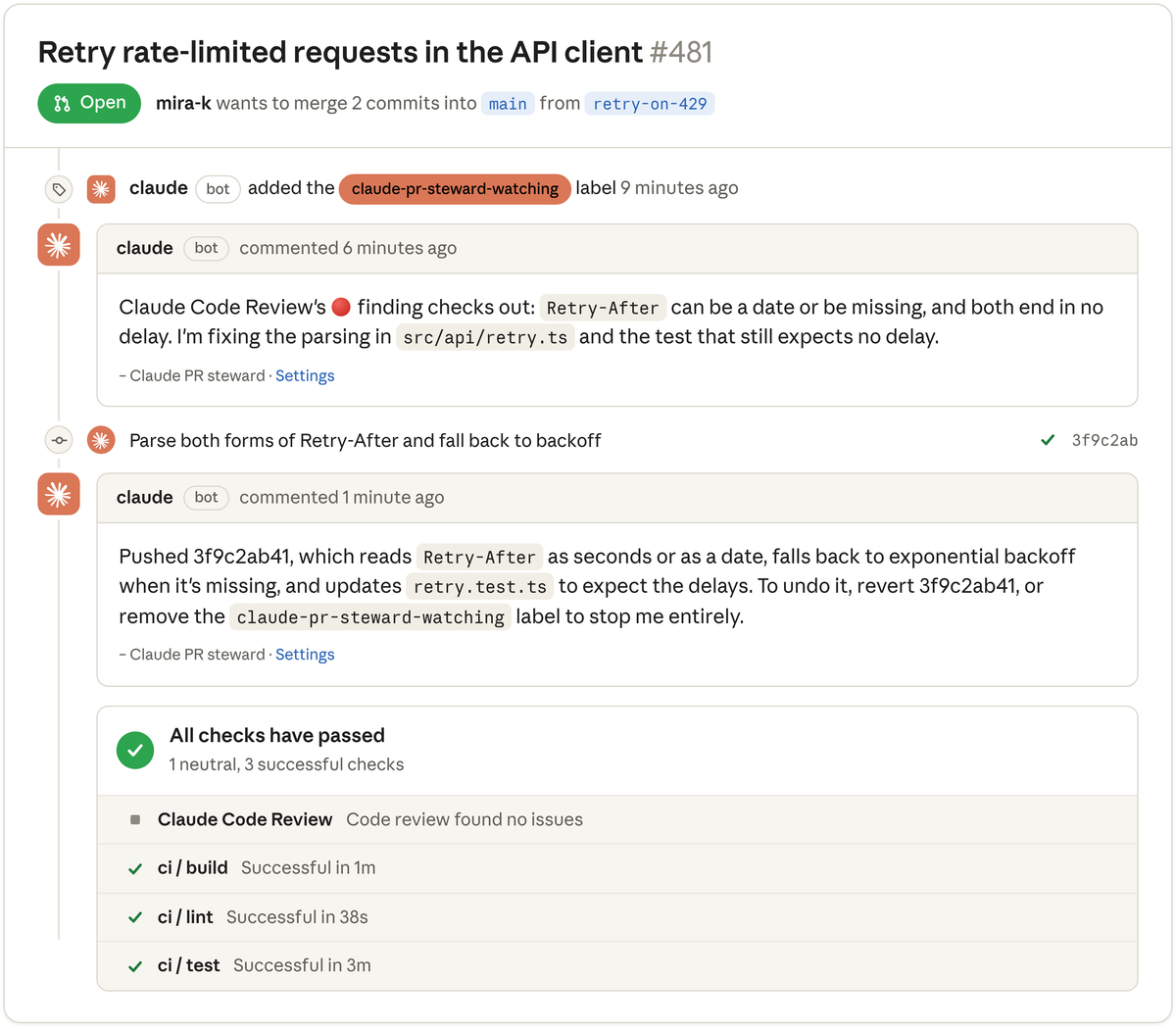
PR Steward is designed not to approve or merge. In Anthropic-hosted sessions, according to its security page, Anthropic's service refuses its requests to approve a pull request, change branch protection, rulesets or statuses, write check runs, delete a branch or push tags. Merging, enabling auto-merge and force-pushing are not on that list. They are left to GitHub branch rules, otherwise guarded only by permission rules on command text and the auto-mode model's judgment, and the page concedes that "a command that's written another way can pass both." PR Steward can push to any branch the Claude GitHub App may push to, and can dismiss reviews unless GitHub rules stop it. Anthropic's advice is to require reviews through branch rules and keep the Claude GitHub App off every bypass list.
Pricing and who can use it
There is no per-review price. Each agent bills on tokens through the organization's usage credits, separately from the usage a plan includes, and the charge lands on the organization rather than the developer. Anthropic's cost page says the bill scales with review level, the size of the change, the complexity of the surrounding code and how often reviews run. The default trigger, "After every push", multiplies cost by the number of pushes. Approvals has no base charge, but its classifiers bill on tokens, and a policy that relies on Claude's review triggers a billed Code Review even in observe mode.
The detail most likely to surprise whoever pays: turning off usage credits does not stop an agent that is on. It keeps billing until the agent itself is turned off, and Anthropic suggests doing that in reverse order - Approvals, then PR Steward, then Code Review. PR Steward has no spend limit of its own until an admin sets one.
Claude Ship is for Claude Team and Enterprise plans, on GitHub repositories only. It is not available with Zero Data Retention, the HIPAA configuration or customer-managed encryption keys, and Approvals cannot be started under FERPA or Access Transparency settings. Eligible paid Enterprise organizations - not Team, not reseller-billed, not trials - can claim $10,000 to $50,000 in promotional credits, scaled to active Claude Code seats, until 23:59 UTC on January 15, 2027. They expire 30 days after claiming and now cover all three agents.
What happens next
Anthropic recommends one agent in one repository at a time: Code Review first, then PR Steward on its "Manual (@claude steward)" setting, then Approvals in observe mode before its check is made required in branch protection. The settings live under Organization settings > Claude Ship and need the Owner role. Developers steer PR Steward by mentioning @claude and halt it with "@claude stop".
The docs carry their own caveat: "Claude Ship uses AI and may miss bugs, security vulnerabilities, or other issues." For teams building on it, that sentence and the merge list above say the same thing. The agents can take review and fix-up work off engineers' desks, but whether code ships unreviewed is now decided by a YAML file and a branch rule - and those deserve the same scrutiny as the code they guard.