Conductor Review: Parallel Claude Code and Codex Agents on Your Mac, Now With a Cloud
Conductor review: run Claude Code, Codex, Cursor and OpenCode agents in parallel git worktrees on a Mac. The free local app vs $50/month Pro with cloud workspaces.
Expert Review

Eight agents, eight branches, one window
Conductor is a macOS app from Melty Labs that does one thing a terminal does badly: run several coding agents on the same repository at once without them overwriting each other. Each task gets a workspace, and each workspace is a git worktree with its own branch, checked out under ~/conductor/workspaces/<repo>/<workspace>. One agent fixes the login bug while a second writes the migration and a third chases a flaky test. When a branch looks right, you review its diff and open the pull request from the same window.
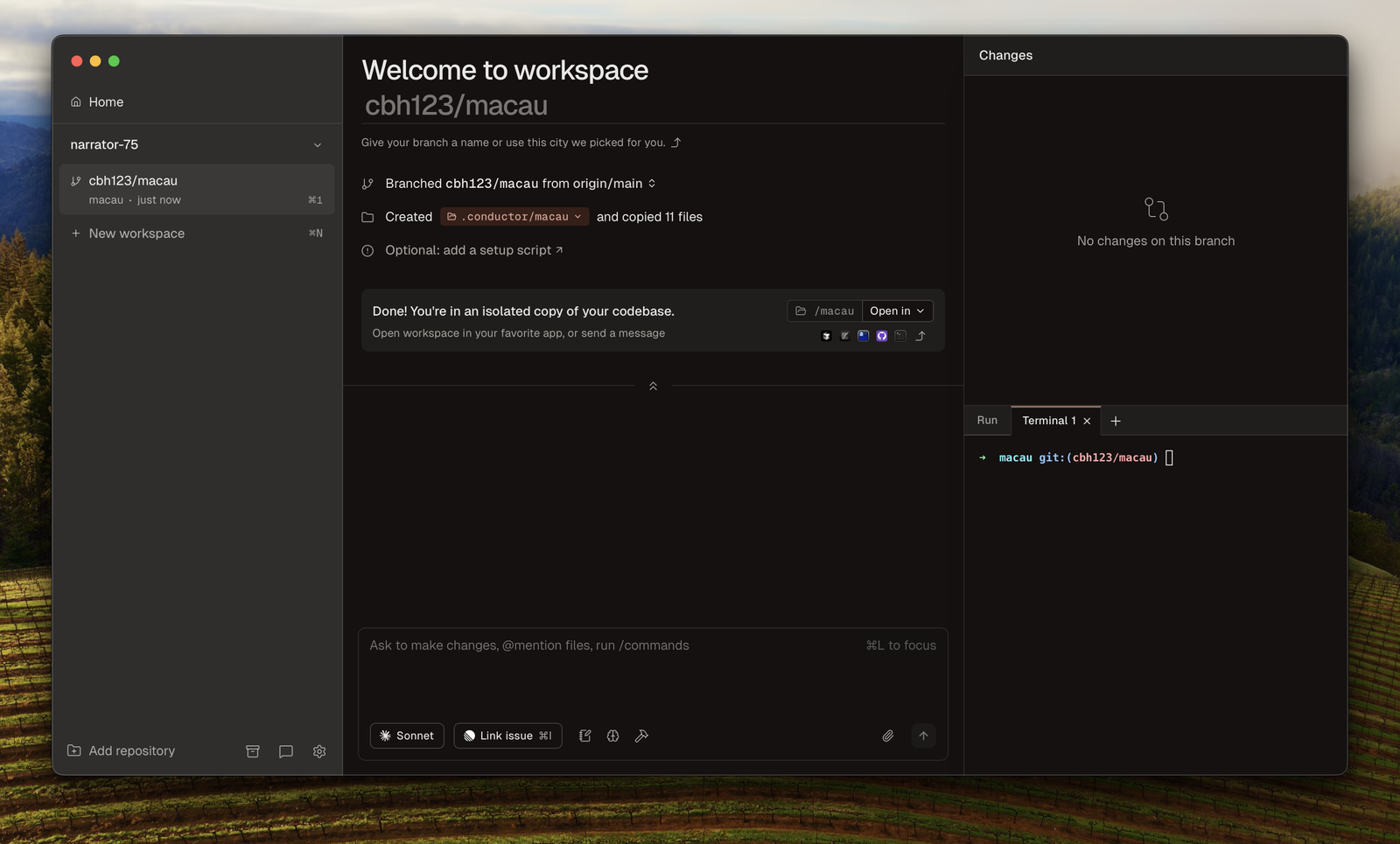
Workspaces are named after cities, and the city doubles as the directory name. Each workspace also gets its own port range through $CONDUCTOR_PORT, so two dev servers do not fight over port 3000.
It is not a model and it is not an editor. Conductor runs the vendors' own agents underneath: Claude Code, Codex and OpenCode come bundled, and Cursor sessions go through the Cursor API. The homepage claims "100k+ builders", and the company's March 2026 Series A post ($22m from Spark and Matrix) says Google, Meta, Ramp, Datadog and Spotify each have "dozens of engineers" on it.
The cost of the design is the fresh checkout. A new worktree has no node_modules and no .env, and a commenter on the July 2025 Show HN thread complained that you "need to run all the dependency installs, etc. for every workspace". The answer is a setup script in .conductor/settings.toml (the older conductor.json is now legacy). Write it before anything else. Without it, every workspace starts as a broken copy of your repo.
You bring the models, and the bill
Conductor does not sell model usage. In its own words, usage "is billed by the provider account, subscription, usage pool, or API key used by the selected harness". By default it picks up the logins already on your Mac: if Claude Code is signed in with Claude Pro or Max, Conductor uses that plan. Since 0.89.0 (September 29, 2026) a ChatGPT plan connects to Codex through Sign in with ChatGPT. OpenCode is the door to everything else - OpenRouter, Cerebras, Baseten, Copilot or a local model.
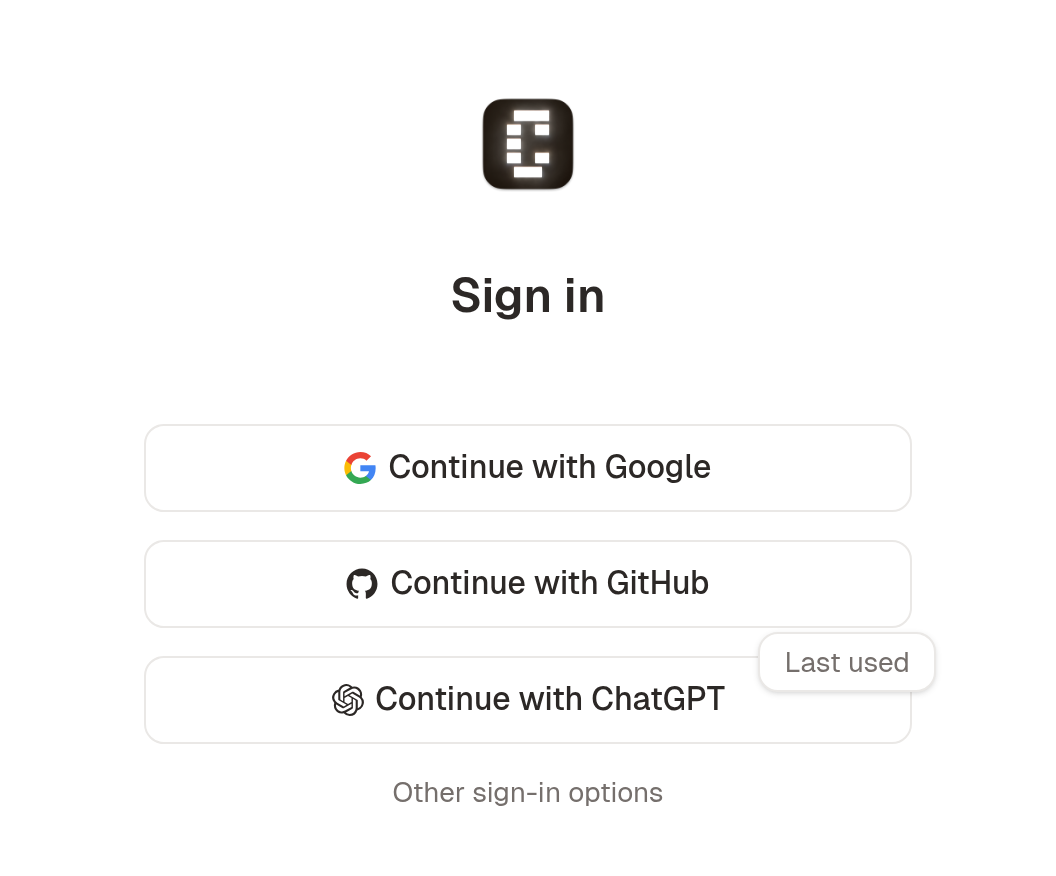
Two lines of fine print can cost real money. The providers page warns that if ANTHROPIC_API_KEY is set in Conductor or in the shell that launches it, "Claude Code may use API billing instead of subscription usage". Check your shell profile before you start eight agents on per-token billing.
The second is outside Conductor's control. It drives Claude Code through the Claude Agent SDK, so using a Claude subscription inside it depends on Anthropic's policy for third-party tools. On May 13, 2026 Anthropic announced subscription changes for exactly that kind of use; on June 15 it delayed them indefinitely. Delayed is not cancelled, and a Max plan is the cheapest way to keep several Claude agents busy.
Reviewing what the agents did
Parallel agents only save time if checking their output is fast, and this is where Conductor beats a row of terminal tabs. The diff viewer shows a unified diff with commit filtering and line comments, pulls in GitHub review comments, and since 0.84.0 (September 2, 2026) lets you edit a file inside the diff instead of switching to your editor. A Checks panel gathers git status, PR metadata, CI results, deployments and open review threads, and Conductor may discourage a merge while required work is still open.
Understand checkpoints before you need one. Conductor snapshots every agent turn, and you can roll a workspace back to any of them - but doing so "will permanently delete all user and AI messages from the selected turn and later", and the agent keeps no memory of what was removed. Checkpoints also live on your Mac, outside git history, so they do not travel with the branch.
Conductor Cloud, multiplayer and the iPhone app
For most of its life Conductor was simply a free Mac app, and local workspaces still cost nothing. The paid product is Conductor Cloud, introduced in 0.78.0 on July 30, 2026. A cloud workspace runs in a Vercel sandbox with 8 vCPUs, 16 GB of RAM and 32 GB of ephemeral NVMe storage, in us-east-1 with Node.js, Python and the GitHub CLI preinstalled. The practical difference is blunt. A local agent stops when you close the lid; a cloud agent keeps going.
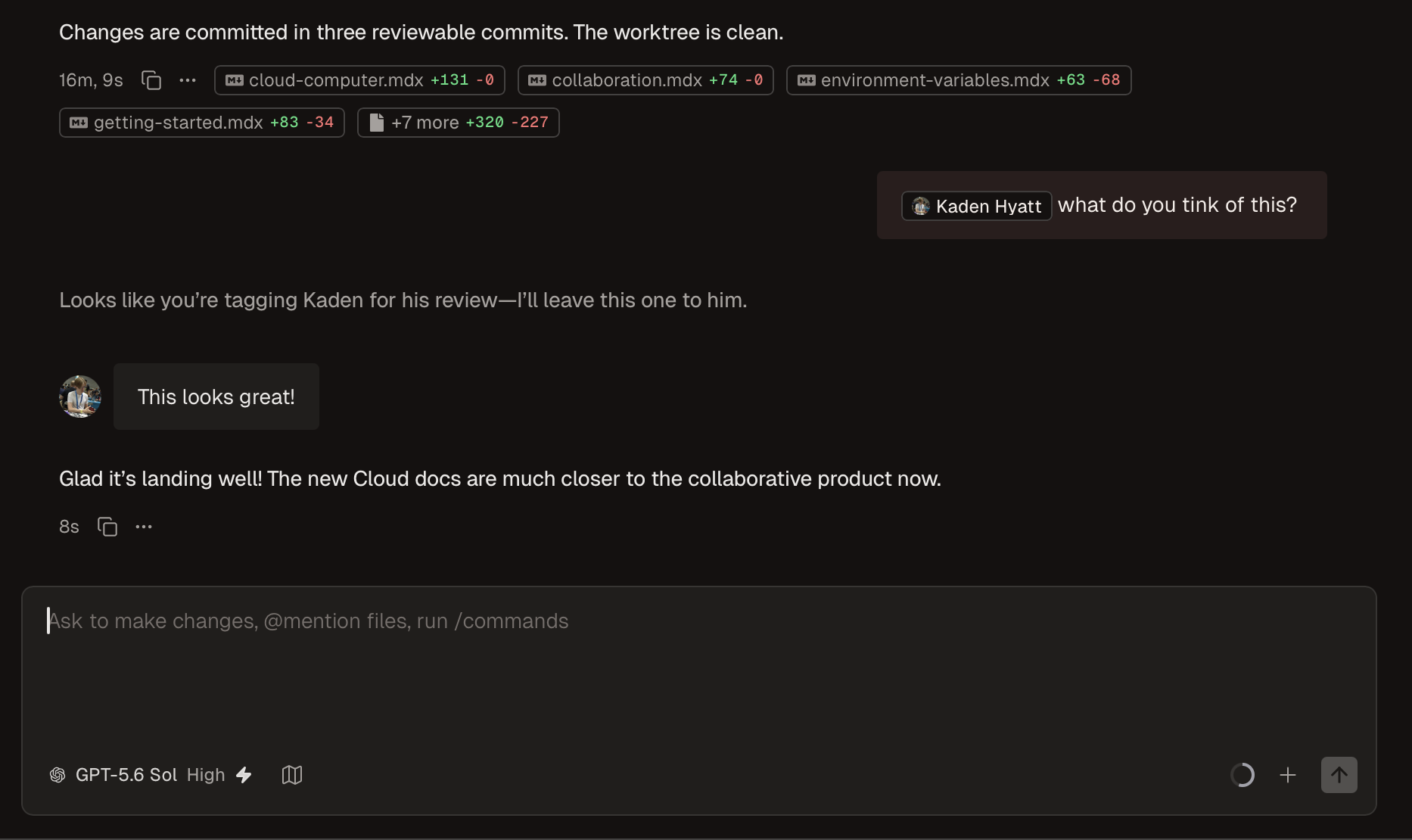
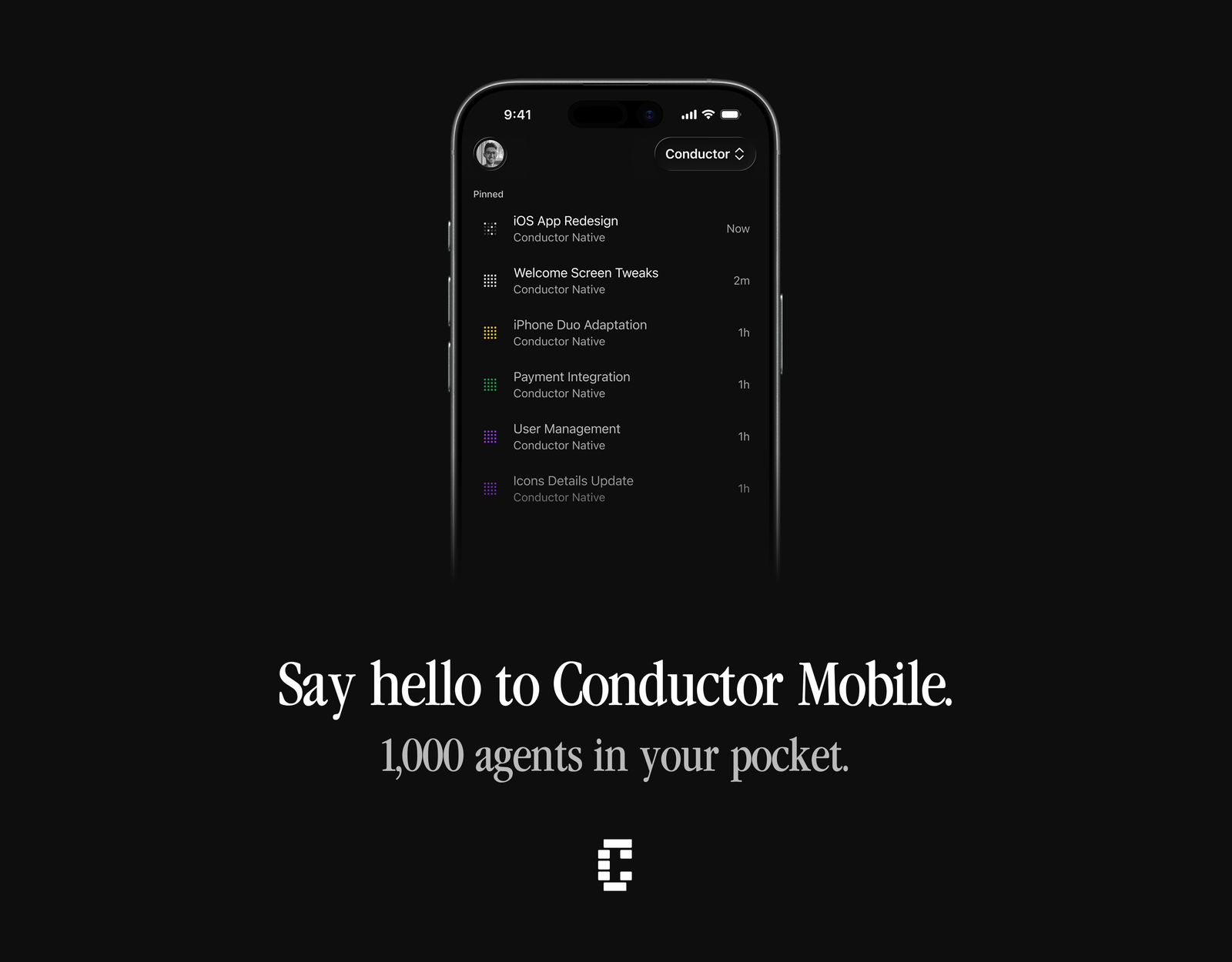
Multiplayer comes in the same bundle: share a workspace link with ⌘⇧C, see who is active, and prompt the same agents together with up to five Pro users. The iOS app, released with 0.90.0 on October 2, 2026, lets you chat with agents and merge PRs from your phone. It needs iOS 26 or later and works with cloud workspaces, so on the free plan it has nothing to talk to. There is also a beta HTTP API for creating workspaces and sending prompts from your own scripts, with the warning that "request and response shapes may change".
Three limits matter before you pay. Cloud workspaces support GitHub only; GitLab and Bitbucket repositories stay local. Pro includes "a bunch of cloud workspace hours", and the pricing page publishes no number for that bunch, while its FAQ says usage-based compute pricing is planned "in the future". And a self-hosted cloud is "not yet", available only as an Enterprise conversation.
Pricing
Checked on conductor.build/pricing in October 2026:
| Plan | Price | What it adds |
|---|---|---|
| Free | $0 | Parallel agents in local workspaces on your Mac, bring your own subscriptions and keys |
| Pro | $50/month | Conductor Cloud with an unstated allowance of workspace hours, multiplayer with up to 5 Pro users, the API, the iOS app |
| Teams | $60/user/month | Collaboration for teams of any size, admin portal, centralized billing |
| Enterprise | Custom | DPA, purchase-order billing, SAML SSO, SCIM, SLA, custom security and privacy settings |
None of these prices includes a model. A Pro user still pays Anthropic, OpenAI or Cursor for the agents themselves, so Pro is $50 a month on top of the Claude or ChatGPT plan you already have. Free plus an existing subscription costs nothing extra, and for one developer at one Mac it delivers the whole core idea.
Security and privacy
Locally, there is no sandbox. The FAQ says agents "run with the same permissions as your user account" and "directly on your system without sandboxing", which means they can reach your SSH keys, your browser profile and every other repository on the machine. The worktree docs put it plainly: "Workspace isolation is development isolation, not a security boundary." Conductor's own advice for anyone uneasy is a separate machine or a VM. Same exposure as Claude Code in a terminal, times however many agents you start.
Cloud flips the trade. Agents run in isolated microVMs, but "Conductor stores session inputs and outputs on its servers", whereas local chats go straight to your model provider and stay on your Mac. In both modes the privacy notice (updated June 12, 2026) says customer data is not used to train Conductor's or its providers' models, and the company holds a SOC 2 Type II report, available on request. Analytics go to PostHog, IP address included. Teams that need the stricter Enterprise data-privacy mode lose custom MCP servers, and that mode cannot be used in the cloud at all.
Rough edges
It is macOS only, with a waitlist for Windows and Linux and no date. Setup expects the GitHub CLI and one GitHub login, and an open request on the public tracker (#33) asks for multiple GitHub accounts, one per repository. If your work and personal repos sit under different accounts, that hurts today.
The troubleshooting page admits that ⌘Z does not work while typing a message, because "the library we use to do @-mentions breaks the undo history", and that removing and re-adding a repository "deletes all workspaces and chats for that repository". Release 0.90.0 fixed a memory leak that grew "with every agent turn until restart", Claude chats stuck on "Waiting for task", and Cursor follow-ups that took minutes to start. Still open on the small public tracker: a window that renders black for 8-13 seconds on every activation in 0.83.0.
Verdict
Conductor turns "several agents at once" from a tmux habit into something you can actually review, and its best parts cost nothing. If you work on a Mac, already pay for Claude or ChatGPT,, install the free app. Worktrees, diff review and checkpoints are the product, and none of them is behind the paywall.
Pay $50 a month for Pro only when agents need to keep running after the laptop closes, or when teammates need to prompt the same workspace - and only if your code lives on GitHub. Ask for the cloud-hour allowance in writing first, since the pricing page will not give you a number.
Skip it if you are on Windows or Linux, or if you cannot accept agents running with your full user permissions and have no VM to put them in. Skip Pro, too, if you only want one agent working in the background: Claude Code's own cloud sessions, OpenAI's Codex cloud and Cursor's background agents do that inside a subscription you already pay for, without a $50 layer on top.
Ready to try Conductor?
Visit the official website to see the latest plans, pricing, and special offers.
Get Started - Conductor* Affiliate link - we may earn a commission at no extra cost to you.