ElevenLabs Review: The AI Voice Platform for TTS, Cloning and Dubbing
ElevenLabs review: the AI voice platform for text-to-speech, voice cloning, multilingual dubbing, conversational AI and a developer API — features, pricing and limits.
Expert Review

What is ElevenLabs?
ElevenLabs (elevenlabs.io) is an AI audio research company and platform built around one thing: generating speech that actually sounds human. It converts written text into natural, expressive voices, clones existing voices from a short sample, and dubs video and audio into more than 30 languages while preserving the speaker's tone. Its multilingual models are widely regarded as some of the most realistic text-to-speech available.
The platform serves a broad audience — YouTubers, podcasters, and audiobook narrators on one end, and product teams, game studios, and developers building voice into their apps on the other. You can work entirely in the browser through a simple interface, or plug the same models into your own software via a well-documented API. That range, from no-code creator tool to production-grade voice infrastructure, is what makes ElevenLabs stand out.
Benefits of Using ElevenLabs
ElevenLabs' appeal is delivering studio-quality voice without a studio, a voice actor, or an engineering team:
- Lifelike quality: The Multilingual and Flash models produce speech with natural intonation, pacing, and emotion that is hard to distinguish from a real narrator.
- Speed and cost: Generate hours of finished voiceover in minutes, avoiding recording sessions and the cost of hiring talent for every revision.
- Massive language reach: Text-to-speech and dubbing span 30+ languages, letting a single piece of content reach a global audience quickly.
- Voice consistency: A cloned or chosen voice stays identical across every project, which matters for brands, series, and long-form audiobooks.
- Developer-ready: A low-latency API and SDKs mean the same voices power apps, agents, and automated pipelines, not just one-off exports.
- One platform, many jobs: TTS, cloning, dubbing, sound effects, a shared voice library, and conversational agents live under a single account.

AI Features of ElevenLabs
-
Text-to-Speech
The core product turns any text into natural speech using models such as Multilingual v2 (highest quality) and the low-latency Flash models built for real-time use. You control stability, similarity, and style, and can add pauses and emphasis for a polished, human read.
-
Voice Cloning (Instant and Professional)
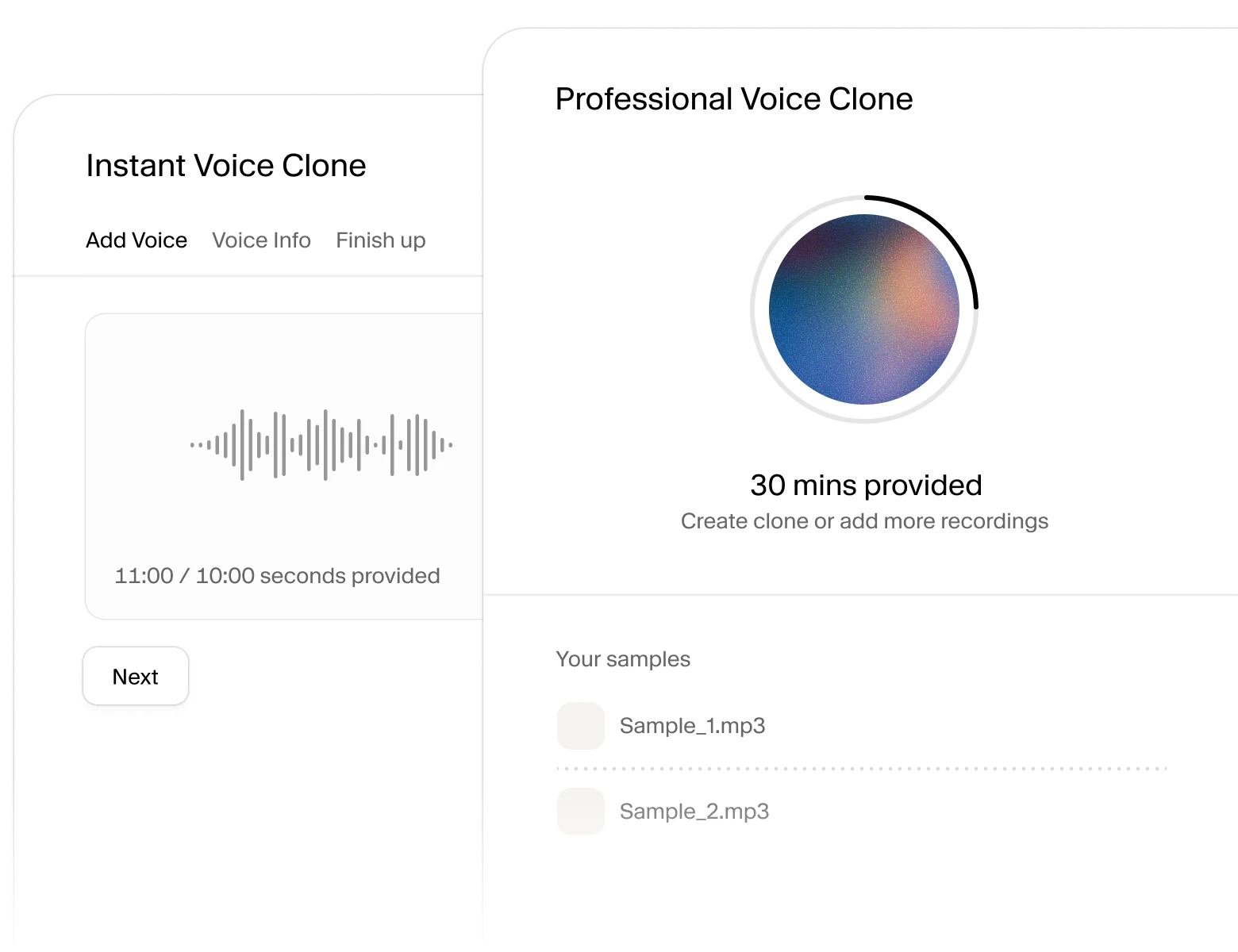
Instant Voice Cloning recreates a voice from just a minute or two of audio, ideal for fast prototyping. Professional Voice Cloning (PVC) trains a dedicated, higher-fidelity model on longer samples for a near-perfect digital replica — the option serious narrators and brands use for consistent, production-quality output.
-
AI Dubbing and Multilingual Audio
The Dubbing studio translates and re-voices video or audio into 30+ languages while keeping the original speaker's tone and delivery. It handles transcription, translation, and voice generation in one flow, and a manual editing mode lets you fine-tune timing and script for professional results.

-
Speech-to-Speech
Speech-to-Speech transforms one recorded performance into a different target voice while preserving the original emotion, pacing, and inflection. It is a powerful tool for actors, game developers, and creators who want to keep a human performance but change the voice delivering it.

-
Voice Library and Voice Design
The Voice Library offers thousands of community and premade voices to browse and use instantly, while Voice Design generates a brand-new, original voice from a text prompt describing age, accent, and character — so you are never limited to a fixed roster.
-
Studio, Projects and Sound Effects
Studio (formerly Projects) is the long-form workspace for narrating whole audiobooks, articles, and scripts with per-paragraph voice control and chapter management. A Sound Effects generator produces custom SFX from text prompts, rounding out a full audio-production toolkit.

-
Conversational AI Agents and API
ElevenLabs Agents let you build real-time voice agents — support bots, receptionists, characters — that combine low-latency TTS, speech recognition, and an LLM. For developers, the API and SDKs expose every capability, so the same voices power your own apps, IVR systems, and automated workflows at scale.


Pricing of ElevenLabs
ElevenLabs uses a credit model where credits are consumed based on characters generated and the model used (roughly 1 credit per character on the highest-quality models, less on Flash/Turbo). Plans are billed monthly, with annual billing working out to about two months free:
- Free: $0/month — 10,000 credits (~10 minutes of TTS), access to TTS, speech-to-text, sound effects, and Voice Design, but non-commercial only with attribution required.
- Starter: $5/month — 30,000 credits, a commercial license, instant voice cloning, and access to Studio and Dubbing.
- Creator: $22/month (often $11 for the first month) — 121,000 credits, Professional Voice Cloning, and 192 kbps higher-quality audio. The most popular tier for creators.
- Pro: $99/month — 600,000 credits and 44.1 kHz PCM audio output via the API for professional pipelines.
- Scale: $299/month — 1,800,000 credits plus multiple workspace seats for small teams.
- Business: $990/month — 6,000,000 credits, 10 seats, and low-latency TTS for high-volume production.
- Enterprise: Custom pricing — custom terms, SSO, HIPAA/BAA options, SLAs, and priority support.
A helpful detail: unused credits roll over for up to two months (capped at roughly 3x your monthly quota) as long as you keep an active paid subscription — more forgiving than platforms where credits simply expire each cycle.

Full, up-to-date details at: https://elevenlabs.io/pricing
Real-World Use Case Analysis
-
Content Creation
YouTube and video: Creators generate consistent narration for explainers, tutorials, and faceless channels without recording, then revise a script and re-render in seconds.
Audiobooks and articles: Studio narrates long-form text with stable, chapter-consistent voices, making self-published audiobooks and audio versions of blogs practical for solo authors.
Podcasts: AI voices work well for intros, ads, and segments, and dubbing extends an existing show into new-language markets.
-
Business and Product Applications
Conversational agents: Companies deploy low-latency voice agents for customer support, receptionists, and IVR systems that sound natural rather than robotic.
Localization at scale: Marketing teams dub product videos and training material into 30+ languages, reaching global audiences without re-shooting or re-recording.
In-app voice: Developers use the API to add narration, accessibility read-aloud, and character voices directly inside their software and games.
-
Creative and Accessibility Projects
Game and character voices: Voice Design and Speech-to-Speech give indie studios a deep roster of distinct characters without a full voice-acting budget.
Accessibility: Natural TTS makes written content available to people who prefer or need audio, from news apps to learning platforms.
Reality check: For emotionally demanding, high-stakes performances, a skilled human actor still has an edge, and cloning real voices carries clear ethical and consent responsibilities.
Pros and Cons of ElevenLabs
-
Advantages of Using ElevenLabs
ElevenLabs offers significant benefits including:
- Industry-leading, natural voice quality across 30+ languages.
- A complete toolkit — TTS, cloning, dubbing, speech-to-speech, sound effects, and agents — in one place.
- A robust, low-latency API and SDKs that scale from a hobby project to production.
- Forgiving credit rollover and a genuinely usable free tier for testing.
-
Disadvantages of Using ElevenLabs
Some potential drawbacks include:
- Credit-based pricing can add up quickly for heavy, long-form use, and the free tier has no commercial rights.
- The best quality (Professional Voice Cloning, 192 kbps and above) is gated behind higher tiers.
- Realistic voice cloning raises ethical and consent concerns that users must handle responsibly.
Final Thoughts on ElevenLabs
ElevenLabs sets the bar for AI voice. Whether you are a creator who wants clean narration in minutes, a business localizing content into dozens of languages, or a developer wiring lifelike speech into an app or agent, it delivers quality and breadth that few competitors match. Budget for the credit model on heavy projects, respect the consent rules around cloning, and start on the free tier to hear it for yourself — for most voice and audio needs, ElevenLabs is the platform to try first.
Related comparison: See how ElevenLabs compares in Murf vs Play.ht vs ElevenLabs: Best AI Voice Generator? — or browse all comparisons & best-of guides.