Gong Review: Seats, a Platform Fee, AI Credits and a 30-Day Exit
Gong review: what the per-seat licence, platform fee and AI credits cost (Vendr median $55,346/year), the auto-renewal and re-pricing terms, the 30-day exit, and who should buy it.
Expert Review

What you actually sign: seats, a platform fee and credits
Gong does not say what it costs. Its pricing page, checked on 14 November 2026, has no list price, no named tiers and no trial button. There is a form that asks for your team size in four bands (1-50, 51-1,000, 1,001-9,999, 10,000+) and four sentences of policy: licences are "priced per user", there is "a platform fee based on the number of users supported", integrating your existing stack is free, and the rest "depends on a few factors specific to your team."
The help docs fill in the rest. You buy a per-seat core licence for Gong Foundation, the platform fee sits on top and grows with seat count, and then come the paid apps: Gong Engage for sequencing, Gong Forecast or Forecast Essentials, Enable Essentials, and Data Cloud. Customers who last renewed before March 2025 may still be on older bundles, so a peer company's quote can describe a package you can no longer buy.
The fourth layer: Gong Credits
This year Gong added usage-based pricing on top of the seats. Its credits doc says "many Gong AI capabilities are included as part of your team's seat allocation", and credits "allow companies to expand AI usage beyond seat-based allocations." Each company gets a shared pool sized by seat type and seat count. Processing new data consumes credits. Viewing data that has already been processed does not.
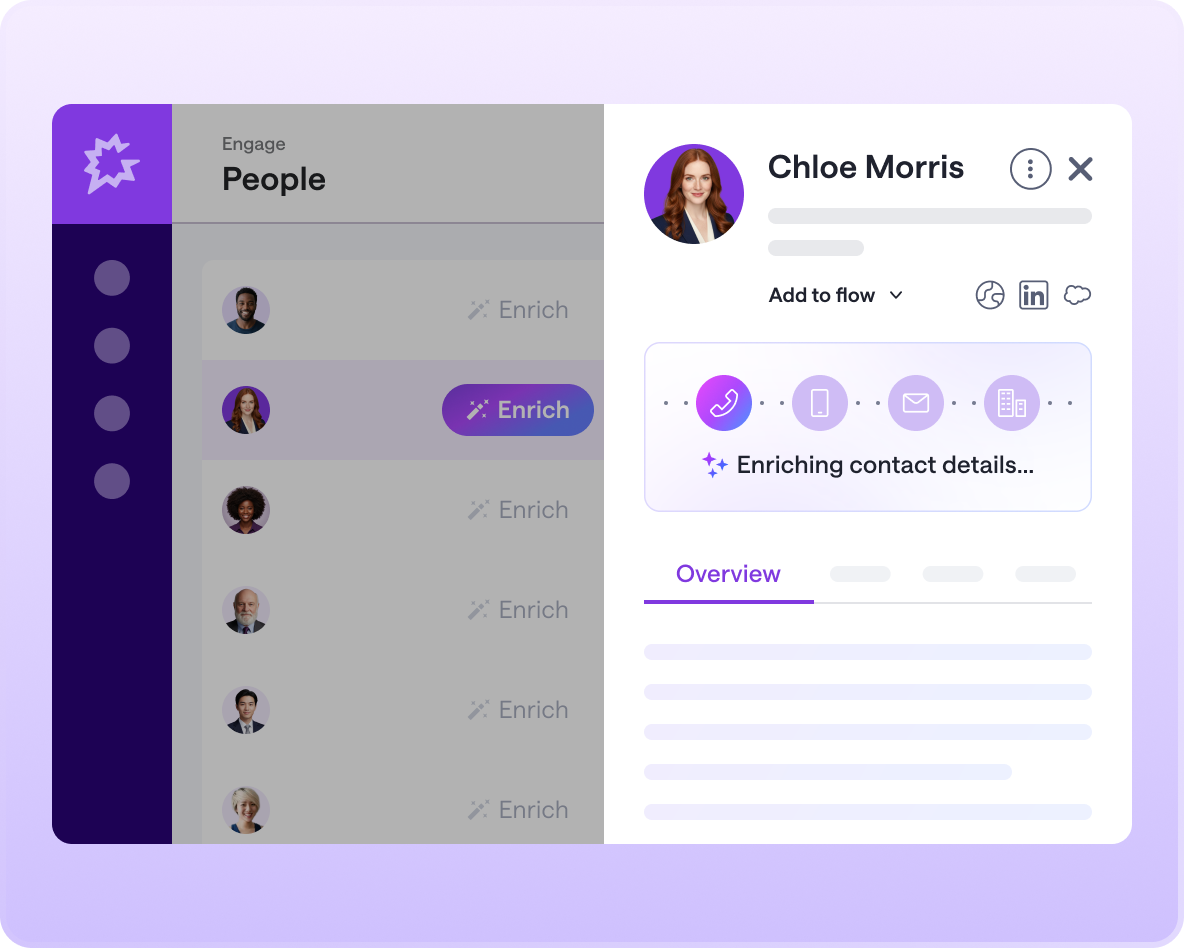
The features that draw from the pool are the ones Gong has been launching hardest: question-based AI Trackers, the AI Ask Anything and AI Briefer APIs, the MCP server, Deep mode in Gong Assistant, and Gong Enrich. The doc does not say what one Enrich lookup costs or what happens when the pool runs dry. Get both in writing.
Two smaller seat rules matter for the budget. Team members without a paid seat become free "Collaborators" with limited access, and they cannot use AI Ask Anything. Seats added mid-term are prorated to the end of the subscription.
What buyers report paying
Since Gong publishes nothing, the useful numbers come from Vendr, which aggregates real purchases. Its Gong buyer guide (last updated March 2026, "based on data from 1,160 purchases") puts the median contract at $55,346 a year, with a range from $11,593 to $205,200. Treat these as Vendr's figures, not Gong's.
| Vendr data point | Reported figure |
|---|---|
| Per seat, per year | $1,200-$2,400 |
| "Standard" deals, 25-75 seats, 1-year terms | $1,400-$2,000 per seat |
| "Advanced" deals, 50-150 seats | $1,800-$2,600 per seat |
| Enterprise, 100+ seats | $1,200-$1,800 per seat |
| 50 seats, total | $70,000-$110,000 a year |
| 200 seats, total | $240,000-$360,000 a year |
| Minimum seats | Typically 10-15 |
| Multi-year discount | 15-30% lower annual price on 2- or 3-year terms |
That is roughly $100-$200 per seat a month before add-ons. The platform fee is vaguer: Avoma and Oliv, which both sell competing tools, put it at $5,000-$50,000 a year, while Vendr says only that "some contracts include a base platform or onboarding fee." On a ten-person team, that fee is what makes Gong so expensive per rep.
What Gong does well
The core is still call recording. A bot ("a virtual participant") joins meetings on Zoom, Google Meet, Microsoft Teams, Webex, GoToMeeting, Amazon Chime or RingCentral, and the transcript is tied back to the deal through dedicated Salesforce and HubSpot integrations. Gong lists 72 languages and detects most of them automatically. The catch is that several features only work in English: email labels, red-flag alerts, Gong's recommended to-dos and example-based smart trackers. A team selling in German gets transcripts and search, but not the alerting.
On top of that sit the AI agents. AI Briefer, part of Foundation, writes structured summaries that combine calls, emails, web information and CRM data. AI Ask Anything answers questions about a call, account, deal or contact. The MCP server exposes the same data to Microsoft Copilot, ChatGPT and Claude through tools named ask_account, ask_deal and generate_brief. Every call to it spends credits.
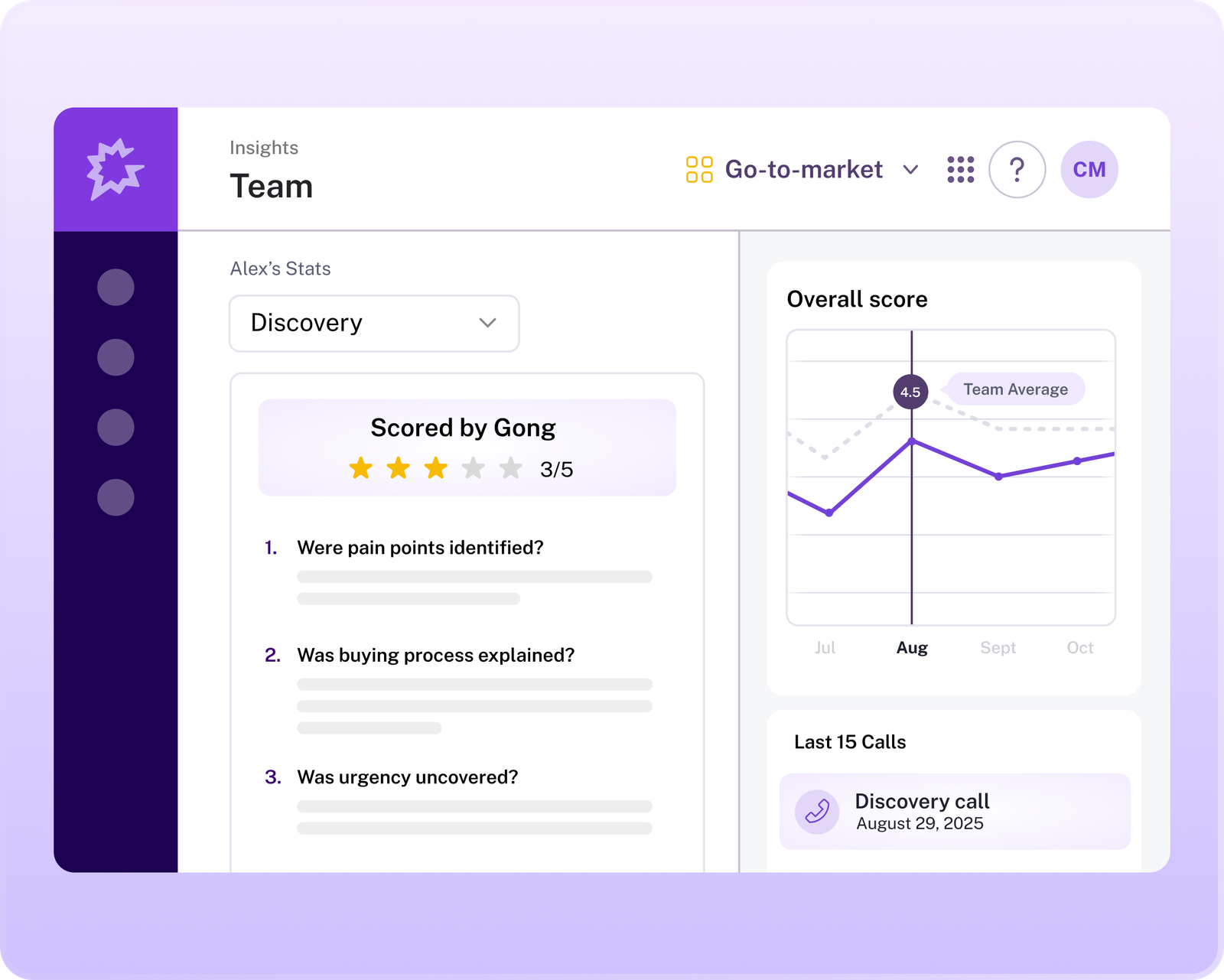
Gong shipped three "Missions" this year. Andromeda (25 February 2026) launched Gong Enable, with AI Call Reviewer, AI Trainer and Initiative Tracking. Big Dipper (24 June) added Custom Agents that RevOps can build without engineering help. Callisto (30 September) brought Gong Enrich, for third-party account and contact data, and Deep mode. Both Callisto features are metered.
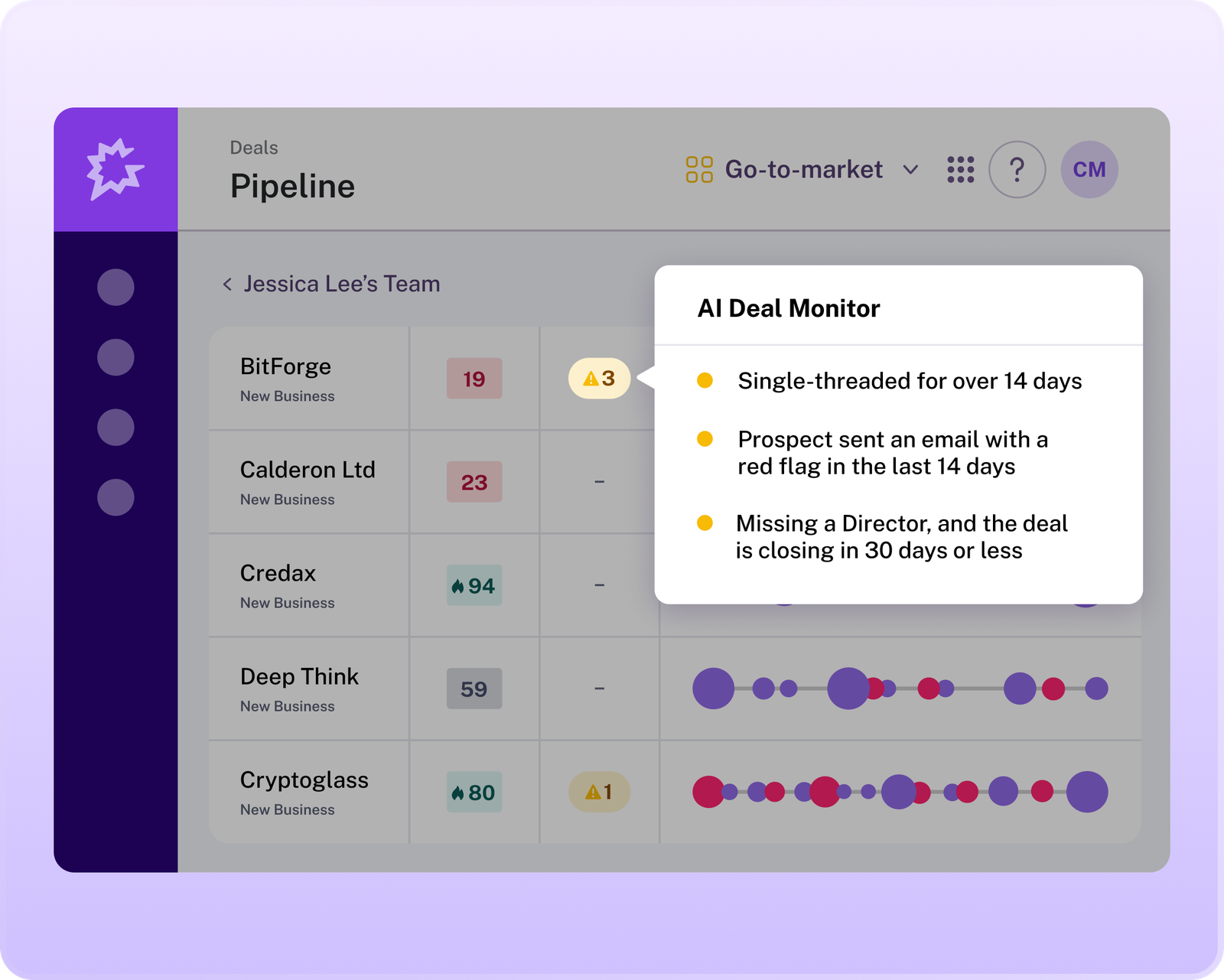
Forecast is where the conversation data earns its keep. The AI Deal Monitor flags single-threaded deals and worrying emails before a pipeline review, rather than after the quarter closes. The vendor is not going anywhere: ARR passed $500 million in May 2026, growing over 55% a year, across more than 5,000 customers, and Gartner named it one of four Leaders among 13 vendors in October. Since July an Azure commitment (MACC) can pay for it through Microsoft Marketplace.
The contract, and how you get out
This is the part the sales deck skips. Gong's terms (last updated June 2026) renew a subscription automatically for another year unless either side gives written notice at least 60 days before the term ends. Promotional or one-time pricing renews at "Gong's applicable list price." And any renewal where seat volume or term length goes down "will result in re-pricing at renewal without regard to the prior term's per-unit pricing." Cutting 100 seats to 60 does not get you 60 at last year's rate. It reopens the price.
That clause is why the 15-30% multi-year discount deserves a hard look. One buyer quoted by The CRO Report put it bluntly: "It was a big mistake on our part to commit to a two year term."
Leaving is harder than it should be. Gong keeps call data for three years or as long as you are a customer, whichever is shorter. Once you leave, your data "will be irreversibly deleted in 30 days." The in-app export sends a CSV of call metadata by email, not recordings. Bulk actions select up to 10 calls per page, media download needs an admin permission, and the help docs describe no bulk export of recordings or transcripts. A complete exit runs through the public API or the paid Data Cloud add-on, which syncs the full schema into Snowflake, BigQuery or Databricks. Start that extraction before you send the non-renewal notice, not in the 30 days after.
Recording consent, data and AI training
Gong offers three consent methods: a Gong-hosted consent page, an audio prompt when people join, and an email sent 10 minutes before the call. Consent profiles decide whether a participant can opt out and stay on the call, or must agree to be recorded to stay. For phone calls, reps have to tell customers out loud. We found no recording lawsuit naming Gong, but other recording tools such as Otter.ai have been sued, so these settings deserve a lawyer's half hour.
On AI training, Gong's trust centre says customer data "is not used to train or improve any Generative AI LLM models from 3rd-party vendors such as Google, Microsoft and AWS Bedrock," and that Gong uses LLMs from those same subprocessors to process customer data. It does not say whether your calls improve Gong's own models, and the terms have no clause on it. Ask.
Certifications run from ISO 27001 to ISO 42001, with bring-your-own-key encryption and US or EU hosting for new customers. Healthcare buyers should read the fine print. The SOC 2 Type II report includes a mapping to HIPAA security requirements, which is not a HIPAA certification, and PHI redaction works only on English-language calls.
What users complain about
Gong's pricing page shows a 4.8 rating on G2, and the complaints are consistent. Price comes first; a Capterra reviewer calls it "a bit expensive compared to similar products." Next is the learning curve, which G2 tracks as a con in 58 reviews. One G2 reviewer calls the app "a bit cumbersome to navigate," with "some features weirdly fragmented across different menus." Transcription gets mixed reviews: one G2 reviewer says it "can occasionally struggle with accents, overlapping conversations, or industry-specific terminology," while a Capterra reviewer finds it "much better/more accurate" than the alternatives.
Verdict: who should buy Gong, and who should skip it
Buy Gong if you run 25 or more quota-carrying reps on Salesforce or HubSpot, your managers actually coach from call reviews, and you want the forecast built on what buyers said rather than what reps typed. At Vendr's $1,400-$2,000 per seat it is expensive, and still the most complete conversation-to-forecast product we have reviewed.
Skip it if you have fewer than about 15 sellers. Between the seat minimum and the platform fee, you are paying enterprise prices for recording and summaries. Avoma (aggregators put it around $19 per seat a month billed annually) or Fireflies, which has a free plan, covers that for a fraction of the cost. If what you need most is sequencing, start with Outreach or Salesloft, now merged with Clari. If you already pay for ZoomInfo, ask whether Chorus is in your bundle before you buy a second recorder.
Whatever you choose, negotiate three things up front: the credit allowance and overage price, the right to cut seats at renewal without re-pricing, and a written export plan for the 30 days after you leave.
Ready to try Gong?
Visit the official website to see the latest plans, pricing, and special offers.
Get Started - Gong* Affiliate link - we may earn a commission at no extra cost to you.