People.ai (Now Backstory) Review: Salesforce Activity Capture With an AI Answer Layer, Priced by Quote
People.ai, now Backstory, reviewed: Salesforce-only activity capture, 15-day email retention, MCP limits and no list price (Vendr median $24,480/yr).
Expert Review

People.ai is called Backstory now
Search for People.ai and you end up on backstory.ai. Every old URL, including the pricing page and the newsroom, now 301-redirects there, and the about page says it plainly: "We used to be People.ai. Same product, same team." The footer still reads People.ai, Inc. d/b/a Backstory.
The rename, announced on April 21, 2026, came at the end of a busy seven months. On October 30, 2025, founder Oleg Rogynskyy handed the CEO job to Jason Ambrose, who had been SVP of marketing and strategy, and stayed on the board. In February 2026 the company shipped an MCP server so Claude, ChatGPT and Microsoft Copilot could query its deal data. Then came the new name and a new label, "Revenue Answers Platform", and in October a CTO from HubSpot. On October 19, 2026, Gartner named it a Challenger in its Magic Quadrant for Revenue Action Orchestration. Gong and Outreach, by their own announcements, were named Leaders.
So this review answers a narrow question. Is Backstory still the automatic Salesforce activity capture People.ai always sold, now with a chatbot on top, and is it worth a contract whose price you can't see? Everything below was checked in November 2026 against backstory.ai, its help center and AWS Marketplace. There is no trial, so the limits quoted come from the vendor's own documentation, not a hands-on test.
What it actually does: capture first, answers second
The core is the same as in the People.ai days. Backstory connects to Google Workspace or Microsoft 365 (Exchange on-premises too) and reads every rep's email and calendar. It pulls call transcripts from Zoom, Teams, Google Meet, Webex or Gong, and it "matches each email and meeting to the right person, account and deal, partners included." The result is written back to Salesforce as activity records. Nobody logs anything by hand. In a figure Backstory publishes, Red Hat says manual data entry fell 75-85%.
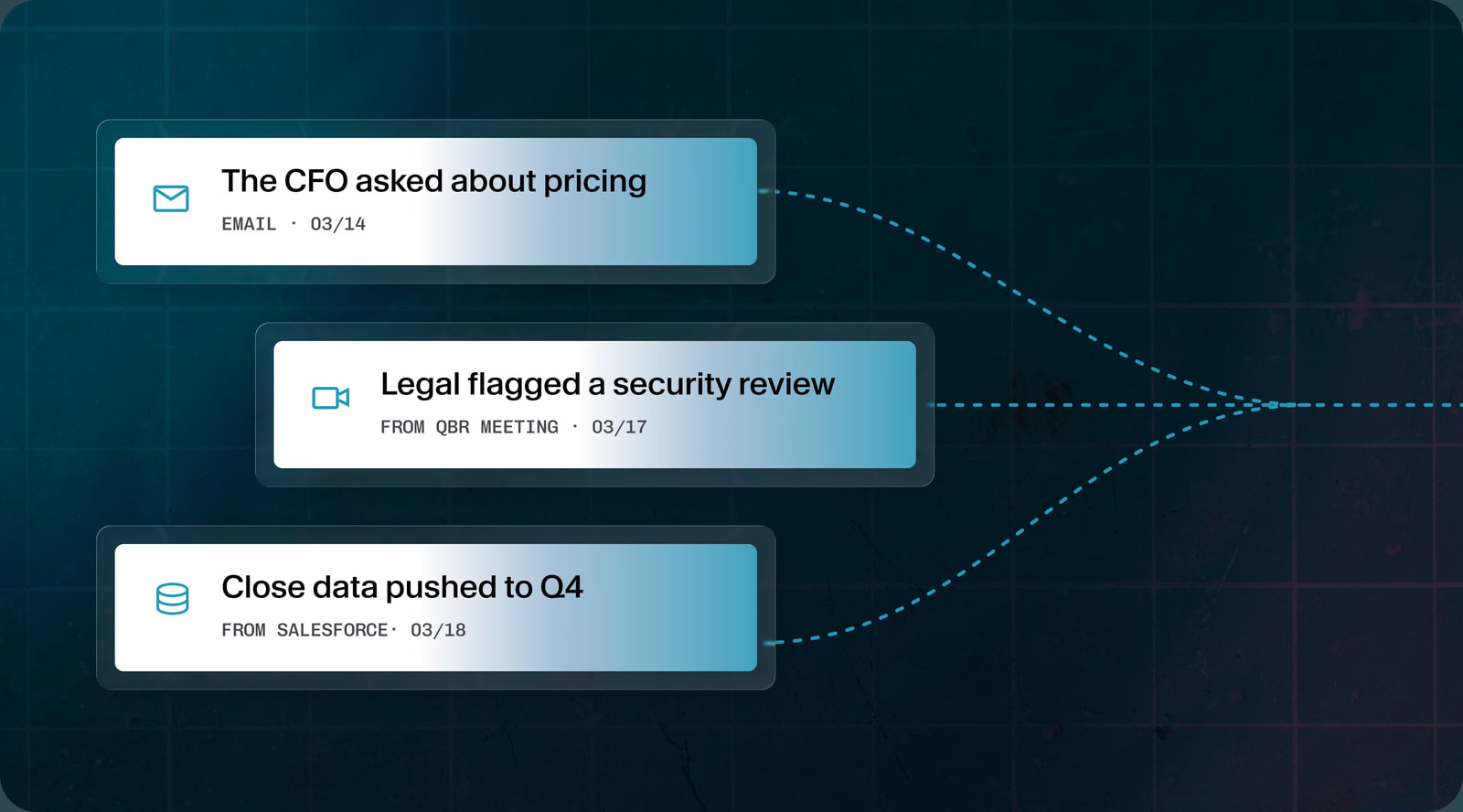
The modules sit on top of that captured history. There are Account 360 and Opportunity 360 views, engagement dashboards and scoring, and Forecasting, which launched in October 2025 and works for Salesforce customers only. ClosePlan covers scorecards, playbooks and relationship maps. Backstory Sheets, formerly PeopleGlass, is a spreadsheet-style editor for Salesforce records. The Backstory Assistant answers questions from the same data. Even Nektar, a competitor, calls the rebrand a conversational layer over the existing capture engine.
Rollout is a services project. The vendor promises "answers on your own accounts in four weeks". Week two is spent tuning how activity maps to accounts and deals.
This is a Salesforce product. Salesforce is the only native CRM, installed as a managed package. Oracle and Microsoft "connect via API", and HubSpot doesn't appear on the integrations page. If you run HubSpot, you can stop reading here.
What the help center says capture leaves out
The marketing pages skip this part, and it decides whether the data is complete enough to forecast on. Email and calendar body content "is deleted within 15 days", and only metadata is kept for the contract term. Emails to or from personal domains such as gmail.com and outlook.com aren't captured, so a small prospect's founder who writes from Gmail is invisible. Internal-only threads, attachments and messages flagged Personal, Private or Confidential are skipped. Sensitive topics like HR, legal, medical, banking, job offers, equity and taxes are redacted automatically. Machine learning filters English and pattern matching covers twelve more languages. Every other language is redacted outright.
Timing and coverage have catches too. Activities show up in Backstory within about two hours but reach Salesforce "within one business day". By default, only users with a CRM license have their activity synced. SDRs or solution engineers without Salesforce seats need support to switch on Unlicensed User Activity Sync. Calls only count if they were logged in Salesforce, and calls and texts on personal phones aren't captured. Whitelisting a contact the filter dropped by mistake takes a support ticket, not an admin toggle.
G2 reviewers report the same problems. Account mapping gets less accurate as the user base grows, and the vendor's replies put that down to how People.ai and the CRM are configured. In-person meetings vanish unless they were on the calendar, and some activity is simply missed. Plan on an ops person watching the mapping for the first quarter.
The AI layer and the MCP server
The most genuinely new piece is the MCP server, which lets an AI assistant your company already pays for query Backstory directly. It supports Claude, ChatGPT, Microsoft Copilot, Gemini CLI and n8n, and it exposes 15 tools, such as Get Opportunity Status and Situation Search. Access goes through OAuth. The AI client sees only what that user can already see in Backstory, and signing in doesn't need a Salesforce license.
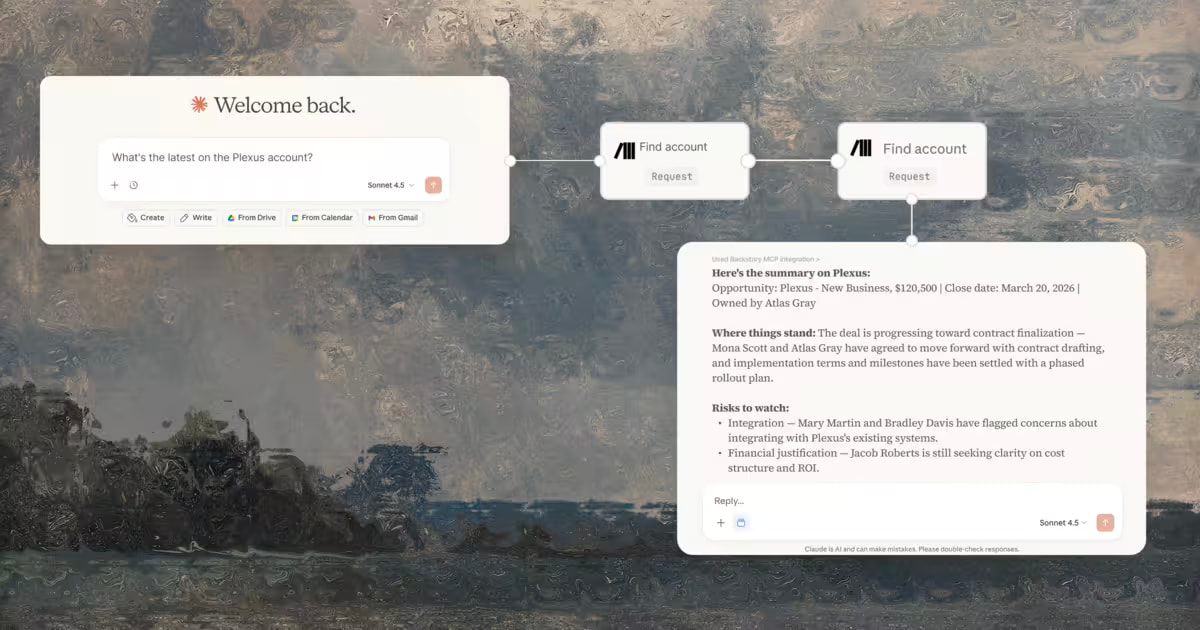
The limits are specific. Each account exposes 30 days of communications, not the two-year history. Fetch Records, added in the October 2026 release, returns at most 1,000 records. On the Claude side, the connector needs a Claude Pro, Team or Enterprise plan, and an organisation admin has to add it as a custom connector before anyone can see it. The help center also warns that most users re-authenticate every few weeks as tokens expire. That's enough for a VP who asks Claude which late-stage deals went quiet this month. It isn't enough for a quarter-over-quarter analysis, which still belongs in the Forecasting module or Sheets.
Pricing: no list price, and a six-figure marketplace listing
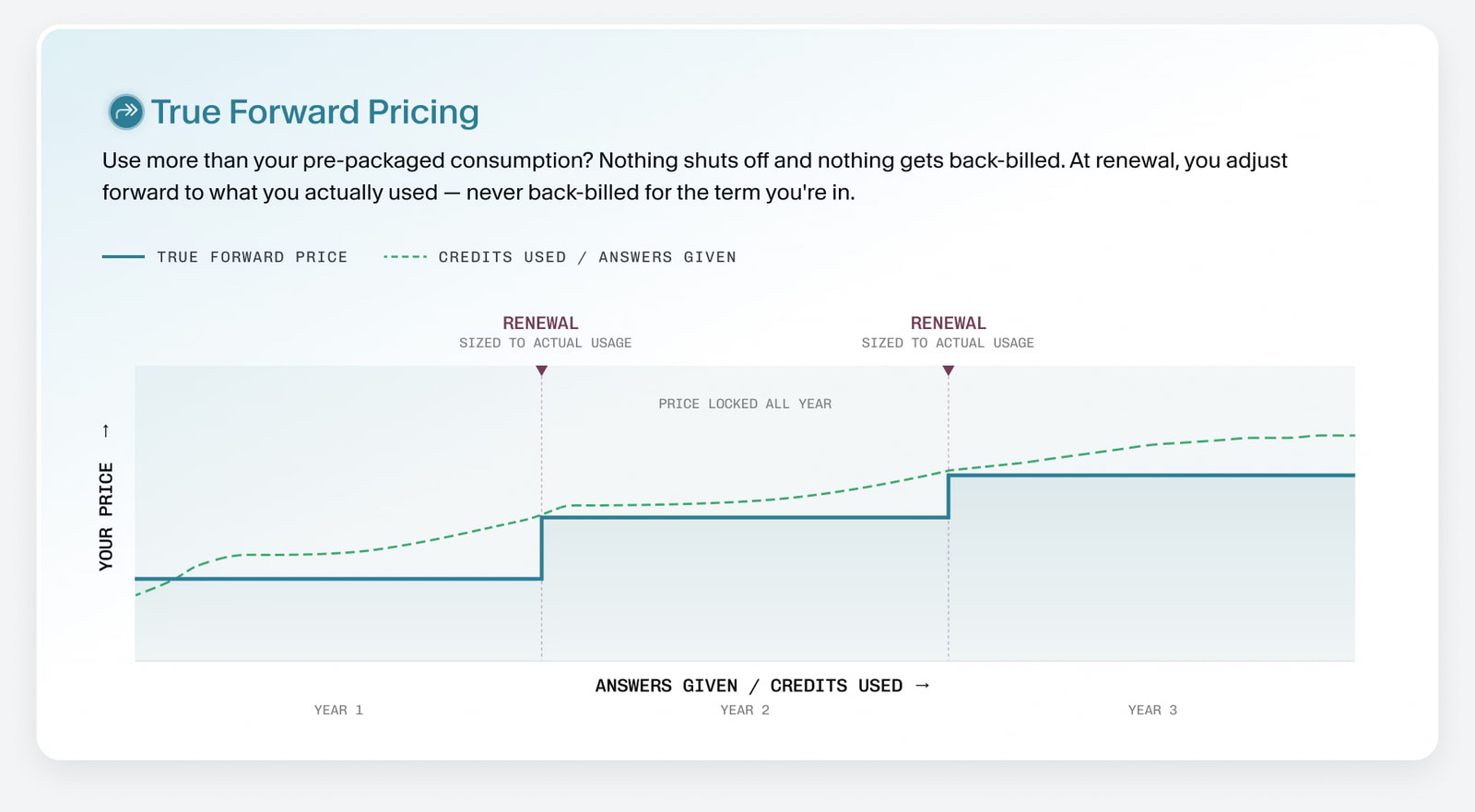
Backstory publishes a pricing model but no prices. As checked on backstory.ai/pricing in November 2026, you pay a platform fee for "people whose customer activity powers the platform". In practice, the reps whose inboxes get captured. Everyone else (managers, finance, deal desk, ops) can view and ask questions free, without a seat. There are no feature tiers, and "everyone gets the full product". Each connected person adds an allotment of AI usage to a pool the whole org draws from. Under what Backstory calls True Forward, going over the allotment shuts nothing off and triggers no back-billing. The contract simply adjusts to actual use at renewal. Friendlier than credits that throttle mid-quarter, but the bill grows at renewal.
Only two public figures show the scale. Both were checked in November 2026.
| Source | Figure | How to read it |
|---|---|---|
| backstory.ai/pricing | No figure; platform fee plus pooled consumption, viewers free | The model, not a price |
| AWS Marketplace | $100,000 per 12 months, private offer only; 24-month term "save up to 50%", 36-month "save up to 67%" | A placeholder for an enterprise contract |
| Vendr (48 purchases) | Median $24,480 a year; range $2,000 to $123,336; buyers save 15% on average | What buyers report actually paying |
Vendr's buyer data is broader and cheaper than the AWS figure, and for comparison it puts Clari's median at $76,000. The pricing page doesn't state a contract length, but the AWS discounts show sales will push you toward three years.
There is no self-serve signup and no free trial. Your company's administrator creates accounts after a contract is signed, so you'll see the product in a demo before you see it on your own data.
Security and data handling
For a tool that reads every rep's inbox, security will come up in the second sales call. Backstory lists SOC 2 Type 2, ISO 27001, GDPR and CCPA compliance and a 99.5% uptime SLA. Customer data is "never used to train AI models", PII is stripped before activity reaches model providers, and AI features can be switched off tenant-wide. Hosting is US-East, with US-West for disaster recovery. The trust page names no EU region, so a European buyer with data-residency rules should ask before the demo.
Backstory vs Gong, Clari, Salesloft and Outreach
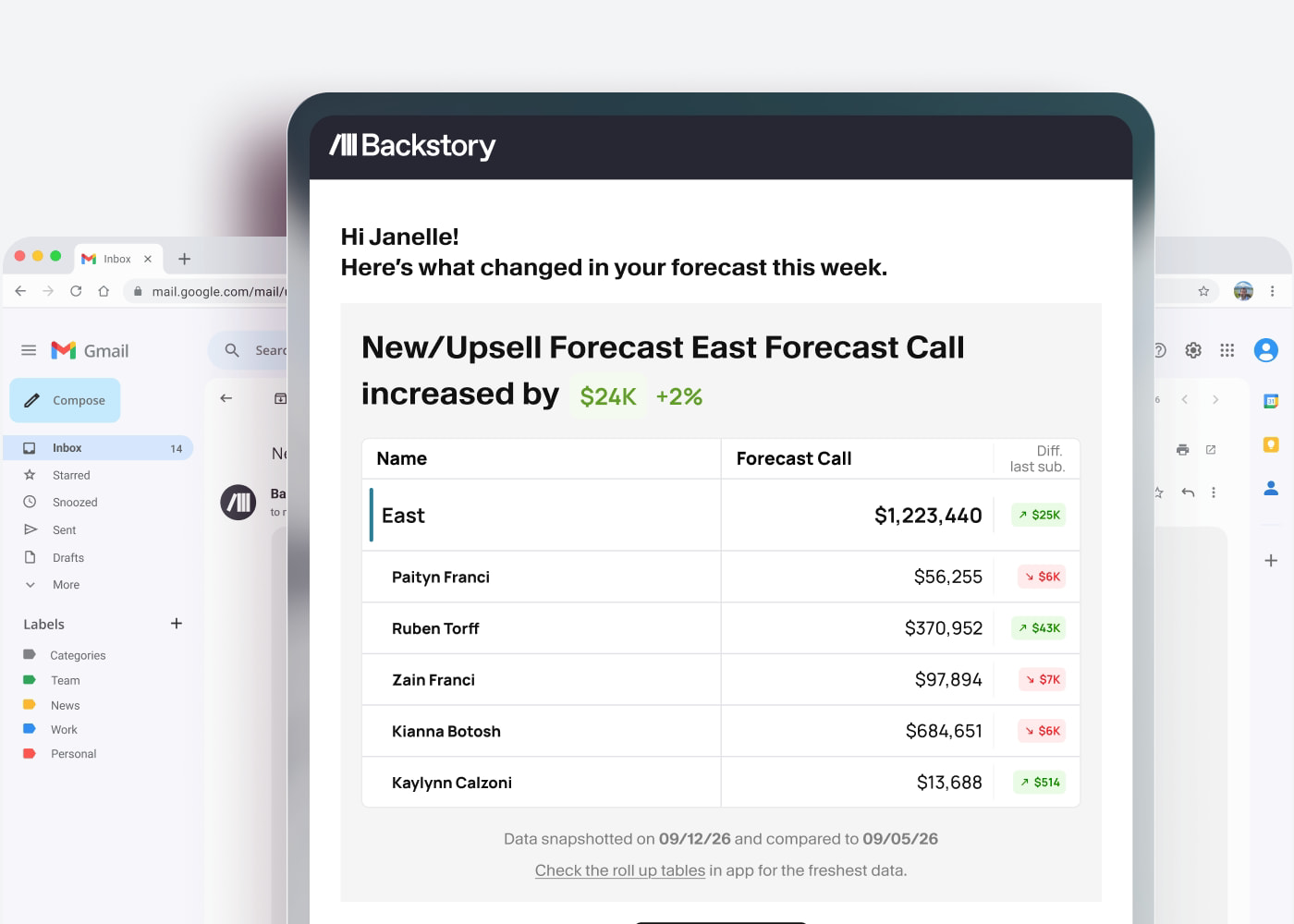
Backstory's edge is the capture itself: email and calendar matched to Salesforce accounts, contacts and opportunities. Gong starts from the call recording, and it's the stronger buy if conversation intelligence is what you need. Backstory can also ingest Gong transcripts. Clari is the forecasting specialist and now comes with a sales engagement tool attached (see our Salesloft review). By Vendr's numbers, its median contract is about three times Backstory's. Outreach is a sequencing platform first and only overlaps on forecasting. If all you want is emails and meetings logged in Salesforce, Einstein Activity Capture inside Salesforce covers basic logging. What you give up is Backstory's account and deal matching, the forecasting module and the answers layer.
Verdict
Buy Backstory if you run Salesforce, your forecast suffers because reps don't log activity, and you want managers and finance to question deals without buying each of them a seat. Free viewers and True Forward billing beat seat-plus-credit pricing.
Skip it if you're on HubSpot, which has no integration. Skip it too if much of your selling happens with prospects on Gmail addresses, on personal phones, or in languages outside the thirteen it filters. And skip it if you can't commit to a five-figure contract without a trial. Take conversation intelligence to Gong, forecasting depth to Clari and basic logging to Einstein Activity Capture. Backstory is a new name for a capable capture engine, not a new product. Judge it in the demo on how well it captures your own accounts.
Ready to try Backstory (formerly People.ai)?
Visit the official website to see the latest plans, pricing, and special offers.
Get Started - Backstory (formerly People.ai)* Affiliate link - we may earn a commission at no extra cost to you.