LowFruits Review: Keyword Research That Pays by the SERP
LowFruits review: how its weak-spot SERP analysis works, what credits really cost ($0.005-$0.0125 per SERP), what PAYG blocks, and who should pick KeySearch or Ahrefs instead.
Expert Review

The one idea LowFruits is built on
Most keyword tools hand you a difficulty score and ask you to trust it. LowFruits skips the model and goes to the result page. For each keyword idea you choose to analyze, it pulls Google's live top 10 and marks every "weak spot": a site with a Moz Domain Authority under 20, or a forum thread, already ranking on page one. If a DA 6 blog sits at position 5 for "golden retriever shedding in winter", a new site has a realistic shot at that query. That is the whole pitch, and it is a good one for anyone running small content sites.
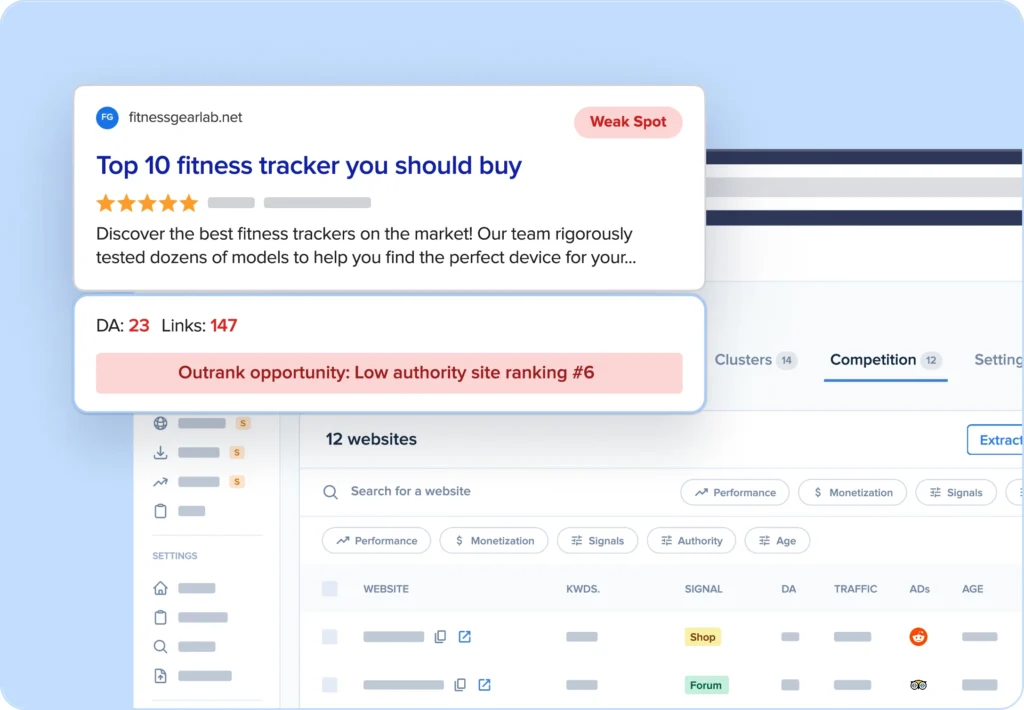
The DA 20 threshold is a default you can change in settings. On top of it sits a SERP Difficulty score with three levels (1 Easy, 2 Medium, 3 High), built from the number of low-authority sites in the top 10, how many forums rank and where, and the lowest DA on the page. It is cruder than a 0-100 scale, and that is deliberate. You are meant to read the weak spots themselves, not argue with a number.
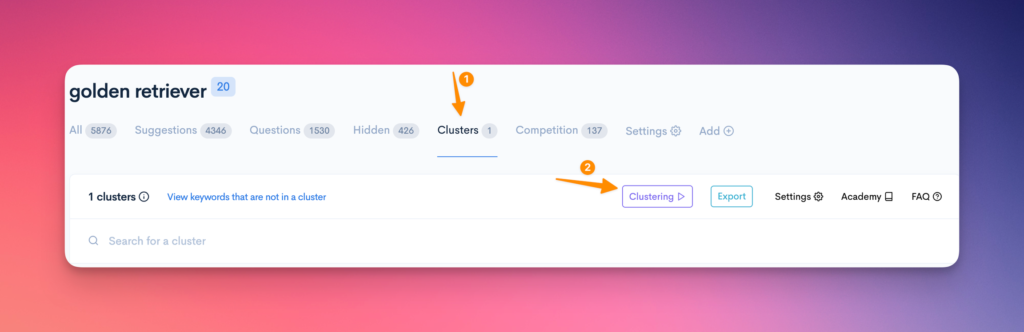
Ideas come from the Keyword Finder, which the docs call "KWFinder" (nothing to do with the Mangools product of the same name). It queries Google Autosuggest with over 250 modifiers, and wildcard seeds like "why is chocolate *" work. Results land in a report split into All, Suggestions, Questions, Hidden, Clusters and Competition tabs. Clustering offers two methods: semantic, and SERP-based, which groups keywords that share at least 40% of their ranking URLs.
Pricing, and where the credits go
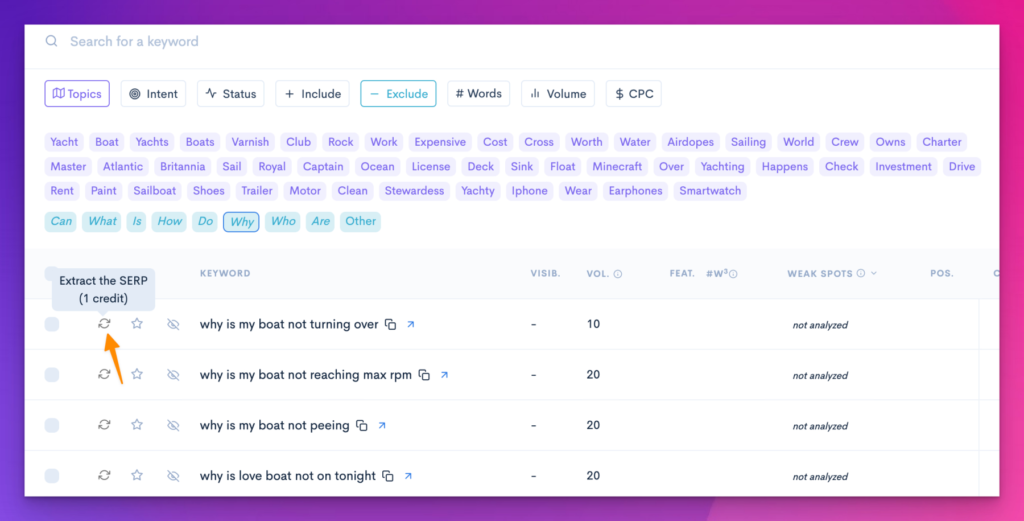
Everything that touches a live SERP costs one credit. Analyzing a keyword is one credit. An on-demand rank check is one credit. An allintitle lookup for KGR (still in beta) is one credit. SERP clustering is free to run, but only over SERPs you have already paid to extract. Finding ideas is the cheap part; checking them is where the money goes.
Prices below were checked on the pricing page in October 2026. The page was last modified in March 2025 and I found no dated price change since then. All figures are USD, before tax.
| Option | Price | Credits | Cost per SERP |
|---|---|---|---|
| PAYG pack | $25 one-off | 2,000 | $0.0125 |
| PAYG pack | $60 one-off | 5,000 | $0.012 |
| PAYG pack | $100 one-off | 10,000 | $0.01 |
| PAYG pack | $250 one-off | 50,000 | $0.005 |
| Standard | $29.90/month, or $20.75/month billed yearly ($249/year) | 3,000 a month | about $0.01 |
| Premium | $79.90/month, or $62.45/month billed yearly ($749.40/year) | 10,000 a month | about $0.008 |
The "$0.005 per keyword" figure LowFruits quotes is real, but only on the $250 pack. On the $25 starter pack a credit costs two and a half times as much.
Now the part the homepage leaves out. LowFruits' own docs say a typical wildcard search produces 100 to 300 ideas, and a broad seed like "fat loss" or "car" can produce 2,000 to 3,000. Their $10-$15 estimate for that broad seed assumes the cheapest pack. On the $25 pack, analyzing 3,000 ideas costs $37.50. On Standard, it is your entire month of credits, gone on a single seed. "Credits run out fast" is the most common reason users give for leaving, according to a September 2026 roundup on TheGuideX. The fix is discipline: filter the idea list by volume, intent and topic before you extract anything, and only spend credits on the subset you would actually write.
Expiry rules differ by type. Subscription credits do not roll over: whatever is left at the end of the month is lost. PAYG credits last one year from purchase. Several older third-party reviews say PAYG credits never expire, which is wrong. If you hold both kinds, subscription credits are spent first.
What pay-as-you-go leaves out
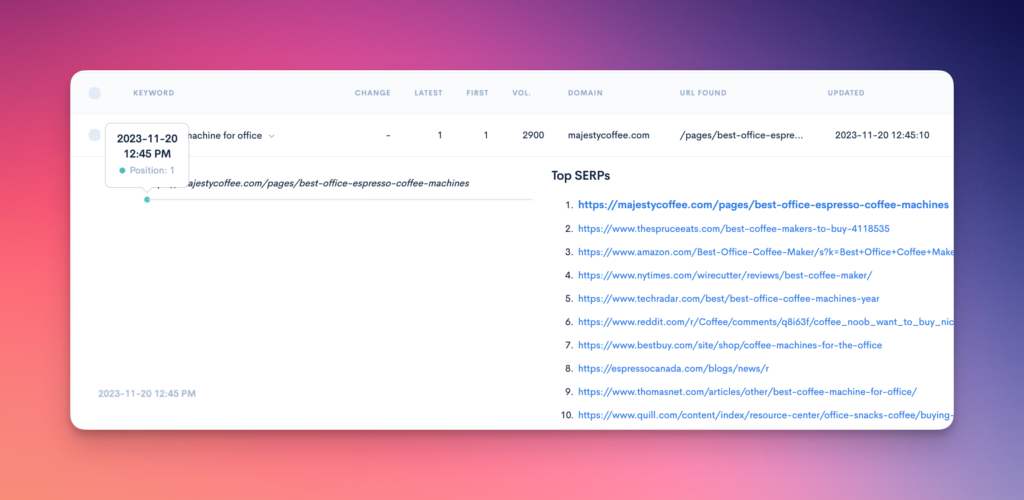
PAYG looks like the obvious choice for a hobby site. It is the weaker product. Free accounts and PAYG users get three free Keyword Finder searches every seven days, then pay a credit per extra search. Subscribers search without limit. A subscription also adds six features PAYG never gets: the Boosted Keyword Finder (over 1,000 modifiers instead of 250, which in LowFruits' own example took "why is chocolate *" from 169 ideas to 358), the rank tracker, Domain Explorer, competitor keyword extraction, sitemap extraction and free report downloads.
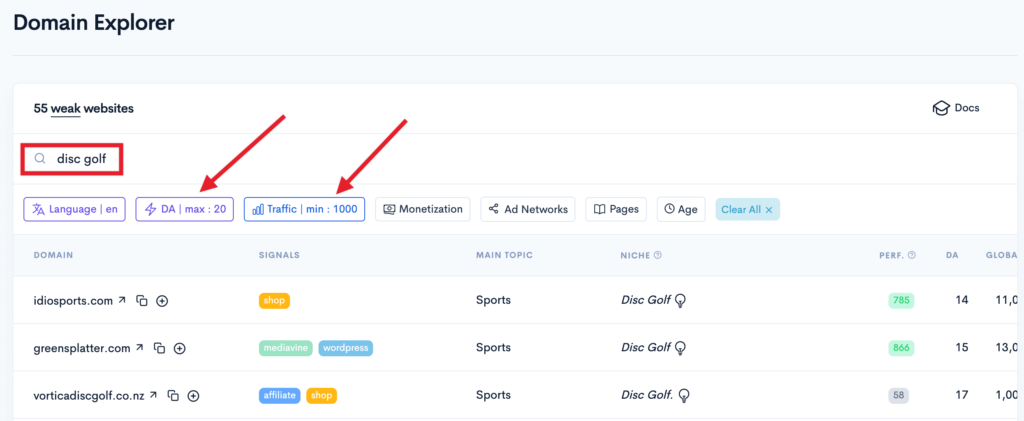
Domain Explorer is the one I would miss. It is a database of small sites with DA under 25, filterable by niche and estimated traffic, so you can find a DA 15 disc golf blog pulling 1,000+ monthly visits and mine what it ranks for. The docs put it at "over 100,000 sites" while the pricing FAQ says 150,000. Either way, it covers only English, French and German sites. Traffic figures come from third-party APIs and the database refreshes monthly.
The subscription limits are monthly. Standard allows 30 competitor ranking extractions, 300 competitor keyword-idea extractions, 90 sitemap extractions and 100 tracked keywords. Premium raises those to 70, 900, 300 and 500. Seats per plan are not stated anywhere I could find, so assume one login.
Where the data comes from, and what is missing
Search volume is sourced from the Google Ads API, so expect bucketed, rounded numbers that disagree with Ahrefs and Semrush. LowFruits has a whole help page explaining why. Authority is Moz DA, the same metric covered in our Moz Pro review. There are no backlink counts, no traffic estimate per keyword and no historical SERP data. Nate Shivar's review puts it plainly: the data is "not as fresh and comprehensive as Ahrefs", and reading weak spots well "requires significant SEO knowledge".
Coverage is wide on countries and narrow on languages. Every country is supported, but only 22 languages, almost all European plus Indonesian, Malay and Vietnamese. Japanese, Chinese, Korean, Arabic and Turkish are not on the list. If you publish in any of those, LowFruits cannot help you.
Exports are .xls only: all keywords, or all SERPs. A report caps at 25,000 analyzed keywords. And there is no API and no reseller program, so you cannot pipe weak-spot data into a content calendar or a script. If you need that, DataForSEO sells raw SERPs by the request. No AI writing features were added either, which some will count as a plus.
Who owns it now
LowFruits started as a one-person project by a Brussels developer known as Paul P, launched on BetaList in December 2020. On 30 May 2024, All in One SEO announced it had acquired it. AIOSEO is part of Awesome Motive, the company behind WPForms and OptinMonster, and the press release promised LowFruits would "continue to operate independently". So far it has: the product still runs under its own brand and domain. The trademark now sits with Semper Plugins, LLC, the terms are governed by Florida law, and there is still no WordPress plugin or link to AIOSEO itself.
What did change is the fine print. Subscriptions auto-renew, and the terms allow price changes on 30 days' written notice. Billing goes through Paddle. The refund policy contradicts itself: the pricing page promises a full refund within 14 days if you have used fewer than 100 credits, while the help doc says used and unused credits are not refundable. Run your first test on a small PAYG pack and you never have to find out which one support follows. Support works Monday to Friday, 9am to 5pm Eastern, and promises a reply within 24 business hours.
LowFruits against the alternatives
Against Ahrefs and Semrush, the comparison is not close on scope. Semrush Pro is $139.95/month and Ahrefs Lite $129/month, and both give you backlinks, site audits and traffic estimates LowFruits does not attempt. What they don't do is put "DA 6 site at position 5" in front of you for every row. Both have copied pieces of the idea, which is one of Shivar's cons, but neither leads with it.
The closer fights are with budget tools. KeySearch starts at $24/month with a conventional difficulty score and backlink checks, which suits a blogger who wants one tool for everything. Keyword Chef sells 1,200 credits for $20, close to LowFruits' $25 pack, and also filters for weak SERPs. Credit-billed tools in general behave like LowFruits; our Keywords Everywhere review covers the same "cheap until you go broad" trap.
Verdict
Buy LowFruits if you run niche or affiliate sites with low authority and want page-one openings proven by the live SERP rather than guessed from a difficulty model. Take Standard at $249/year if you research every week, since the Boosted finder and Domain Explorer are the best parts and PAYG locks both out. Start on the $25 pack if you only research a few topics a quarter, and filter hard before every extraction.
Skip it if you need backlink data, an API, non-European languages or a single all-in-one suite. Ahrefs or Semrush cover the suite at four to five times the price; KeySearch at $24/month is the budget all-rounder. LowFruits does one job very well, and it charges you per page of Google to do it.
Ready to try LowFruits?
Visit the official website to see the latest plans, pricing, and special offers.
Get Started - LowFruits* Affiliate link - we may earn a commission at no extra cost to you.