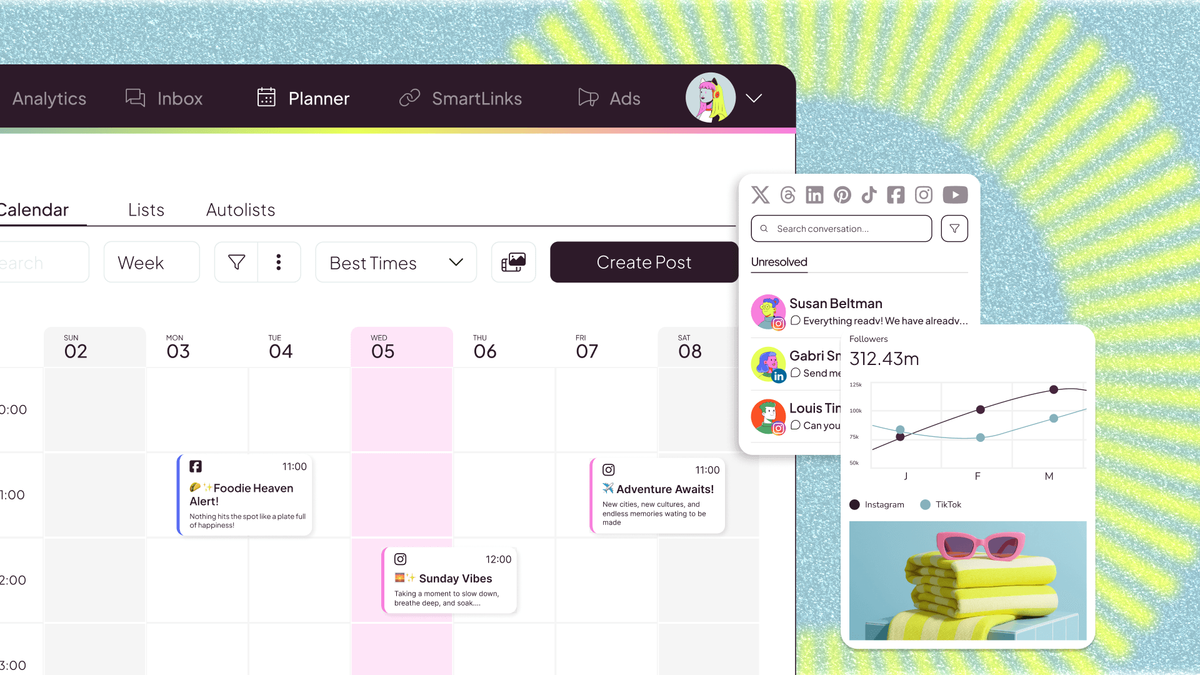
A hands-on look at Metricool pricing, its per-brand model, free-plan limits, AI credit caps and how it compares to Buffer and Hootsuite. Checked September 2026.
Table of Contents
Most social schedulers bill you for two things: how many people log in, and how many accounts you connect. Metricool bills for neither. It charges per brand, one brand being a bundle of connected profiles across Instagram, Facebook, TikTok, X, LinkedIn, YouTube, Pinterest, Threads, Google Business Profile, Twitch and Bluesky. Add a teammate, add a fourth network to a brand, and the price does not move. That single design choice decides whether Metricool is the cheapest tool on your shortlist or a quiet letdown, so start there rather than with the feature grid.
Metricool is a Madrid company, founded in 2015 by Juan Pablo Tejela and Laura Montells, that took growth money from the Spanish firm Axon before team.blue bought a majority stake on 30 July 2024 in a deal valuing it above €100M. Its own about page now claims more than three million professionals use it. The mid-2024 acquisition release said two million, so the figure is climbing, but treat the three-million number as marketing rather than an audited count.
Every figure here was checked on Metricool's pricing page in September 2026, on monthly billing. Annual billing is advertised as saving up to 24%.

The pricing that matters is the pricing you notice after signup. Two things are not in the headline. On Starter, X (Twitter) is a paid add-on rather than an included network, and the AI text generator runs on credits, not an open tap. So the sticker price of a plan and the price of the plan you actually need can differ by a monthly add-on line you did not budget for.
Free tiers are marketing, and the useful question is what they refuse to do. Metricool's free plan refuses three concrete things. It will not connect LinkedIn or X at all, so a B2B marketer is locked out on day one. It holds only 30 days of analytics, which means you cannot compare this month to the same month last year, the single comparison most reports are built around. And it has no post-approval step and no campaign dashboards, so it is a solo tool, not a team trial.
The 20-posts-a-month cap is the gentler limit. One post every weekday across a single brand and you are already at the ceiling. The harder wall is the AI: the free plan gives 5 assistant credits a month, and even Advanced caps the text generator at 35 credits per brand per month. If AI captioning is central to your workflow, count those credits before you count the brands.
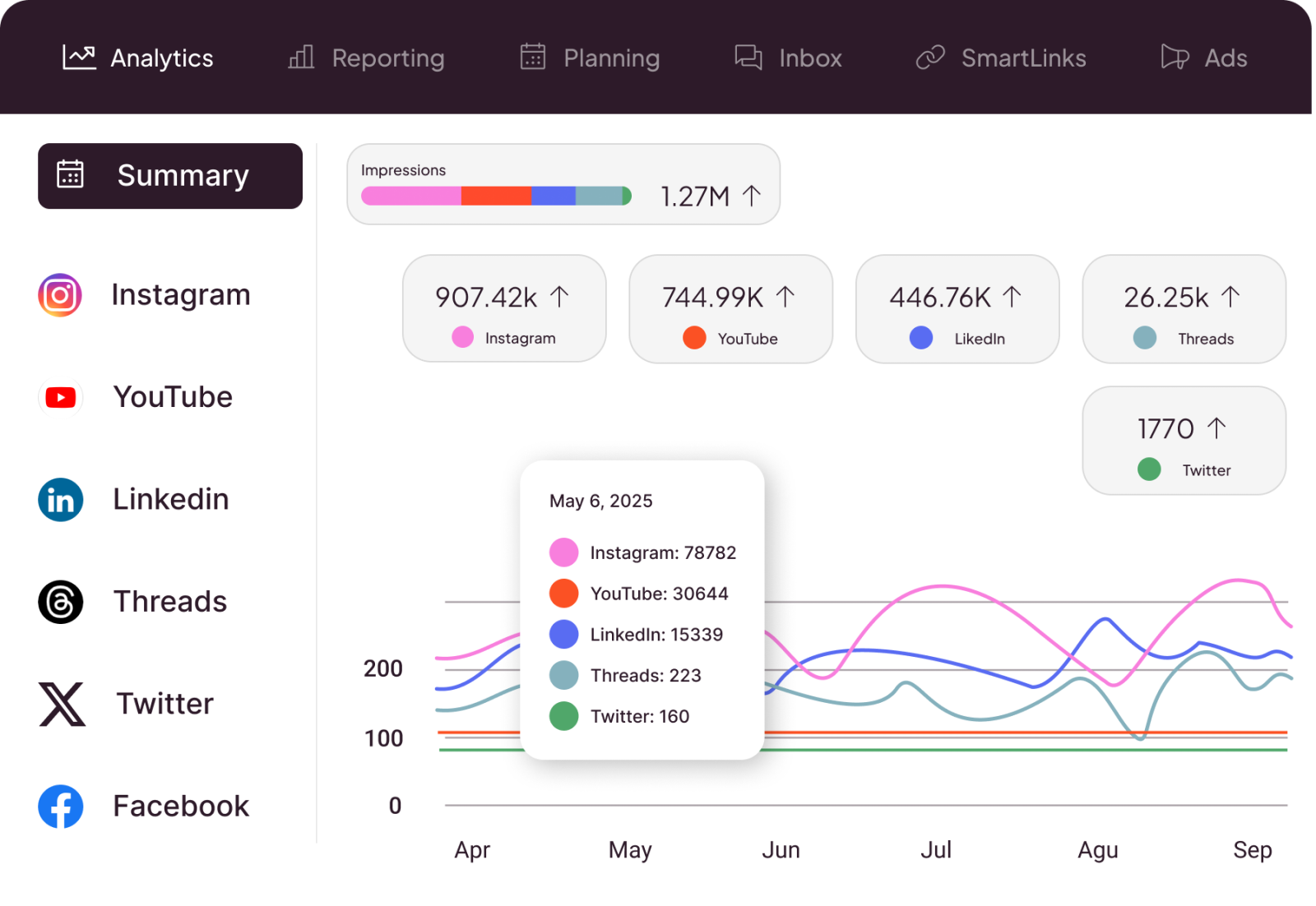
Against Hootsuite, the per-brand model is close to unfair. Hootsuite prices per seat, so a five-person agency running ten client brands pays for five logins on top of its plan; Metricool charges for the ten brands and lets the whole team in for free. At agency scale that is the deciding line item. (Hootsuite's exact current rates move often, so price your own seat count rather than trusting a stale comparison table.)
Against Buffer the picture is split, and the sharpest numbers come from Buffer's own comparison page, which is worth reading with that bias in mind. By Buffer's math, at eight connected channels Buffer Essentials runs about $96/month while Metricool Advanced with one X add-on runs about $77, so Metricool wins even on a competitor's home turf. Metricool also tracks competitors, 5 profiles free and 100 on Starter, a feature Buffer simply does not have.

Buffer wins two real points back. Its AI assistant is unlimited on every plan, including free, against Metricool's hard credit caps. And its API is open on every Buffer plan, where Metricool locks Zapier, Make and MCP behind the $53 Advanced tier. Buffer's Team plan is also $12 per channel per month with unlimited users, so a small shop that lives in automations and few channels can land cheaper on Buffer than the per-brand math suggests.
Metricool holds 4.5 out of 5 on G2 but 4.2 on Trustpilot, and the gap is instructive. Aggregated reviews through 2026 pin the Trustpilot drag on billing: cards charged on auto-renew after people had stopped using the product, and slow resolution when they disputed it. Support quality reads as inconsistent, with reports of conversations dropped mid-thread and the AI assistant acting as a bottleneck before a human answers. There is no published support SLA that changes with your plan, so a paying agency waits in the same queue as a free user.
The functional complaints are narrower but worth knowing: intermittent double-posting and accounts silently disconnecting, which for a scheduler is the one bug that undoes the entire point of the tool. Treat these as a pattern to test during a trial, not a verdict, but do test them.
Buy Metricool if you manage several brands and a team: the agency running eight client accounts, the freelancer juggling five, the in-house lead who needs approvals and competitor tracking without paying Hootsuite's per-seat premium. For that reader it is one of the cheapest capable tools on the market, and the per-brand model is doing exactly what it was designed to do.
Skip it if you are a single creator on one or two channels who leans on AI captions and automations. There the credit caps and the Advanced-only API bite, and Buffer's free tier with its unlimited AI and open API is the better home. And watch the auto-renew: set a calendar reminder before the term ends, because getting a wrong charge reversed is the thing current users say Metricool is worst at.
Visit the official website to see the latest plans, pricing, and special offers.
Get Started — Metricool* Affiliate link — we may earn a commission at no extra cost to you.