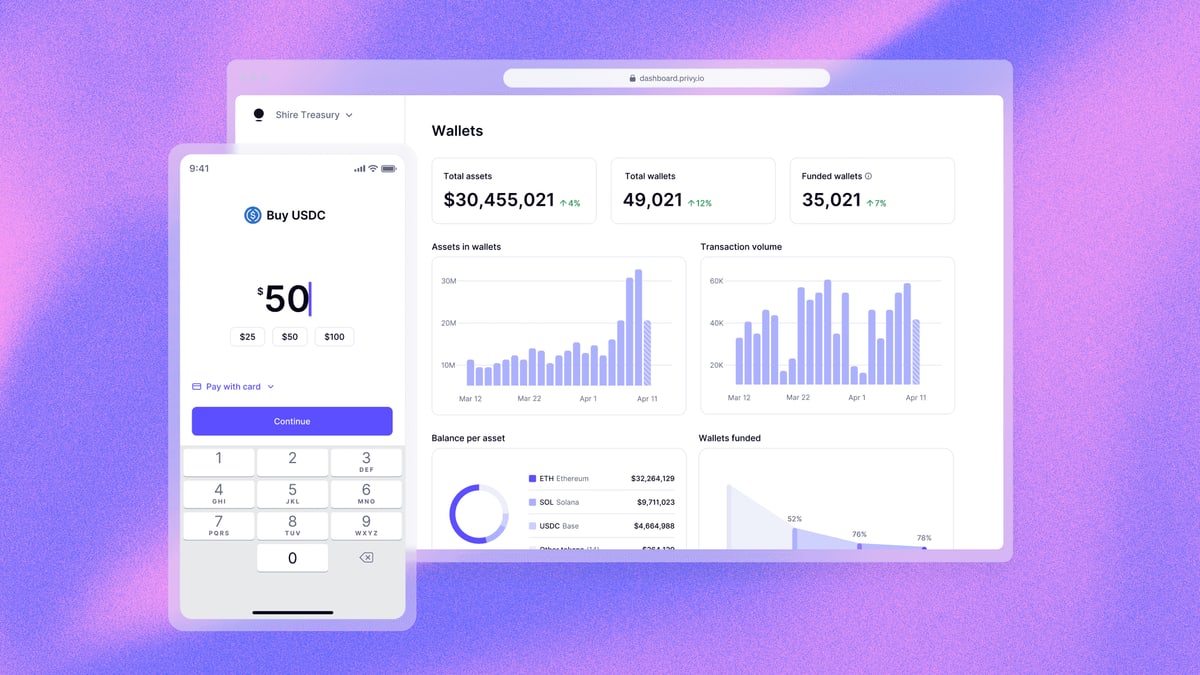
Privy review: embedded and server wallets, TEE plus Shamir key custody, SDKs, MAU pricing with the $2,000 overage step, and what Stripe ownership means.
Table of Contents
Privy was built to solve one annoying problem: getting a person into a crypto app without making them install MetaMask and copy down twelve words. Sign in with an email or a Google account, and a wallet appears behind the login. That is still the core of the product. What changed is who owns it and what it is being pointed at.
On June 11, 2025, Privy announced on its own blog that "Stripe is acquiring Privy." No price was disclosed. The post, signed by Henri Stern, said Privy would "continue to operate as an independent product," and gave the reason in one line: Stripe, like Privy, wants to bring crypto and fiat so close together "that the distinction becomes almost meaningless." Press coverage placed the deal right after Stripe's roughly $1.1 billion purchase of the stablecoin company Bridge in February 2025.
Fifteen months later the homepage no longer talks about web3 logins first. It reads "Build products that hold, move, and grow digital assets," and the pitch is wallets, stablecoins and automated money movement. The scale grew with it: coverage at the time of the acquisition cited more than 75 million accounts across 1,000+ developer teams, and the wallets page now claims over 120 million accounts and "billions of dollars monthly" in processed volume (both checked on privy.io in September 2026).
So this review answers a narrower question than "is Privy a good wallet". Privy is not an app you install. It is SDKs and an API you build on, and the question is whether your product should.
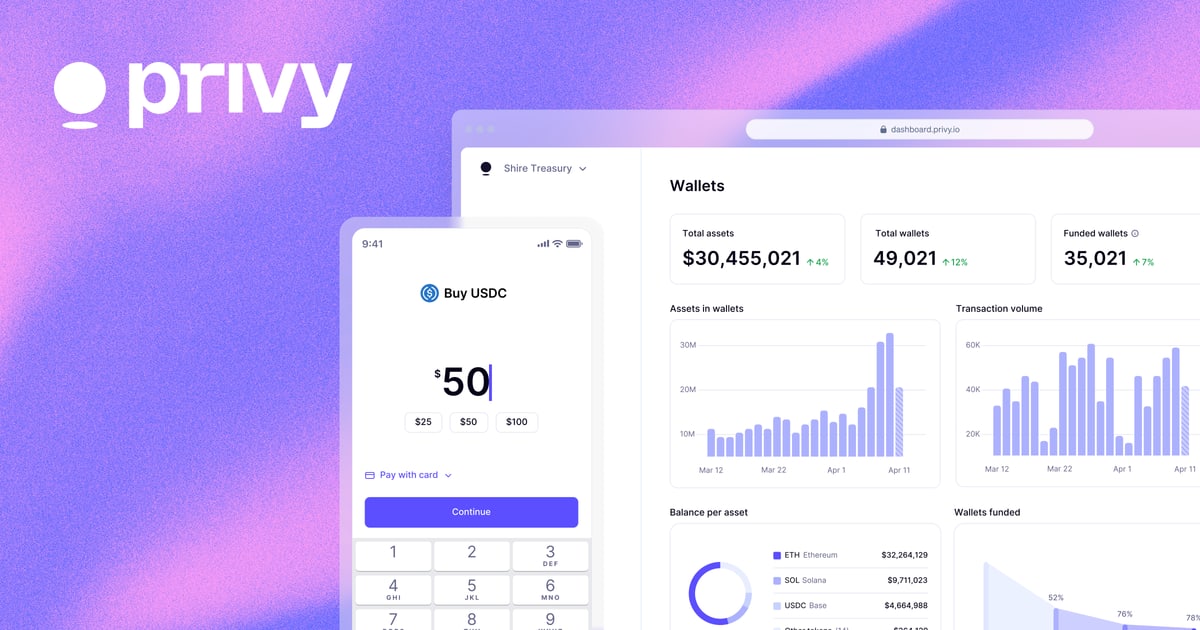
This is the part most wallet-infrastructure write-ups get wrong, so it comes first. Privy does not use MPC (multi-party computation), the threshold-signing design several competitors sell. It uses Trusted Execution Environments plus Shamir's Secret Sharing.
In practice, a wallet's private key is split into shares with Shamir's scheme, and the shares are only put back together inside a hardware-backed enclave. Privy's docs say enclave memory is inaccessible to Privy and to the host machine, and cryptographic attestation proves which code is running inside it. The stated result: "only the rightful owner can control their wallet or access its keys." Privy also holds SOC 2 Type I and Type II reports, renewed two years running.
The trade-off is worth understanding before you sign. With MPC, no single machine ever holds the full key. With a TEE design, the full key does exist, briefly, inside the enclave, and your trust rests on the enclave hardware and the attestation chain rather than on the maths of distributed signing. That buys speed: Privy quotes signature times "under 20ms," which matters when you are signing trades or payouts at volume. If your security review has a hard "MPC only" line, Privy fails it by design, and Turnkey or an MPC vendor is the conversation to have instead.
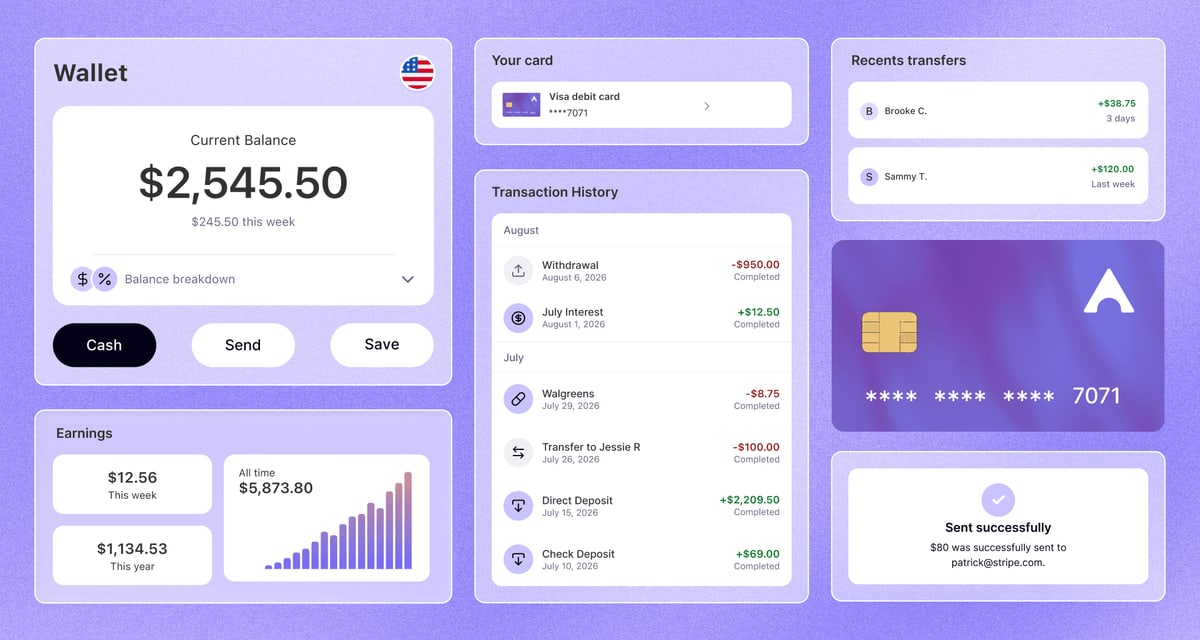
There are two wallet models, and choosing between them is the first architecture decision. Embedded wallets live inside your app and belong to the signed-in user. Server-controlled wallets are fleets you run through the Privy API: treasury wallets, per-customer payout accounts, bots that move funds on a schedule. The stablecoin repositioning mostly lives in the second model.
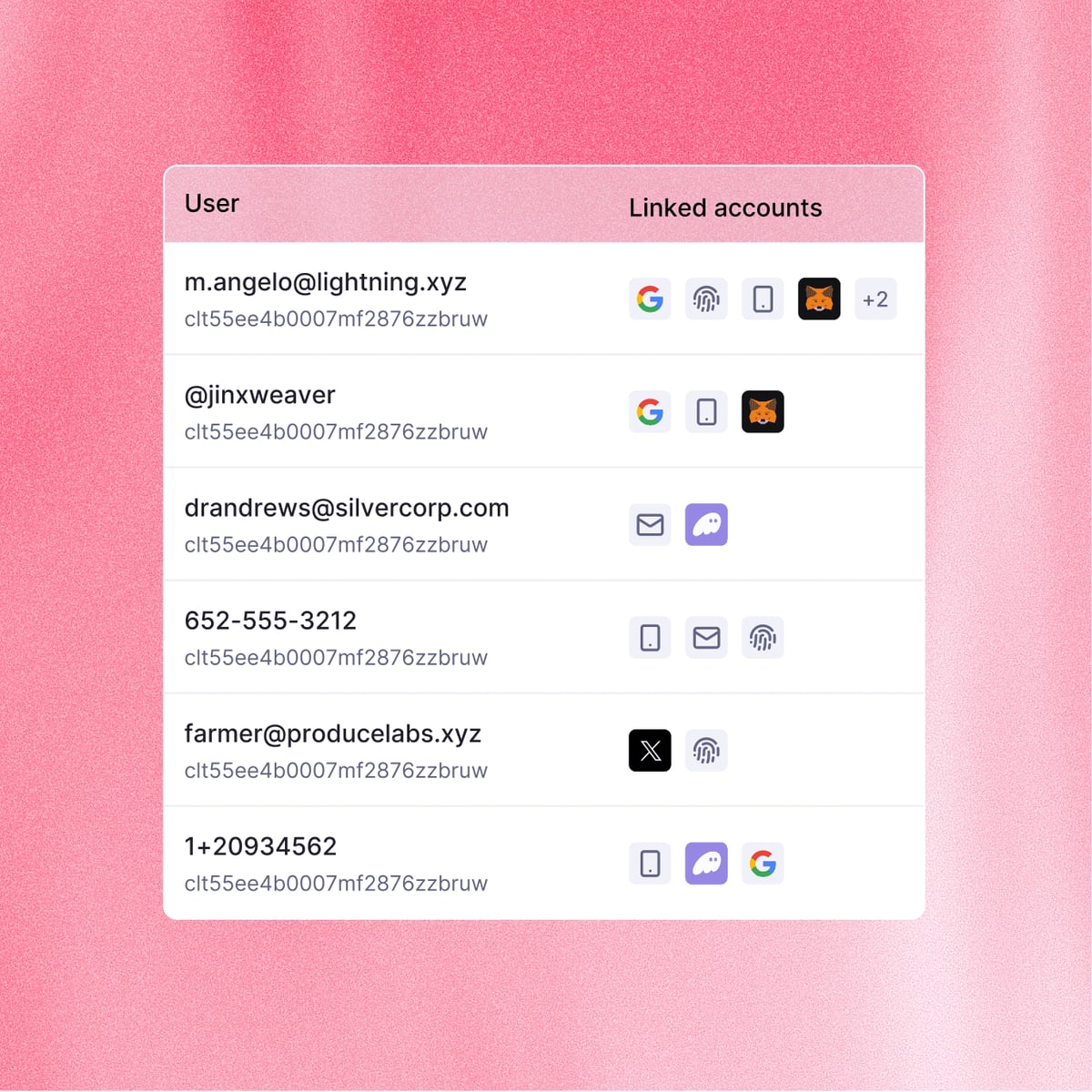
Login options cover email, SMS, social OAuth, passkeys and biometrics, plus connecting an existing wallet such as MetaMask or Phantom, and cross-device sign-in. Chain support is EVM-compatible chains, Solana and Bitcoin per the marketing copy; the docs name Ethereum, Base, Solana and Tempo (Stripe's own payments chain) and claim "hundreds of blockchains" in total.
SDK coverage is where to check your stack before anything else. Confirmed: a TypeScript/Node SDK (TypeScript 4.9+, Node 20 LTS or newer), React with a PrivyProvider wrapper, React Native for both bare projects and Expo, and a native Swift SDK for iOS. We found no native Android/Kotlin SDK in the docs we checked, so an Android-first team should confirm that with Privy or plan on React Native.
Privy bills by monthly active users, defined as any Privy-authenticated user with at least one active session in the last 30 days. Figures below were checked on the pricing page in September 2026; the page carries no "last updated" date.
| Plan | Price | Monthly active users | Notes |
|---|---|---|---|
| Core | $0/month | 0-499 | 50K signatures and $1M transaction volume a month |
| Scale | $299/month | 500-2,499 | |
| Growth | $499/month | 2,500-9,999 | |
| Enterprise | Custom | Any | Per transaction or transacting wallet; signatures "as low as $0.001"; SLAs, SSO, webhooks |
Two things the plan cards do not make obvious. First, the step from Growth to overage is steep. Past 10,000 MAU or 50,000 signatures, the bill becomes a $2,000 base fee plus $0.05 per MAU above 10,000 and $0.01 per signature above 50,000. An app with 12,000 active users and 60,000 signatures a month pays $2,000 + $100 + $100 = $2,200, against $499 one tier down. Crossing 10,000 users roughly quadruples the bill overnight.
Second, you do not choose when to upgrade. Hitting a paid tier's cap moves the account to the next plan automatically, billed the following month. A marketing push that brings in a wave of one-visit users can therefore reprice you for a month of people who never came back. The MAU definition counts sessions, not transactions, so login-heavy products with low activity per user feel this most.
The free tier is genuinely usable for a prototype: 499 users and $1M of monthly volume is enough to launch a beta.

The customer list on privy.io has shifted from crypto-native apps toward fintech, which says more about the post-Stripe direction than any press release. Ramp runs "Stablecoin Accounts powered by Privy" for global payouts and card-linked balances. Deel uses dollar-backed wallets for payroll and contractor payments in 160+ countries. Klarna lists it for consumer crypto wallets. On the crypto side, Hyperliquid, Kraken (for DeFi Earn) and Uniswap (in-app trading wallets) are all named.
That mix is the best evidence that the product handles real money at scale. Several of those companies have their own compliance teams and chose to build on Privy rather than run key custody themselves.
The wallet-infrastructure market has consolidated fast. Dynamic now belongs to Fireblocks, Web3Auth to MetaMask's parent Consensys, and Privy to Stripe. Picking a vendor now means picking a parent company.
The strongest knock on Privy, raised in competitors' comparisons, is exactly that: Stripe ecosystem lock-in. If you already run payments on Stripe and plan to use Bridge for stablecoin rails, that pull is an advantage, since the pieces are designed to meet. If you want to stay payment-processor neutral, it is a reason to look at Turnkey (key infrastructure without a payments parent), Magic, or open alternatives such as Openfort, whose pricing is not tied to MAU. Moving embedded wallets between providers is not a config change: users' keys live in Privy's enclaves, so an exit plan needs a key-export path agreed up front.
Privy is the default choice for a team that wants email-or-passkey login with a wallet behind it, needs to ship on web, React Native or iOS this quarter, and is comfortable with Stripe as the long-term owner. The TEE design is fast, the free tier is enough to launch, and the customer list shows it holds up under real payment volume.
Skip it if your security policy requires MPC (look at Turnkey), if you are Android-native with no appetite for React Native, or if your user count will sit just above 10,000 with low engagement, where the $2,000 overage floor makes a per-transaction vendor far cheaper. And whichever you pick, get the key-export terms in writing before your first thousand users.
Visit the official website to see the latest plans, pricing, and special offers.
Get Started - Privy* Affiliate link - we may earn a commission at no extra cost to you.