EspoCRM 评论:免费的开源 CRM,其工作流程位于付费包中
EspoCRM 评论,于 2026 年 11 月检查:v10 管道和免费 MCP 服务器添加了什么、为什么工作流程需要额外费用、云从 15 美元/席位起,以及 SuiteCRM 与 SugarCRM。
专家评测

What changed in v10
For most of a decade EspoCRM has been the quiet alternative to SuiteCRM: a PHP CRM from Letrium, a Ukrainian team that dates back to 2008, which you can download for free, run on a cheap VPS and reshape without writing code. The vendor says more than 50,000 companies use it. Two releases this year make it worth a fresh look. Version 10.0 shipped on July 2, 2026 with the feature sales teams had asked for longest, multiple pipelines. On September 30 the vendor followed it with an official MCP server that lets an AI agent read and write CRM records.
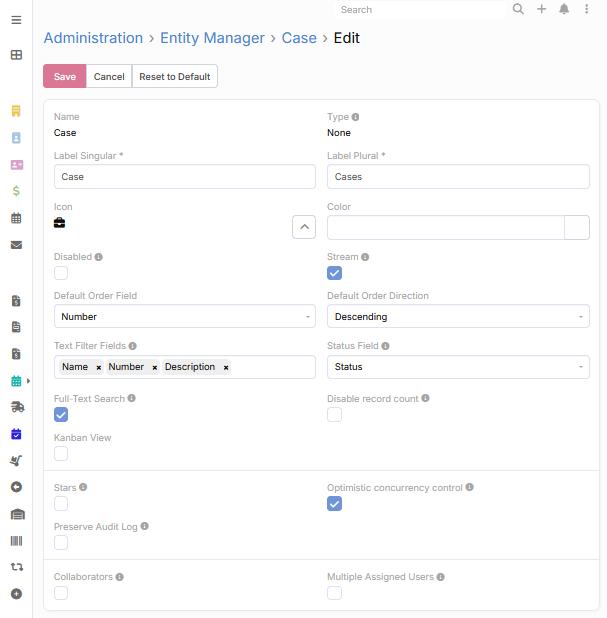
Pipelines work on Leads, Opportunities and custom entities. Each record gets a pipeline that decides its stages, so a company selling both one-off projects and annual contracts no longer crams both into one stage list. The same release added record locking (a locked record can't be edited or removed except for designated fields, and only users with the Lock permission can lock or unlock it), cascading links (pick an Account on a Quote and only that Account's Contacts are offered), cascade removal and restore, plus OIDC PKCE and TypeScript for developers.
The upgrade has a price if you run custom code. v10 removed SelectManager, the deprecated Espo.ui and Espo.utils helpers, deprecated link access in the ORM and jobs defined by serviceName. Anything written against 9.x, older third-party extensions included, may break. No rush, though: 9.3.11 shipped alongside 10.0.11 on October 23, 2026 with backported security fixes.
Pricing: free core, paid packs, or the cloud
This is the part the homepage doesn't spell out. The core is free under AGPLv3 and genuinely useful: accounts, contacts, leads, opportunities, cases, an email client, calendar, customer portals, webhooks, a REST API and the no-code Entity Manager. What it lacks is automation. Workflows, BPMN 2.0 business processes and reports all live in the Advanced Pack, a paid extension. Quotes, invoices, products, price books and inventory are a second paid extension, the Sales Pack.
What those cost, we can't tell you. The extension pages load their prices with JavaScript, no official figure was readable when we checked in November 2026, and third-party listings disagree by more than double. You see the number at checkout.
The licence terms matter more than the price. The extension licence agreement (version 1.1, dated September 3, 2025) covers one production instance plus two non-production copies for a "Licensed Period", says upgrades need a valid licence, and states that "if the license expires, you must uninstall the Software." A 2019 forum reply from the team said extensions kept working after a subscription ran out. The current written terms say the opposite. Your workflows are rented, even on your own server.
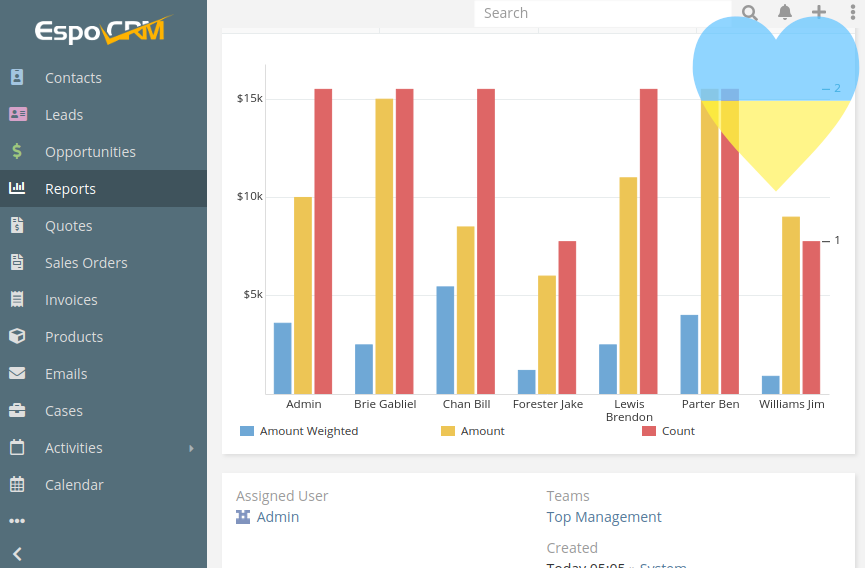
Reports and the quote-to-invoice menu above come from the Advanced Pack and Sales Pack. Screenshot by Harperpentusevich, CC BY-SA 4.0 via Wikimedia Commons.
EspoCRM Cloud folds every official extension into one per-seat price. These are the figures on the pricing page, checked on November 6, 2026.
| Plan | Per user/month | Minimum seats | Smallest monthly bill | File storage | Records |
|---|---|---|---|---|---|
| Basic | $15 | 3 | $45 | 3 GB per user | 100,000 |
| Enterprise | $25 | 5 | $125 | 10 GB per user | 10,000,000 |
| Ultimate | $69 | 10 | $690 | 400 GB total | Unlimited |
Ultimate adds a dedicated IP, a private server and your own domain. The catch is the billing line: Basic and Enterprise are "billed for 6 months or 1 year", with no monthly option, and the refund policy says plainly that "refunds for cloud services are not provided." The smallest possible Cloud commitment is 3 seats x $15 x 6 months, so $270 up front, even if you are one person. Seats added later are charged monthly. The 30-day trial needs no credit card, and that is the place to decide. Extensions bought for a self-hosted install, by contrast, carry a 30-day refund window.
What self-hosting takes
The stack is ordinary. PHP 8.3 to 8.5; MySQL 8.0+, MariaDB 10.6+ or PostgreSQL 15+; Apache, Nginx or IIS with a dozen common PHP extensions such as gd, zip, mbstring and bcmath. There is a browser installer, an install script, and a Docker Official Image called espocrm. The old espocrm/espocrm image is now marked legacy, so ignore tutorials that pull it.
Ordinary isn't easy. In August 2025 an EspoCRM developer opened a forum thread after an "increased number of feedback reports from potential users struggling to install Espo for the first time." Replies include "I kept getting a 500 error and some fonts weren't displaying" on Nginx, "I have had several issues while updating", and in June 2026, "I can't get espocrm to start even though it shows up as running when I check through Docker Desktop." G2, where EspoCRM averages 4.5/5 from 29 reviews, lists "a steep learning curve and limited documentation" among the downsides.
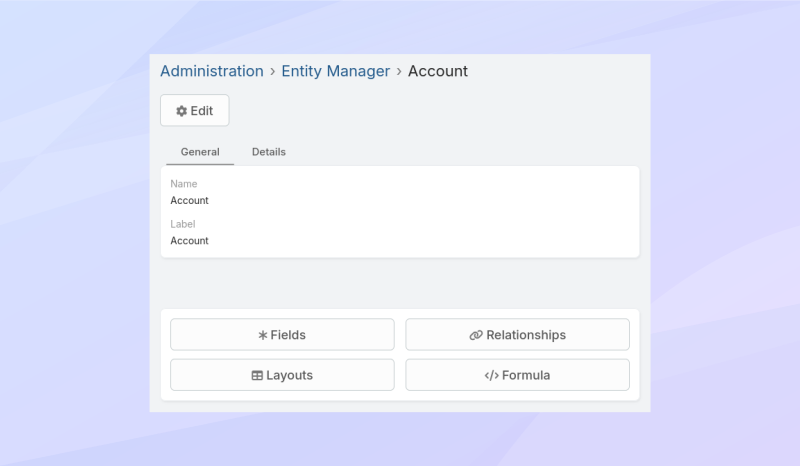
Once it runs, customization is the best reason to be here. Entity Manager adds entities, fields, relationships, dynamic logic and duplicate rules from the admin panel. Layout Manager rearranges list, detail and Kanban views per team or per portal. Formula scripts run logic before a record saves. Plenty of CRMs reserve that for an enterprise tier; EspoCRM puts it in the free core.
Support is the other bill. Self-hosted users get the community forum, where the developers do answer. Paid help runs "$50 - $100" an hour and is not included when you buy an extension. Cloud includes 12x5 email and portal support, but no response time is published for any tier. A middle route, announced in June 2026, is managed hosting through the vendor's partner Elestio.
AI and the MCP server
The AI story comes in two pieces, and only one is free. The MCP extension (AGPL-3.0, on GitHub as espocrm/ext-mcp) installs like any other extension, so there is no separate server to run. It gives an agent tools to find, read, create, update and delete records, list a record's stream and post to it. The admin chooses which tools are switched on, and each user only reaches what their role allows: an agent connected under a sales rep's account sees what that rep sees.
Two caveats. Authentication today is an API user with an X-Api-Key; OAuth 2.0 is documented as arriving with v10.1, which had not shipped when we checked. And the server speaks only MCP protocol version 2026-07-28, so an AI client that hasn't caught up won't connect.
The paid half is the Intelligence extension: record summaries, an "intelligent paste" that fills a form from pasted text, an AI email composer, and formula functions for classification, extraction and summarising, with usage logs and quotas. It connects to OpenAI, Gemini, Claude or any OpenAI-compatible endpoint. The last option lets you aim it at an open model on your own hardware when customer data can't leave the building. Its price wasn't readable either.
Getting data in and out
Import is CSV only (UTF-8), with duplicate checks and "Create & Update" or "Update Only" modes. There is an undo, and it has a hole: "Updates caused by import are not reverted." Records an import created vanish in one click. Fields it overwrote on existing records stay overwritten. Run any large update import on a copy first.
A full instance move (records, settings, customizations, files) goes through the free Export Import extension, and that is a command-line tool. There is no point-and-click full export. For a sysadmin that is fine; for an office manager on Cloud who later wants to leave, it is a wall. The REST API at api/v1 (API key, HMAC or Basic auth) and the core webhooks cover the rest, and no rate limits are documented. One Capterra reviewer warns that "large data quantities may be complicated for Espo CRM to handle".
EspoCRM vs SuiteCRM and SugarCRM
SuiteCRM is the direct rival: also free, also PHP, also AGPL. Its trump card is that workflows, reports and quotes ship in the free download, which is exactly what EspoCRM charges for. EspoCRM answers with a lighter single-page interface and no-code customization that goes further without touching files. Our SuiteCRM review covers what running that one really costs.
SugarCRM, the commercial product SuiteCRM was forked from, prices like an enterprise vendor: its AI tier starts at $98 a seat, as our SugarCRM review details. EspoCRM Enterprise is $25 a seat with every extension included, so ten users pay $250 a month against $980 at Sugar's starting rate.
For a two-person shop that wants neither a server nor a six-month prepay on three seats, Less Annoying CRM sells one $15 plan. The wider field is in our best CRM software roundup.
Verdict
Buy EspoCRM Cloud if you have somewhere between three and twenty users, want a CRM you can reshape without a developer, and can live with paying six months ahead. At $15 a seat with workflows, reports and the Sales Pack included, Basic is one of the cheaper ways to get a hosted CRM that automates anything. Self-host the free core if someone on the team is comfortable with PHP and Docker and your process doesn't need automation, or if you want the MCP server on infrastructure you control.
Skip it if you want free workflows on your own server: SuiteCRM includes them, EspoCRM rents them. Skip it if you work alone, because the 3-seat minimum and the no-refund rule make the smallest Cloud bill $270. And skip the self-hosted route if nobody on the team wants to read forum threads about 500 errors.