Zendesk 销售回顾:其自己的支持链接 CRM 供应商即将退出
Zendesk 销售评论:CRM 将于 2027 年 8 月 31 日停用。计划限制、支持集成、缺失价格及其导出的数据无法随身携带。
专家评测

The shutdown date comes first
Most CRM reviews end on a verdict. This one has to start with it, because Zendesk has already written it. On September 9, 2025, Zendesk announced that "Zendesk Sell and Sell mobile app will be retired on August 31, 2027", adding that "we'll no longer provide a sales CRM solution." The reason it gives is focus: Zendesk wants to concentrate on customer and employee service and "innovate more boldly with AI".
Until that date, existing customers keep "full access to the product as usual." After it - or as soon as a subscription ends, if that comes first - Sell data is deleted under Zendesk's Service Data Deletion Policy, and "once data deletion begins, it is permanent and cannot be reversed." Zendesk has even picked the successor. It partnered with Pipedrive, which it describes as having "a well-established Zendesk integration" and which has built migration tools for Sell accounts.
So this is not a review of a CRM to adopt. It covers what Sell does for the teams still on it, what its own documentation says about its limits, and what will and will not survive the move out. Every figure here was checked on the Zendesk help centre and zendesk.com on November 11, 2026. We did not run a hands-on trial, and nothing below pretends we did.
Where Sell still earns its seat: the Support link
Sell started out as Base CRM, and the one thing that sets it apart from Pipedrive or HubSpot is how closely it sits next to Zendesk Support. With both products on the same Zendesk subdomain, a rep sees a customer's Support tickets inside the Sell record, and an agent sees Sell lead, contact and deal data inside Support through the "Zendesk Sell app for Support". Tickets appear on their own when the email address or phone number of a Sell lead or contact matches a Support requester. Nobody has to link records by hand.
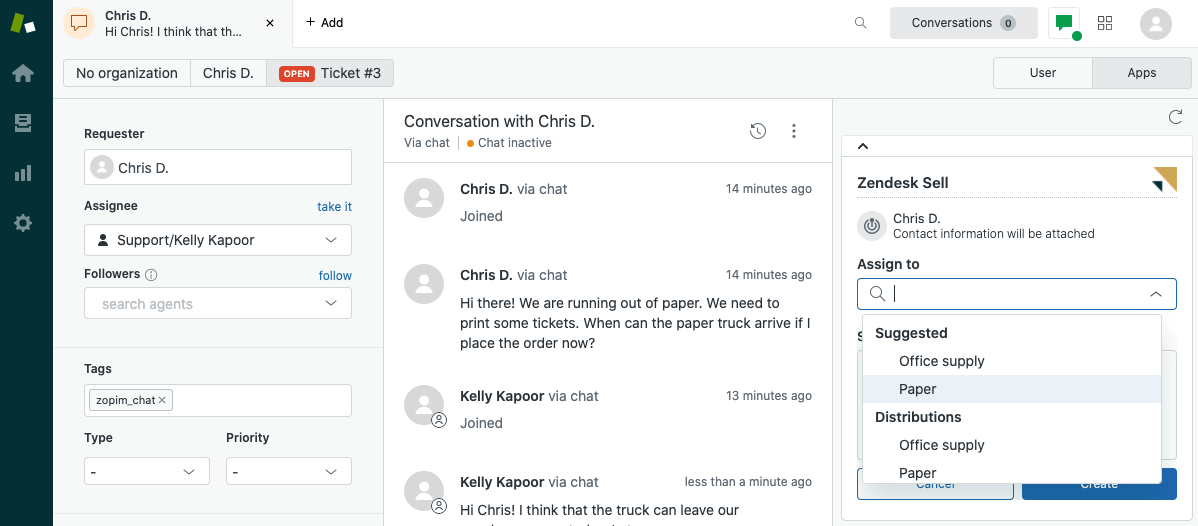
The catch is in the prerequisites. The integration "requires you have any Zendesk Sell plan and a Zendesk Support Team, Professional, or Enterprise plan", so it is a two-subscription feature. Every Sell user also gets into Support, but only with the Contributor role by default. A ticket a rep opens from Sell is tagged ticket_from_sell, and the customer named as requester gets no notification about it unless you change that. Good for internal hand-offs. A surprise for anyone who expected the customer to hear back.
If your team lives in Zendesk Support, this pairing is what you will miss most. Pipedrive's existing Zendesk integration is the nearest replacement, which is presumably why Zendesk chose it.
Plans, pipelines and where each tier stops
Sell comes in four plans - Team, Growth, Professional and Enterprise - billed month to month or on an annual contract. One rule matters for mixed teams: "All users on your Zendesk Sell account need to be on the same plan." You cannot put two managers on Enterprise and leave the rest of the floor on Team. Upgrades are pro-rated; downgrades wait for the end of the billing period.
| Plan | Pipelines | Storage per user | Forecasting | Lead and deal scoring | Reach sequences |
|---|---|---|---|---|---|
| Team | 2 | 2 GB | No | No | No |
| Growth | 10 | 5 GB | Yes | No | Yes |
| Professional | 20 | 10 GB | Yes | Yes | Yes |
| Enterprise | Unlimited | 25 GB | Yes | Yes | Yes |
Automation follows the same ladder: Professional gets 300 triggers in total, Enterprise gets unlimited. The account-wide ceilings are generous for a small or mid-sized team - 2,000,000 contacts, 2,000,000 deals, 5,000,000 leads, 50 stages per pipeline, 200 products per deal and 500 custom fields per object type - though Zendesk notes that "limits may vary from plan to plan."
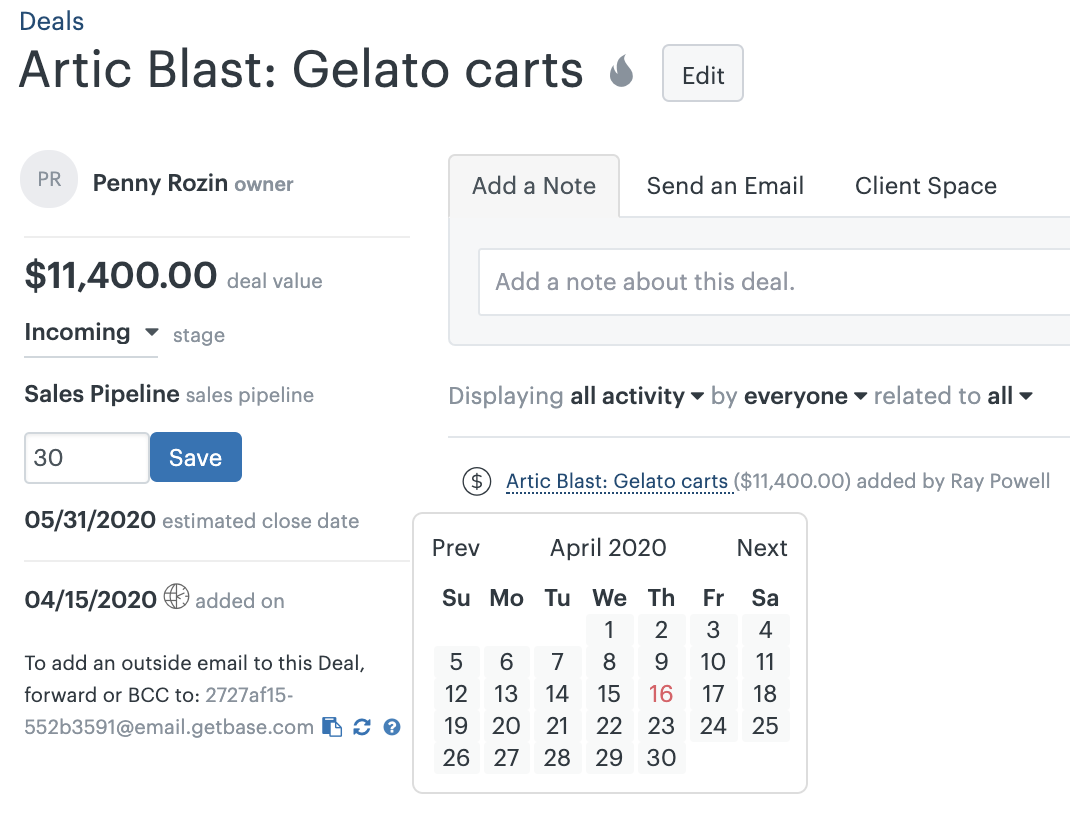
The limit that actually bites is email. Sell caps sending at 300 emails per user per 24 hours, and at 100 recipients for an email sent from an external address, so a rep working a list by hand can run out before the afternoon. Attachments stop at 10 MB. The API allows 10 requests per second per token, which sets the pace for any script you write to copy records out of Sell before the deadline.
Reach sequences and Sell Voice
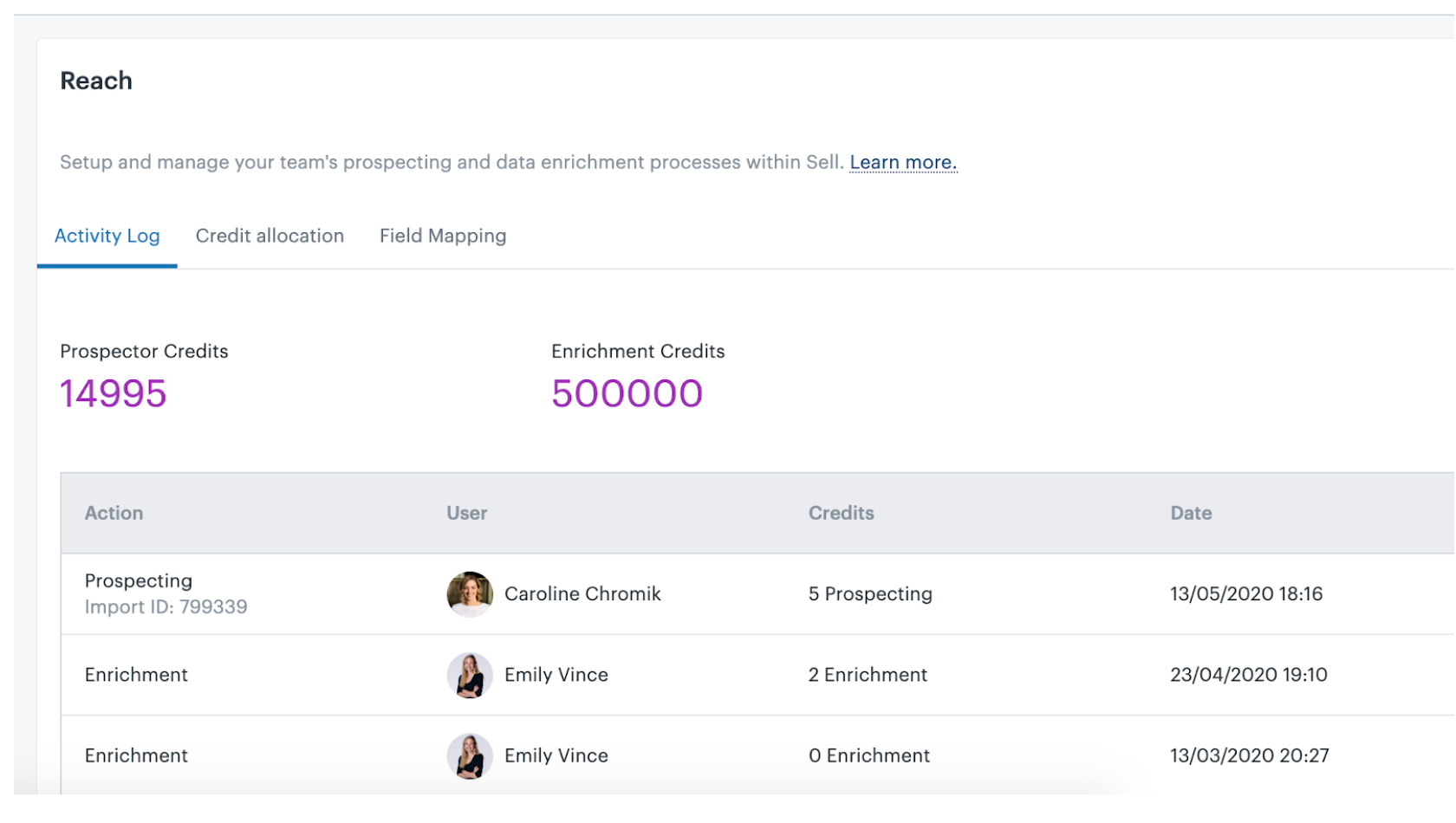
Reach is Sell's sales-engagement layer. It does prospecting from a Clearbit-backed database that Zendesk puts at "over 44 million businesses and 350 million prospect records", enriches records you already have, and runs multi-step email sequences. It needs Growth or above. Credits are allotted per seat per month by plan, and "any unused credits expire at the end of each month", so a quiet month is credit lost rather than banked. The sequence ceilings - 5,000 sequences, 200 steps each, 500,000 active enrollments - are not where anyone runs short. The 300-emails-a-day cap is.
Sell Voice is built-in calling and texting at Twilio's rates, billed in US dollars, prepaid by credit card. Calls are charged per minute and "rounded up to the nearest minute", a transferred call is charged for each leg, and the dedicated Sell number is included in the subscription. What Zendesk does not publish is a per-minute rate, so the cost of a calling-heavy team is something you learn from the bill. There is a second reason to care: call logs are on the list of things Sell's export leaves out.
Pricing: Zendesk no longer shows it
As of November 11, 2026, there is no Sell price anywhere on zendesk.com. The old Sell pricing URL redirects to Zendesk's general pricing page, which does not mention Sell once, and the Sell sign-up page returns a 404. The zendesk.com/sell/ marketing page is still up with no retirement notice, and its "Start free trial" button leads to the generic Zendesk sign-up. Zendesk has not said in so many words that new sales have stopped. This is simply what its site shows.
Third-party review sites still list Team at $19, Growth at $55, Professional at $115 and Enterprise at $169 per user per month on annual billing. We could not confirm any of them with Zendesk, and three of the four match the prices of Zendesk's service plans on its live pricing page exactly, so they may well be mislabelled. For an existing customer, the contract is the only reliable figure. For anyone else, the price is beside the point.
What comes with you, and what stays behind
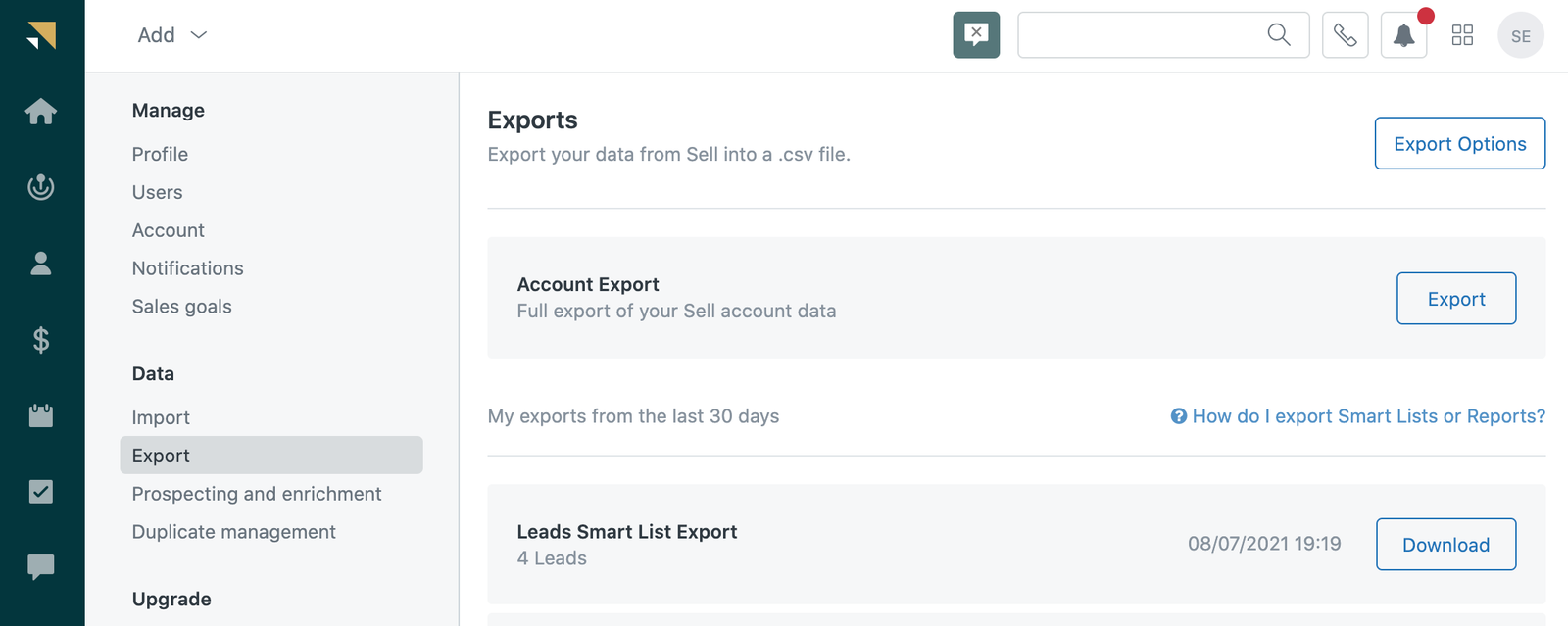
This is what only a close read of the help centre turns up, and it is the reason to plan now rather than next summer. Sell's export covers leads, contacts, deals, notes, tasks, smart lists and a full account export, delivered as CSV files through an emailed link. It does not cover "activity history, appointments, emails, call logs, and documents." For a sales team, that is the record of nearly every conversation it has had with a customer.
Four rules follow from Zendesk's own documentation:
- Export before you cancel. Deletion starts when the subscription ends if that comes before August 31, 2027, and it cannot be undone.
- Download exports promptly. They stay in the Export panel for 30 days after creation, then they are gone.
- Check the parent-company fields. A full export leaves out Parent Company and Parent Company ID by default, which flattens any account hierarchy you built.
- Plan separately for emails, call logs and documents. Nothing in the standard export brings them out. Ask Pipedrive exactly what its migration tool carries across before you count on it.
Reliability is a fair worry for a product on a wind-down. Zendesk's help centre logged a service incident on June 26, 2026, across all pods, titled "Deals feature outage in Zendesk Sales and SQL errors due to unintentional dropped DB tables". One incident proves little. It is still a reason not to keep the only copy of your pipeline in Sell any longer than you must.
Verdict: who should stay, and who should not start
Do not start on Zendesk Sell. Its vendor has set a shutdown date, it no longer publishes a price, and anything you put in it now is data you will have to move out within months. A new team that wants a pipeline-first CRM should go to Pipedrive, Zendesk's own pick, with a Zendesk integration and migration tools built for Sell users. A team that wants to start free should look at HubSpot. Teams on a Freshworks stack have Freshsales, and the wider field is in our CRM roundup.
Existing customers who run Zendesk Support alongside Sell can stay for now. The integration works and access continues until August 31, 2027. But book the migration for early 2027, not August, export everything the panel allows, and decide what happens to emails, call logs and documents before you cancel. Once the subscription ends, Zendesk deletes the rest.