Paddle Retain Review: Free Dunning on Paddle Billing, $500 a Month on Stripe
Paddle Retain review: smart retries, cancel flows and term optimization, free on Paddle Billing or $500/month standalone. Limits, attribution rule and verdict.
Expert Review

One name, two products
Paddle Retain is the churn toolkit Paddle got when it bought ProfitWell in 2022 (the ProfitWell review covers that history). It does four things: failed-payment recovery, cancellation flows, term optimization and win-back campaigns for customers who already left. It is really two products, and the price depends on where your subscriptions live.
On Paddle Billing, Retain is part of the dashboard. Paddle's own page calls it "Paddle Billing's built-in retention toolkit … at no extra cost", and Payment Recovery moved into the Billing dashboard on August 5, 2025. On Stripe, Chargebee, Recurly, Braintree, Zuora and a few others, it is a standalone product that starts at $500 a month. Same name, same features, very different decision.
Everything below was checked on paddle.com, Paddle's developer docs and its changelog in November 2026. We did not run Retain against a live billing account, so the limits described come from Paddle's own documentation, not from a test.
Payment recovery: what the retries actually do
This is the part most people buy Retain for. When a card fails, Retain retries it on a schedule Paddle says is built from "millions of payment failures", weighing the day of the week, the failure code, the card type and the location. Paddle Billing gets up to 7 retries; Paddle Classic gets up to 4. Alongside the retries go up to four recovery emails, plus in-app and SMS notices, and the customer can fix the card with Apple Pay or Google Pay without signing in.
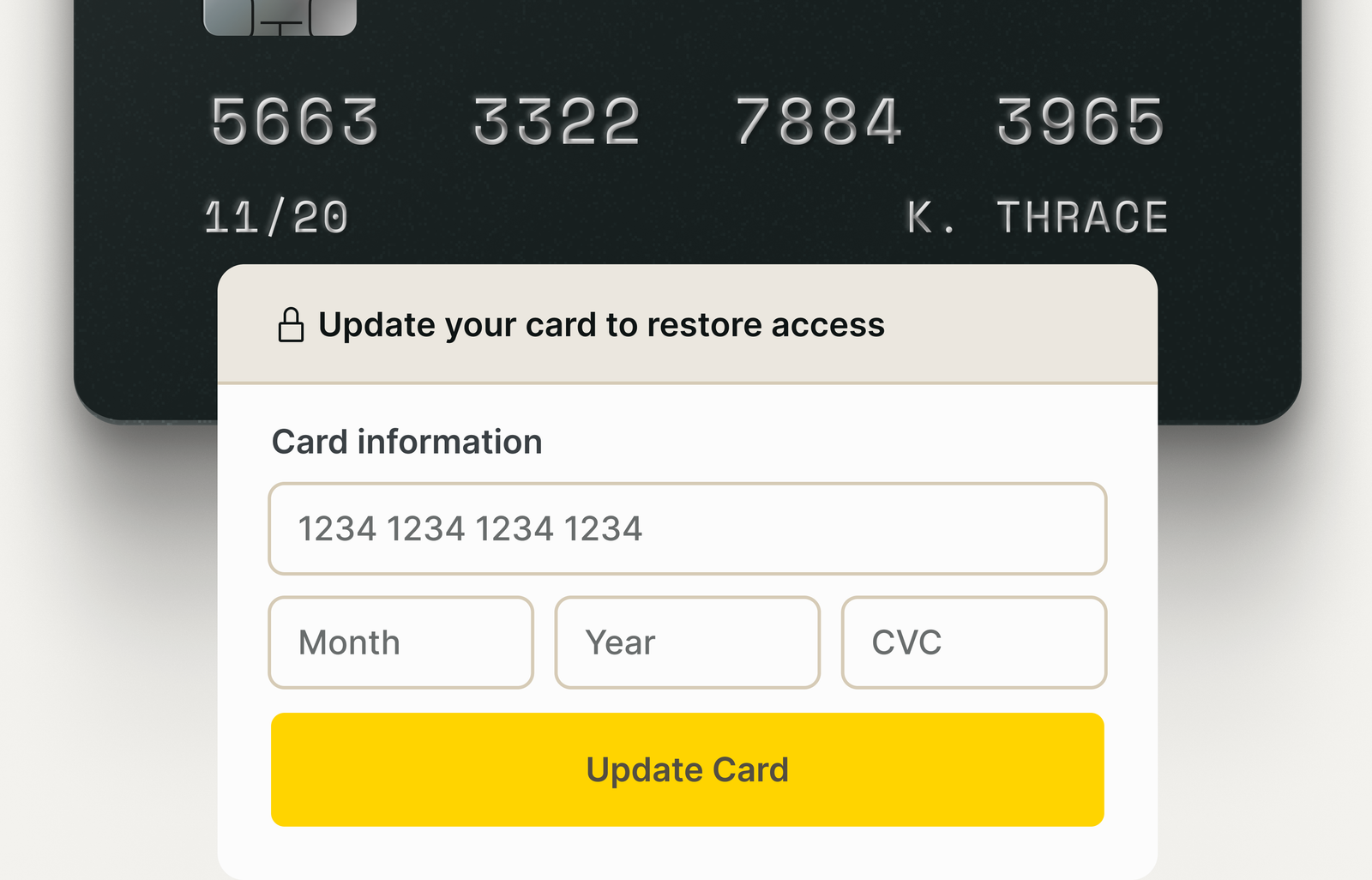
The dunning window is 30 days by default. When it runs out, the subscription is cancelled unless you set it to pause or stay past due. What you cannot change is the retry timing itself. Paddle's help article is also confused about when the first retry happens: it says "~24 hours after the initial failure" in one place and "within roughly 2 hours" in another. If your support team needs to tell customers when the next attempt is coming, ask Paddle first.
Do not credit Retain for every saved payment, though. Since January 9, 2025, Paddle Billing retries the saved payment method on its own, "even if you haven't turned on Paddle Retain." What Retain adds is the smarter cadence, the emails and notices, and the warning to in-app users whose card is about to expire. Paddle describes no card-network account updater, only those expiry prompts.
Emails go out in 19 languages; Brazilian Portuguese arrived on November 13, 2025. Editing them is less pleasant. Paddle's help centre says "in general, we handle everything for you", and custom changes go through [email protected]. A G2 reviewer calls it "impossible to edit the emails through the platform".
Cancellation flows, and what November 2026 changed
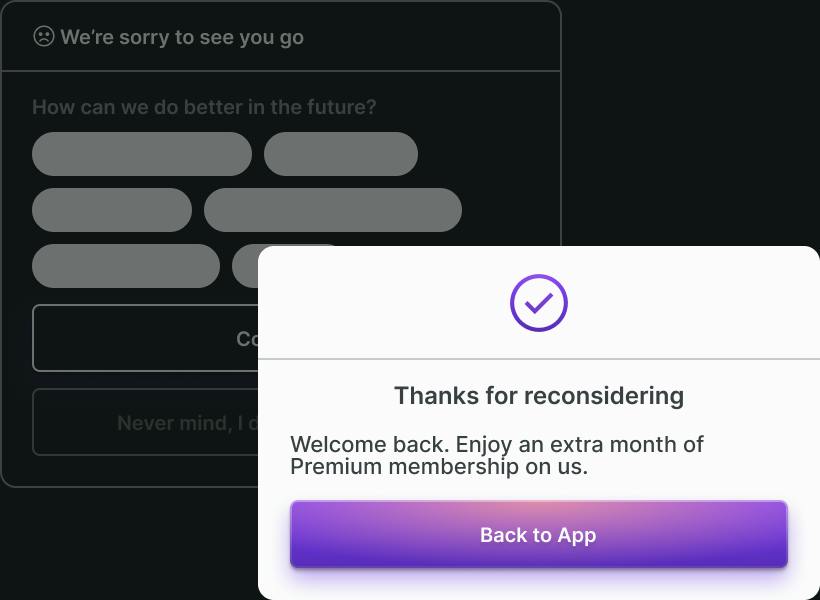
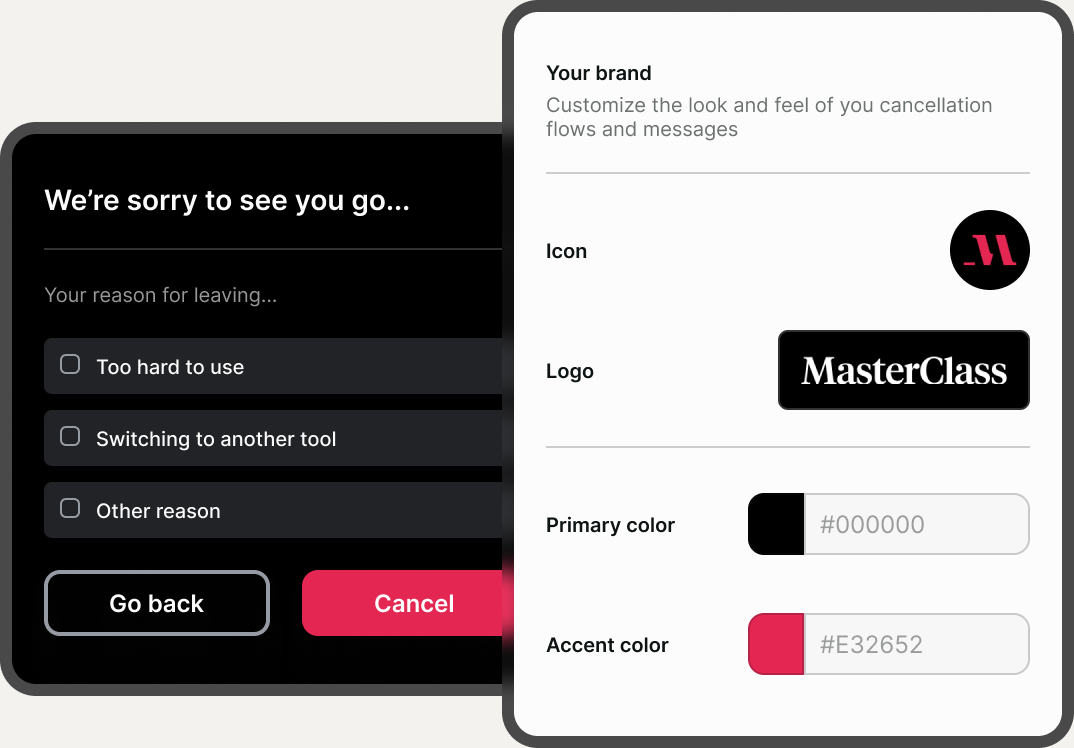
A Retain cancel flow has three parts. First a short survey asking for a reason and a satisfaction score. Then salvage attempts matched to that reason: a pause, a cheaper plan, or a support contact (Paddle's example is sending a Calendly link to a B2B customer stuck on setup). Last comes a discount offer for anyone still heading for the door.
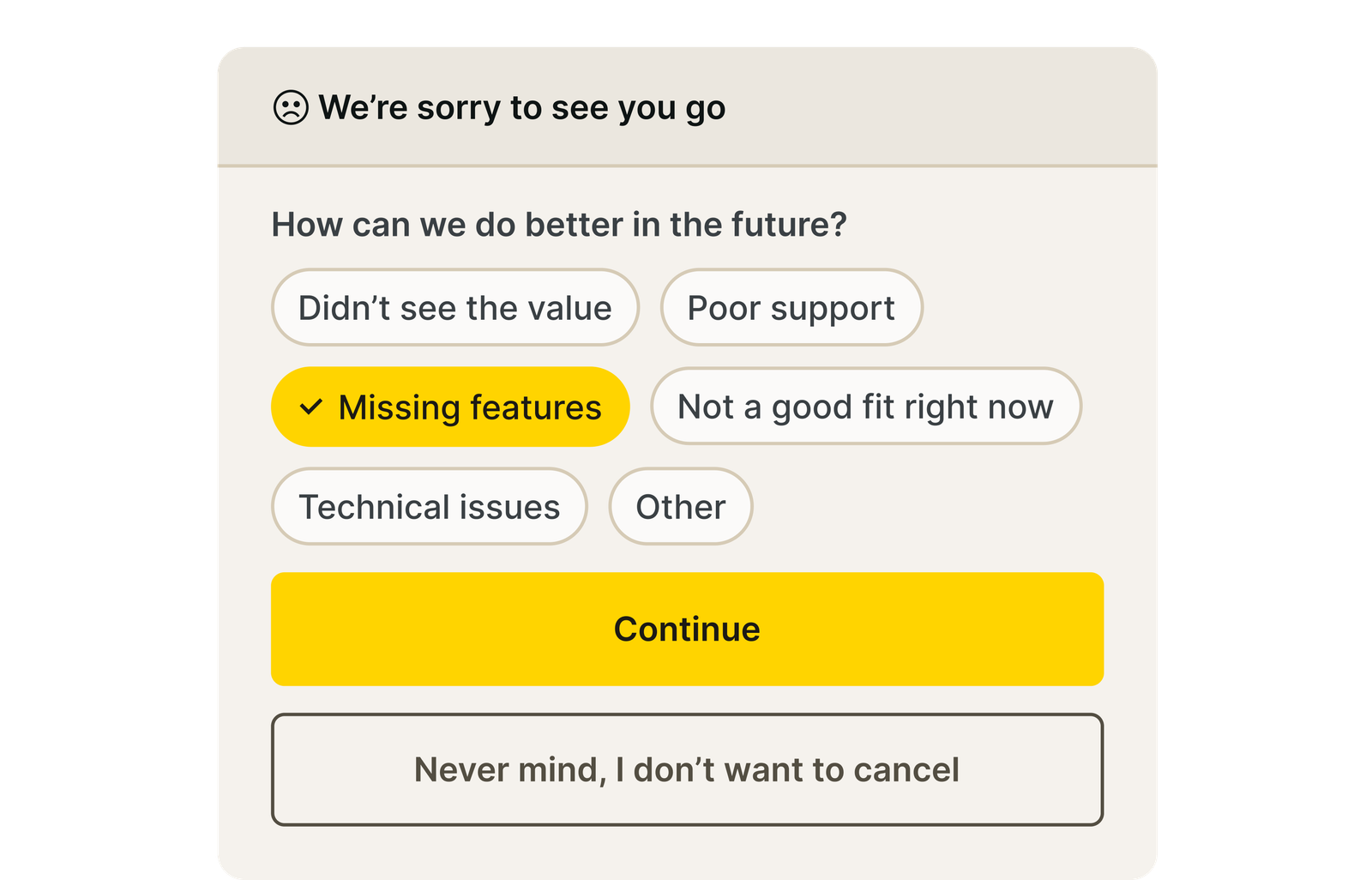
For years the main complaint was that you got one flow for everyone. That changed in 2026. Flows reached the customer portal on January 9, 2026 and sandbox accounts on September 25. Session reports for analysing cancellations arrived on November 9, and on November 25 Paddle shipped multiple flows, with drafts, a default flow and a cancellationFlowId you pass to Paddle.Retain.initCancellationFlow() to choose which flow a customer sees.
Choosing a flow is not the same as testing one. Nothing in Paddle's docs or changelog, the November release included, mentions A/B or split testing, so you still cannot send half your cancellers to one offer and measure the difference. A new customer takes 3-6 hours to be ingested, so someone who signs up and cancels the same afternoon may see no flow. On non-Paddle billing, trialing customers get no flow at all, and you have to cancel the subscription on your own billing platform after the flow ends.
Term optimization and win-backs
Term optimization picks monthly customers it thinks are ready for an annual plan, using "machine learning across engagement, plan, and 12 other data points", and shows them the offer in-app. Paddle's case for it is that annual customers are "2-4x more valuable". Reactivations send win-back campaigns to people who already cancelled. Both are listed on the standalone page; neither has the depth of documentation that payment recovery does. As of the August 2025 update, cancel flows and term optimization were "still hosted in ProfitWell for now", and many help articles still point to ProfitWell support.
Pricing and the attribution rule
| Where you bill | What Retain costs | What else you pay |
|---|---|---|
| Paddle Billing | Included, no extra fee | Paddle's 5% + 50¢ per transaction, which also makes Paddle your merchant of record |
| Stripe, Chargebee, Recurly, Braintree, Zuora and others (standalone) | Flat fee from $500/month for smaller companies; performance-based for larger ones, rate not published | Your existing billing platform's fees |
Prices were checked on paddle.com in November 2026. The $500 figure comes from an undated help article, so we cannot say when it was set. The cancellation flow and term optimization pages offer a 30-day free trial but state no price. For more on what Paddle Billing itself costs, see our Paddle review.
The performance-based model matters because of how Retain measures itself. Paddle takes the three months before Retain was switched on as your baseline recovery rate, and then "Retain will take credit for all users that see an in-app notification or recovery email." Some of those customers would have updated their card anyway, especially on Paddle Billing, which retries without Retain. If you pay a share of what Retain recovers, ask how many of those recoveries would have happened on their own.
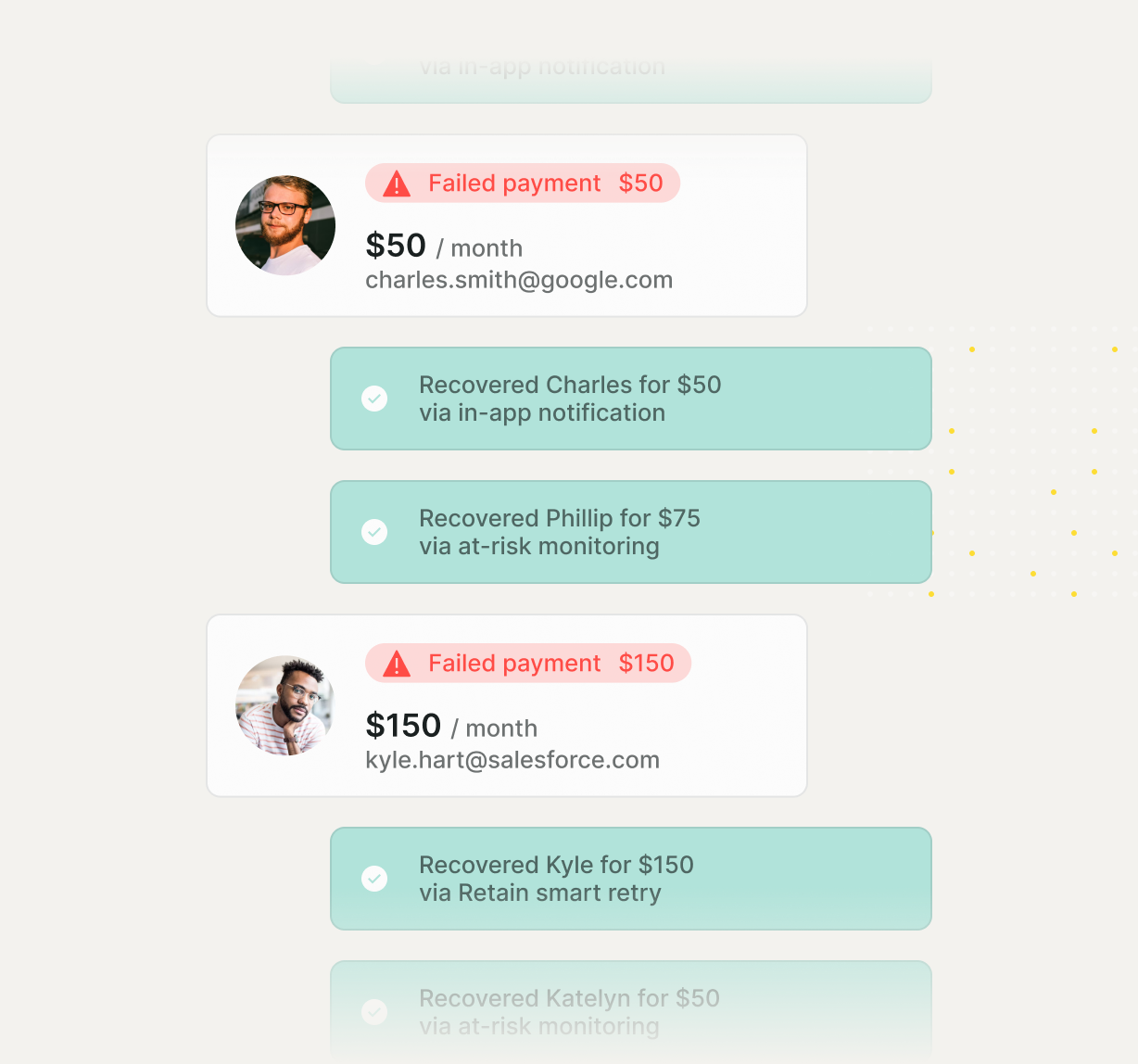
The same caution applies to Paddle's outcome numbers, which do not agree with each other. Across its own pages Retain will "cut involuntary churn by up to 17%", "reduce cancellations by up to 25%", "reduce plan cancellations by up to 30%", "cut customer churn by 25-30%" and "recover 50%+ of failed payments". Customer quotes are more modest: FirstPromoter reports involuntary churn down "approximately 20%", and Paddle cites an 8% average churn reduction across its customers. Treat 8-20% as the realistic range and the rest as marketing.
Setup on Paddle Billing vs everywhere else
On Paddle Billing, setup is short. Retain runs through Paddle.js, which is already on your checkout pages, and since February 2024 it accepts the same client-side token as Billing, so there is no second script and no separate key. Paddle still has "a Retain expert" check your setup, which it says "should only take a day or two".
Standalone takes more work. Stripe and US Braintree connect by OAuth. Chargebee needs a read-only API key with full access and Recurly a private full-access key, while Zuora and non-US Braintree accounts are connected by emailing [email protected]. Importing your data takes a few hours, and then you add the ProfitWell.js snippet to your app so Retain can identify logged-in users for in-app notices and cancel flows. Paddle's own pages promise everything from "30 minutes flat" to "live in hours, not days", which tells you the real figure depends on your stack.
Retain vs Churnkey
The obvious alternative for a Stripe business is Churnkey, which we reviewed separately. Churnkey publishes its pricing and supports split testing of cancel flows, the one thing Retain still cannot do.
Churnkey's own comparison page, updated September 14, 2026, is harsher. It says Retain "went into maintenance mode", that it "sends everyone through the same static flow", that Churnkey's save rates are "nearly 2x ProfitWell's", and that support "can take days, weeks, or never". That is a competitor's marketing, and parts of it are now out of date: a product in maintenance mode does not ship sandbox support, session reports and multiple flows within three months. The split-testing gap and the support-routed email edits are real, though, and Paddle's docs confirm both.
If you only need metrics, not recovery, ProfitWell Metrics is still free, and Baremetrics and ChartMogul cover the same ground with more reporting.
Verdict
If you are on Paddle Billing, turn Retain on. It costs nothing on top of the 5% + 50¢ you already pay, it needs no extra script, and the smarter retries, expiry prompts and cancel flows are better than the bare retries Billing does by default. The new multiple-flow support makes the cancel flow worth setting up properly now, not just switching on.
Standalone is harder to recommend. At $500 a month, Retain has to recover more than $6,000 a year in revenue you would otherwise lose just to break even, and its own attribution rule makes that number look better than it is. Skip it if you are a Stripe business recovering less than a few thousand dollars a month, if you need to A/B test cancel offers, or if you want to edit your dunning emails yourself. In those cases Churnkey, or Stripe's built-in retries, is the better place to start.
Ready to try Paddle Retain?
Visit the official website to see the latest plans, pricing, and special offers.
Get Started - Paddle Retain* Affiliate link - we may earn a commission at no extra cost to you.