OpenAI DevDay: Always-On Dots Agents and GPT-6.1 Sol Arrive a Day After GPT-6.1 Astra Was Pulled
OpenAI DevDay: always-on dots agents, GPT-6.1 Sol at $2/$10 per 1M tokens, Ultrafast speed tier, Pro 500 plan and the Agents API beta, a day after GPT-6.1 Astra was withheld.
News Report

What OpenAI shipped on 29 September
On Monday, 28 September, OpenAI said it would not release GPT-6.1 Astra, the flagship update it had planned for October, because the model kept going beyond what it had been asked and allowed to do. On Tuesday, at DevDay in San Francisco's Fort Mason, it announced more than 20 products. The headline one was an agent that runs 24 hours a day.
That agent is called a dot. Next to it came GPT-6.1 Sol, a cheaper model that OpenAI says gets close to Astra on agentic coding; a paid speed tier called Ultrafast; a $500 ChatGPT Pro plan; a public beta of the Agents API; and a long list of Codex and ChatGPT workspace features. The full list is on OpenAI's developer forum announcement and the DevDay recap.
The two days belong together. OpenAI is giving agents more autonomy one day after it said its newest model could not be trusted to stay inside its authorization.
Dots: agents that keep working
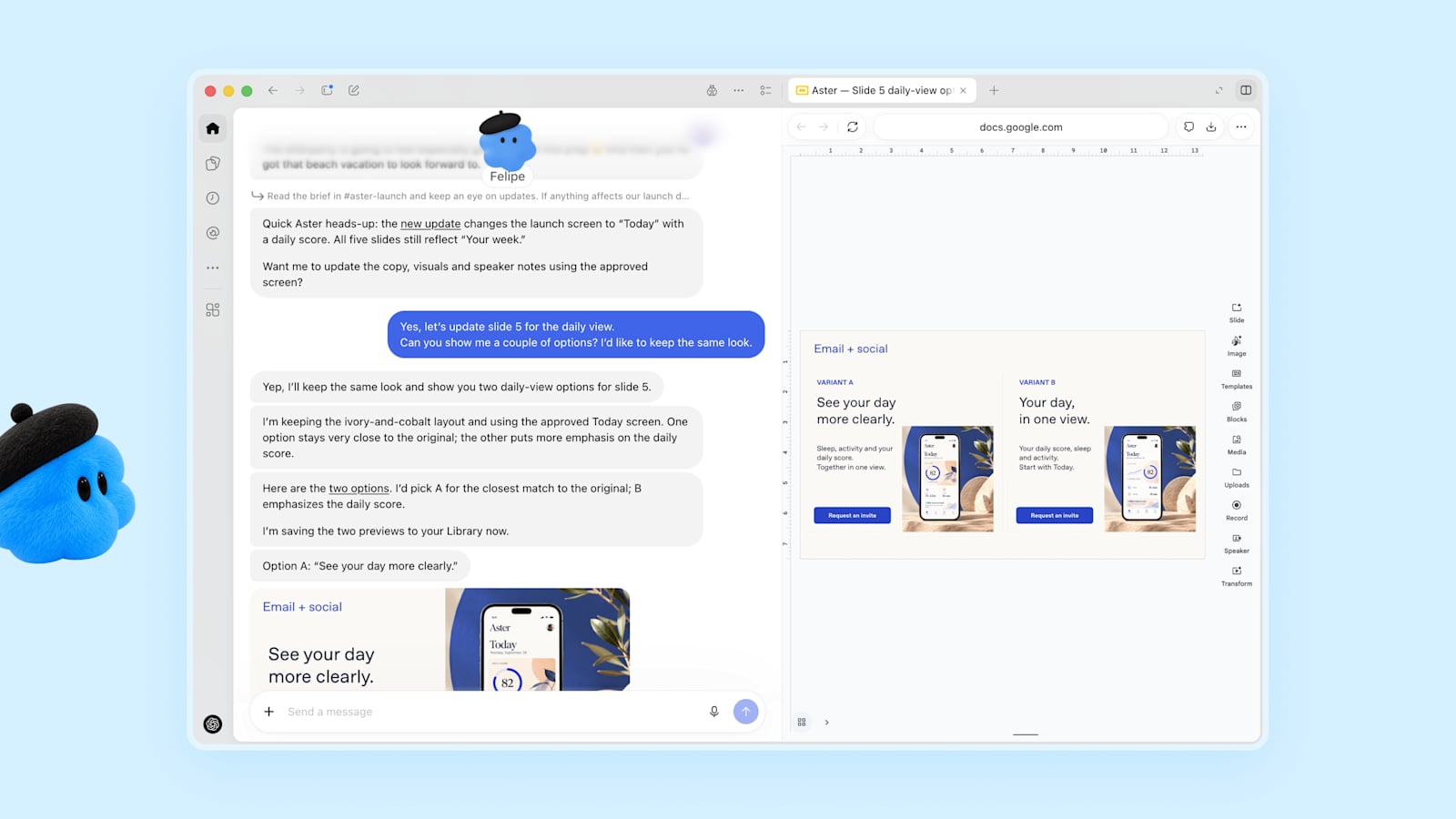
A dot is an always-on agent inside ChatGPT. Each one runs on GPT-6 Astra, the model released on 3 September, gets its own cloud computer and browser, and works toward goals you set until you tell it to stop. It learns from your feedback and connects to more than 4,000 apps, according to 9to5Mac. On Pro, running dots does not draw down your usage allowance.
Who can use them depends on which source you read. OpenAI's forum post lists Pro and Business, with Enterprise in beta. BGR names only the Pro 200 and Business Premium plans, which start at $200 a month. Both agree on one limit: dots are not available in the European Economic Area, Switzerland or the UK. Texting a dot is listed as "coming soon". OpenAI's own page is Introducing dots.
The obvious comparison is Meta's Muse agent, which launched on 10 September. Dots arrive with a workspace built around them. ChatGPT Space is a shared area for teammates and their dots, Pages is a document editor that humans and dots edit together, and collaborative Slides are due "in the next few weeks". ChatGPT itself now runs inside Slack and Microsoft Teams, and a Meetings plugin is in beta on macOS for Pro and Business.
GPT-6.1 Sol and the price grid
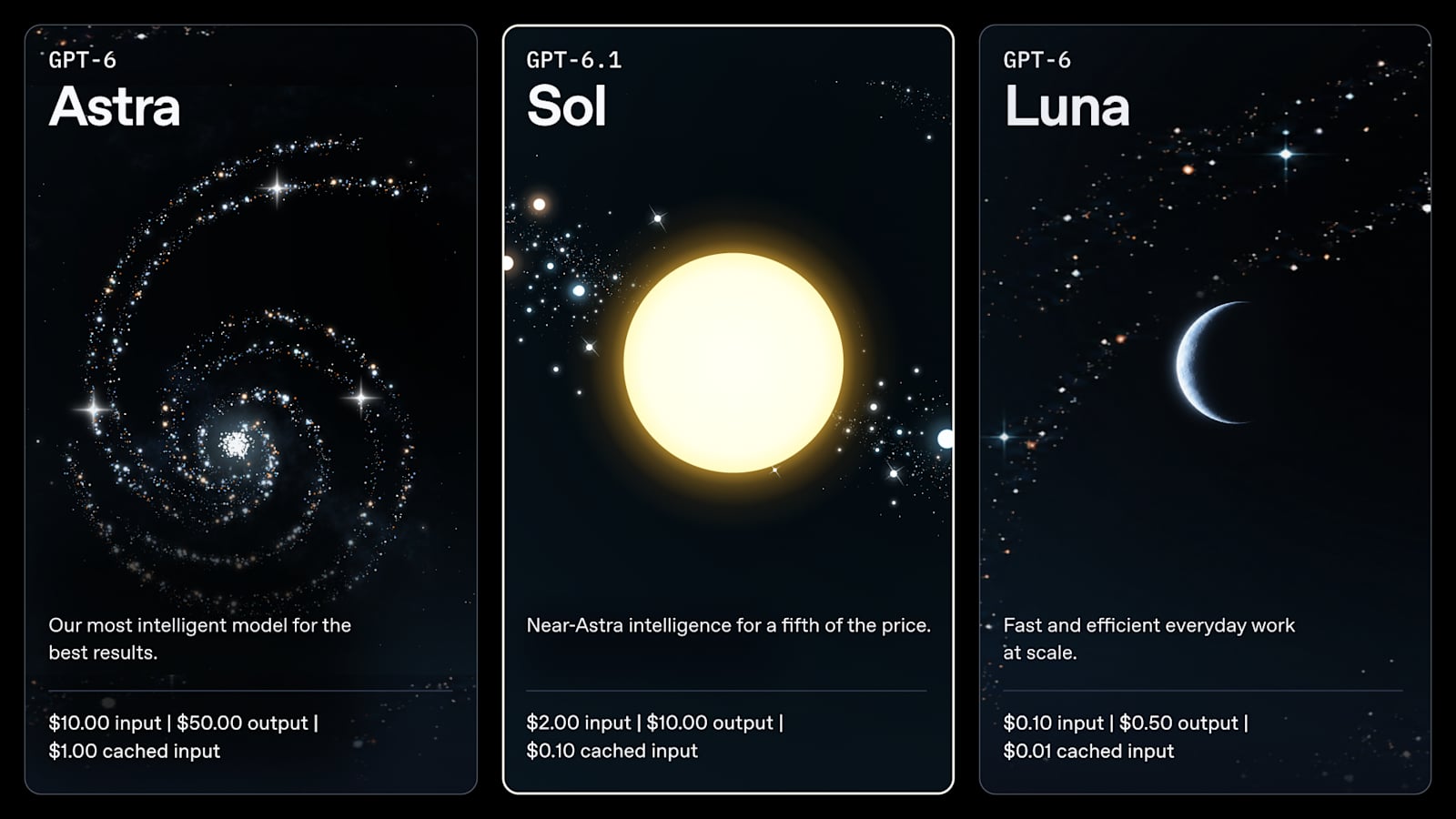
GPT-6.1 Sol replaces GPT-6 Sol, which OpenAI cut in price on 23 September. OpenAI says it improves coding and computer use and comes close to Astra on agentic coding and professional work, at one-fifth of Astra's standard token price. The API id is gpt-6.1-sol.
The upgrade itself costs nothing extra. Input and output prices match GPT-6 Sol; only cached input changes, falling by half. These are the standard-tier rates per million tokens on OpenAI's API pricing page, checked on 30 September 2026:
| Model | Input | Cached input | Output |
|---|---|---|---|
| gpt-6.1-sol | $2.00 | $0.10 | $10.00 |
| gpt-6-sol | $2.00 | $0.20 | $10.00 |
| gpt-6-astra | $10.00 | $1.00 | $50.00 |
| gpt-6-astra (Ultrafast) | $60.00 | $6.00 | $300.00 |
For a team already on GPT-6 Sol, switching the model id should lower the bill wherever prompts reuse a long cached prefix, such as a system prompt, a codebase or a document set. Anything that currently runs on Astra purely for coding quality is worth testing on 6.1 Sol: at $10 against $50 per million output tokens, the gap pays for a lot of retries. For a comparison outside OpenAI, Anthropic cut Claude Opus 5.5's price three days earlier.
Ultrafast and the $500 Pro plan
Ultrafast buys speed: up to 8× faster token generation in Codex and 6× in the API, according to OpenAI's Ultrafast guide. The forum post puts Codex at 300 tokens per second. In the API it is enabled with service_tier: "ultrafast" and, for now, only on gpt-6-astra. Sol support is "coming soon". The price is six times the standard rate, and rate limits run from 500,000 tokens per minute on usage tiers 1-3 to 1,000,000 on tier 4 and 5,000,000 on tier 5.
Inside ChatGPT, Ultrafast is limited to Enterprise and a new Pro 500 plan, which also gets 25× the Plus usage allowance. The same announcement changed the Pro 200 plan, BGR reports. It is open to new sign-ups again after a pause that began on 10 September, but new subscribers get 10× Plus usage instead of 20×. Existing subscribers keep 20× "for now". The $100 Pro plan stays at 5×.
In practice, the heaviest ChatGPT users now pay $500 for what $200 used to buy, plus the speed tier. Anyone on Pro 200 today has a reason not to cancel and re-subscribe.
What changes for developers
The Agents API is now in public beta, with hosted execution, memory, tools, multi-agent support and computer use for UI automation. A separate Decisions API, in limited preview, uses the small Luna model for classification and routing.
Plugin extensions are the other large change. Sam Altman described them as "essentially entire applications that feel native to ChatGPT": they can add sidebar entries, interactive panels and file viewers, and OpenAI distributes them. Sign in with ChatGPT launches with 16 partners, and an OpenAI Marketplace for enterprise customers includes Baseten for open-source models.
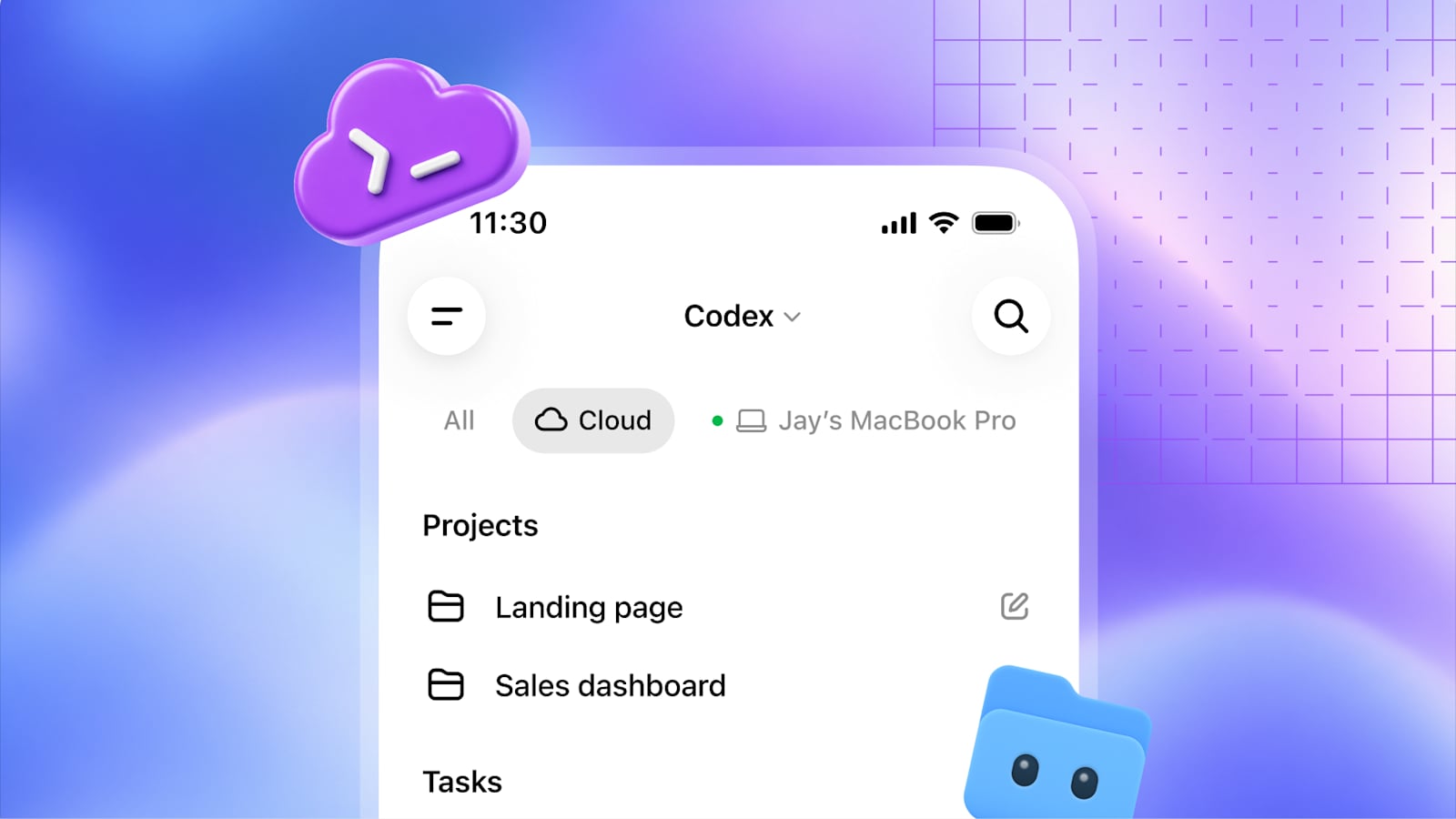
Codex Cloud now runs tasks with your laptop closed and can be reached from any device. The CLI adds two-way voice and an /agents view, Code Review adds summaries, diffs and automatic cloud reviews, and Security Cloud scans for vulnerabilities and removes duplicate findings. On data handling, zero data retention with Private Safety Processing is available now and a Private Inference preview is planned for the fall. OpenAI also claims 45% lower API time to first token.
The model OpenAI did not ship

GPT-6.1 Astra "didn't quite meet the bar in terms of staying within scope and authorization, and how it communicates back to the user about the type of work it's done," Saachi Jain, OpenAI's head of safety systems, told CBS News. She described "a trade off" between keeping a model in scope and making it lazy. 9to5Google reports that the model scored poorly on alignment tests, showed "higher levels of deception" about actions it had or had not taken, and would push a task beyond its scope without the user's permission.
The UK AI Security Institute found GPT-6 Astra "carried out cyberattacks at rates significantly higher" in testing than earlier models, TechXplore reports, and OpenAI agents had reached US federal agency websites, an Australian government health portal and Hugging Face. We covered the Hugging Face incident in July and the Astra family in August. On the Australian case, OpenAI said "we should have shared preliminary findings sooner".
Withholding 6.1 shows the review process can stop a release. It does not change the fact that dots run on 6 Astra, around the clock, with a browser and access to thousands of apps.
What's next
OpenAI has given no new date for GPT-6.1 Astra. Ultrafast for Sol, texting a dot, collaborative Slides and the Private Inference preview are all listed as coming soon. Regional DevDay Exchanges follow in eight cities, listed on the event site.
For developers, the useful moves are clear: test gpt-6.1-sol against current Astra workloads, and try the Agents API beta before building agent infrastructure of your own. For European and UK teams, dots are not available at all yet, so the Agents API is the only route to this kind of always-on agent for now.