Best Workflow Automation Tools in 2026: 6 Compared
The best workflow automation tools in 2026 compared: Zapier, Make, n8n, Activepieces, Pipedream, and Relay.app on connectors, pricing model, self-hosting, and value.
Expert Review
Best Workflow Automation Tools in 2026: Quick Verdict
Workflow automation tools all promise the same thing: connect your apps so a change in one triggers an action in another, no code required. Where they split is on price model, how many apps they reach, and whether you rent the whole thing or can run it on your own server. That last question decides more than most people expect, because a task-metered cloud tool that looks cheap can quintuple in cost the month your automations get popular.
The short version. Zapier reaches the most apps and is the easiest to start, and you pay for both. Make gives you a visual builder and far more operations per dollar. n8n is the developer favourite you can self-host for the price of a small server. Activepieces is the genuinely open-source (MIT) option. Pipedream is for people who would rather write a few lines of code than click through a UI. Relay.app is being shut down in 2026, so it is here for completeness, not as a recommendation.
| Zapier | Make | n8n | Activepieces | Pipedream | Relay.app | |
|---|---|---|---|---|---|---|
| Best for | Most apps, easiest | Visual value | Self-hosters | Open source | Developers | Nothing new |
| Free plan | Yes | Yes | Self-host | Yes + self-host | Yes | Closing |
| Paid from | $19.99/mo | $9/mo | €24/mo cloud | $25/mo cloud | $45/mo | Discontinued |
| Self-host | No | No | Yes | Yes | No | No |
| Licence | Closed | Closed | Fair-code | MIT | Closed | — |
Prices checked on each vendor's pricing page in August 2026. Read on for the detail, or jump to the final recommendation.
The Six Tools at a Glance
These are not six versions of the same product. They sit on a line from "click, never see code" to "here is a code editor," and where a tool sits tells you who it is for.
Zapier: the widest reach
Zapier is the automation tool most people meet first, and it earns that place with the largest app library in the category: well past 7,000 integrations in 2026. If a SaaS product exists, Zapier probably connects to it. The builder is linear and beginner-friendly, and the free plan covers 100 tasks a month for light use. The cost of that reach is the price and the metering: paid plans start at $19.99 a month for 750 tasks, and a task is counted per action, so multi-step Zaps burn through the allowance fast.
Make: visual power for less
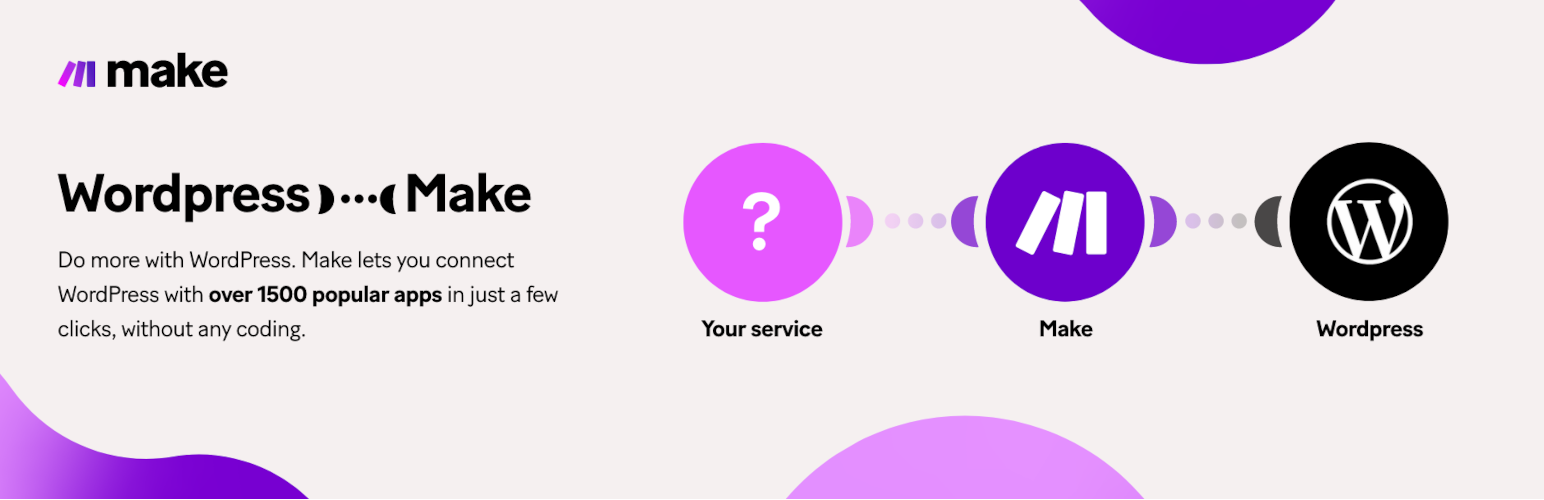
Make (formerly Integromat) trades Zapier's linear list for a visual canvas where you wire modules together, branch, loop, and see data flow between them. It counts operations rather than tasks and gives you far more of them: the Core plan is about $9 a month for 10,000 operations, checked in August 2026. For anyone building something with more than two or three steps, Make usually does more for a quarter of Zapier's bill. The trade-off is a steeper first hour while the canvas clicks.
n8n: self-host and stop paying per task
n8n is the tool developers reach for when the task meter starts to hurt. It is source-available under a fair-code licence, and you can run it on your own server, where there is no per-execution charge at all: a small VPS at €5 to €20 a month will handle a serious workload. If you would rather not host it, n8n Cloud starts at €24 a month. It has a proper node-based editor, handles code and API calls natively, and is the best answer to "my automation volume made Zapier expensive."

Activepieces: the true open-source option
Activepieces is the one tool here under a full MIT licence, which matters if you care about really owning your automation stack rather than renting it. Self-host it for the cost of a server, or use the cloud, which starts around $25 a month with unlimited runs before credit-based overages kick in. Its integration library is smaller than Zapier's or Make's and growing, but it is community-extendable, and for teams that want no vendor lock-in it is the cleanest choice on this list.

Read our full Activepieces review →
Pipedream: automation for people who code
Pipedream flips the usual pitch. Instead of hiding code, it hands you a workflow where any step can be Node.js, Python, Go, or Bash, with thousands of prebuilt actions when you want them. There is a usable free tier, and paid plans begin at $45 a month. For a developer wiring together APIs, it is faster and more flexible than a pure no-code canvas. For a marketer who never wants to see a function, it is the wrong tool, and that is by design.
Read our full Pipedream review →
Relay.app: being shut down
Relay.app built a name on human-in-the-loop automation, letting a person approve or edit a step before a workflow continued. Know about it, but do not adopt it: the company announced in July 2026 that it is closing. New signups and free-to-paid upgrades were switched off, free accounts close on 15 August 2026, paying customers keep access until 14 September 2026, and data is deleted after that. If you are already on it, this is a migration, not a purchase decision. See the section below for where to go.

How They Charge (This Is the Whole Game)
Every real difference in your future bill comes down to the unit each tool counts. Get this wrong and the cheap tool becomes the expensive one at scale.
| Tool | Free plan | Entry paid | What you pay per |
|---|---|---|---|
| Zapier | 100 tasks/mo | $19.99/mo (750 tasks) | Task (per action) |
| Make | 1,000 ops/mo | $9/mo (10,000 ops) | Operation |
| n8n | Self-host, free | €24/mo cloud | Execution (or nothing self-hosted) |
| Activepieces | Yes + self-host | $25/mo cloud | Unlimited runs, then credits |
| Pipedream | Yes | $45/mo | Credit (compute time) |
| Relay.app | Closing | Discontinued | — |
The pattern is simple once you see it. Zapier and Pipedream meter every action, so a busy multi-step workflow is where they get expensive. Make gives you an order of magnitude more units for less money, which is why it wins on value for most builders. And self-hosting n8n or Activepieces removes the meter entirely: you pay for a server whether you run 100 automations or 100,000. If your volume is small and unpredictable, a metered cloud plan is fine. If it is large and steady, self-hosting pays for itself quickly.
Cloud vs Self-Hosted: Who Owns Your Data
Three of these tools can run on infrastructure you control, and that is not just a cost question. When a workflow moves customer records, invoices, or API keys between apps, self-hosting means that data never touches a third party's servers.
n8n and Activepieces are the self-host options, with Activepieces the more permissively licensed of the two. Run either on a cheap VPS and you get no task meter and full control of the data, at the cost of maintaining the server, updates, and backups yourself. Zapier, Make, and Pipedream are cloud-only: less to manage, but your data and automations live on their infrastructure and your bill scales with usage. There is no universally right answer. A regulated team handling sensitive records should look hard at self-hosting; a two-person startup that just wants Slack to ping on a new sale should not run a server to do it.
Ease of Use
Roughly, ease of use runs opposite to power here. Zapier is the gentlest on-ramp: pick a trigger, pick an action, done, no concepts to learn. Make asks for an hour of patience, then rewards it with a canvas that makes complex logic visible. Activepieces sits close to Make in feel, a little lighter. n8n is comfortable for anyone technical and fiddly for anyone who is not. Pipedream is the steepest, because its whole value is that you can drop into code, which only helps if you can write it.
A quick way to choose on this axis alone: if the person who will maintain these automations cannot read a line of JavaScript, stay in the Zapier-to-Make range and do not let anyone talk you onto Pipedream because it is cheaper per run. The cheapest tool is the one your team can actually keep working.
A Note on Relay.app
Because Relay.app was on the shortlist, here is the plain guidance. Do not start a new project on it. If you already run workflows there, you have until 14 September 2026 as a paying customer, and 15 August 2026 on the free plan, to move. The closest replacement depends on what you valued: for the same no-code, approval-style flows, Make and n8n are the natural landing spots, Activepieces if you want it open source, and Zapier if breadth of integrations matters most. Export your workflow logic and credentials now rather than in September; migrations always take longer than the countdown suggests.
Which Automation Tool Should You Pick?
No single tool wins outright, so match the pick to how you work, and note who each one is wrong for.
Pick Zapier if you want the most integrations and the shortest learning curve, and your automation volume is modest. Skip it if you are running high-volume, multi-step workflows; the per-task bill will punish you, and Make or a self-hosted tool costs a fraction.
Pick Make if you want serious visual power at a low price, which is most people. Skip it only if you need an app Make does not connect to but Zapier does, or if you refuse to spend an hour learning the canvas.
Pick n8n if you are technical, care about cost at scale, or want your data on your own server. Skip it if nobody on the team wants to maintain infrastructure; take n8n Cloud or Make instead.
Pick Activepieces if a true open-source (MIT) licence and zero lock-in are the priority. Skip it if you need a huge integration catalogue today; its library is smaller than Zapier's, though growing.
Pick Pipedream if you write code and want the flexibility to drop into it mid-workflow. Skip it if the maintainer is non-technical; they will be happier and more productive in Make.
Do not pick Relay.app. It is shutting down in 2026. Existing users should migrate to one of the tools above.
For most teams, the honest default is Make for the value, Zapier if you need the widest app support and easiest start, and self-hosted n8n or Activepieces once volume or data control makes the meter or the cloud a problem.
FAQ
What is the best free workflow automation tool? For cloud, Make's free plan (1,000 operations a month) goes further than Zapier's 100 tasks. For unlimited free use, self-host n8n or Activepieces on your own server and pay only for the hosting.
What is the best Zapier alternative in 2026? Make for most people, on price and visual power. n8n or Activepieces if you want to self-host and drop the per-task meter entirely.
Which of these can I self-host? n8n and Activepieces. Zapier, Make, and Pipedream are cloud-only. Activepieces uses the most permissive licence (MIT).
Is Relay.app still available? No. It announced its shutdown in July 2026: free accounts close 15 August 2026 and paid accounts 14 September 2026, after which data is deleted. Migrate to Make, n8n, Activepieces, or Zapier.
Ready to try Make?
Visit the official website to see the latest plans, pricing, and special offers.
Get Started — Make* Affiliate link — we may earn a commission at no extra cost to you.