Taiga Review: The Open-Source Agile Tool That Charges by Project, Not by Seat
Taiga review: the open-source Scrum and Kanban tool with flat per-project pricing instead of per-seat. Plans, self-hosting, importers, gaps and maintenance.
Expert Review

Priced by project, not by person
Nearly every project management tool bills per seat. Taiga does not. Its plans are flat monthly fees, and every tier including the free one carries the line "Unlimited number of users". What you actually buy is a number of projects and an amount of storage.
From the deployment and pricing page, checked on 1 September 2026. Prices are in euros.
| Plan | Price | Projects | Storage | Support |
| Gratis | Free | 1 public, 1 private | 10MB | Community |
| Enthusiast | €5/mo, €50/yr | 5 public, 5 private | 100MB | Community |
| Basic | €20/mo, €200/yr | Unlimited | 500MB | Basic |
| Premium | €60/mo, €600/yr | Unlimited | 3GB | Premium |
| Private Cloud | Quote | Unlimited | 100GB SSD, 8GB RAM, 2 vCPU | Managed |
| On premise | Quote | Unlimited | Your hardware | Priority, with SLA |
The free tier is thinner than it first reads. One public project and one private project, sharing 10MB. Storage is the limit that catches people out on the paid tiers too, because 500MB on Basic is the whole account rather than 500MB per project. A team that attaches design mockups to tickets will hit the storage ceiling long before it runs out of projects.
Taiga only reintroduced paid plans in October 2025, and the announcement was direct about the logic: "One decision we feel strongly about: we won't charge per user. Invite as many collaborators as you need, no hidden costs." The same post gave existing users until 1 January 2026 to pick a plan, cut their project count, or move to self-hosting. If your last look at Taiga predates that deadline, your account is on different terms now.
Who is actually maintaining it
For open-source software this outranks the feature list, and Taiga's answer is complicated. Kaleidos, the Spanish agency that built it, stepped back in 2024: "as of March 1st 2024 ... Taiga Cloud Services ... [is] the exclusive service provider of SaaS tree.taiga.io and supported Taiga self-hosted instances as well as the product development core team... Given the maturity of Taiga ... we decided to devote all our energies and resources to Penpot, instead."
The rewrite meant to become the next Taiga never arrived as Taiga. It was spun out under a different company as a separate product, Tenzu, described on Taiga's own forum as "the new identity of Taiga-Next, the successor of Taiga started by Kaleidos a few years back". The repository holding that rewrite has had no commit since 13 December 2023.
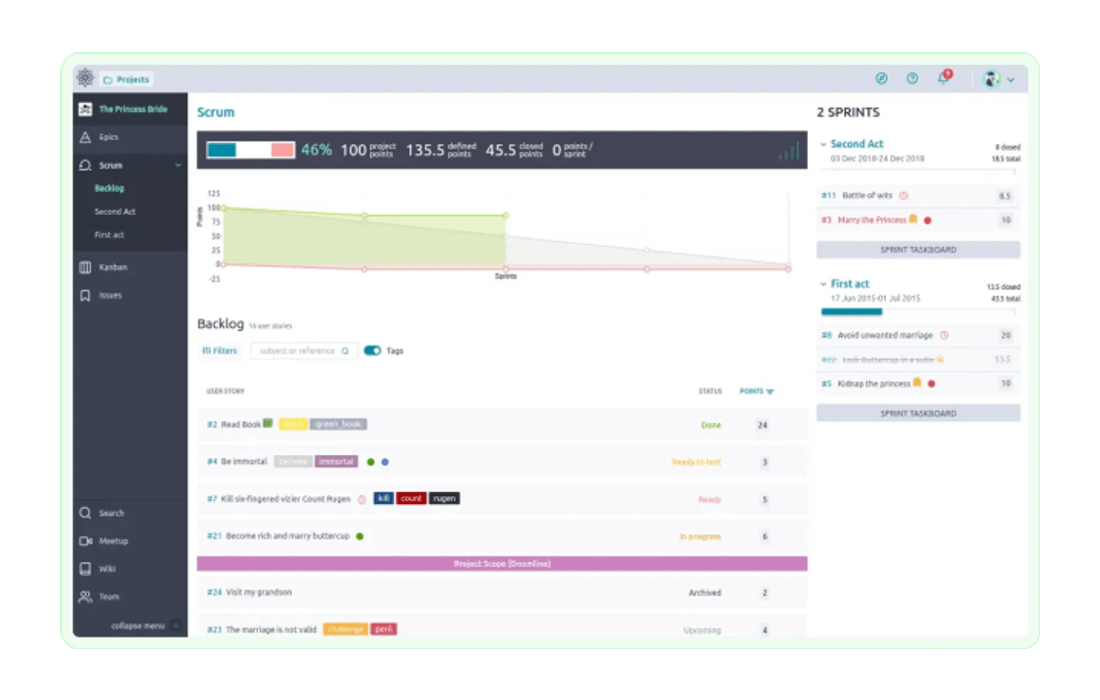
So Taiga 6 is the product, and it is still being worked on. Counting commits on GitHub on 1 September 2026: the backend took 66 commits over the previous twelve months and was last pushed on 4 August 2026, the frontend took 47 and was last pushed on 18 August 2026. The newest tag is 6.10.2, dated 2 July 2026. Release 6.10.1 in May added project archiving and, notably, "We fixed the Trello import."
Roughly one commit a week per repository is a maintenance pace, not a development pace. Two numbers sharpen it: 94 open issues on the backend, 141 on the frontend. The Docker repository should worry a self-hoster most, since it took a single commit in twelve months and was last pushed on 13 October 2025, while Docker is the install method the project recommends. The documentation footer reads "Last updated 2024-04-03". Taiga is alive and getting fixes. Nobody is building it out.
What it does, and what is not there
The parts that work
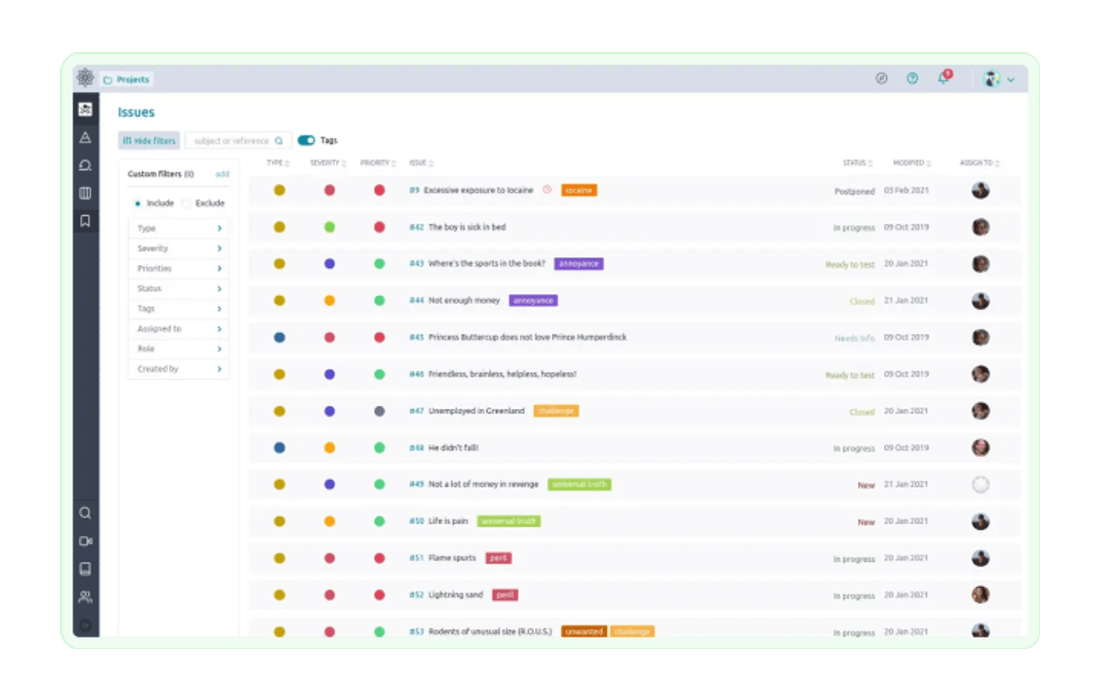
Taiga covers the agile basics without the configuration overhead Jira demands: a Kanban board with swimlanes and WIP limits, a Scrum backlog feeding sprint taskboards, epics and sub-tasks, an issue tracker, a per-project wiki, burndown charts at project and sprint level, and an estimation tool called Taiga Seed. Reporting comes as dashboards and as a CSV URL you can point your own tooling at.
The design decision worth noticing is that Kanban and Scrum are separate modules switched on per project, not two views of one dataset. A support team can run pure Kanban next to a product team running sprints, and neither inherits the other's ceremony.
The parts that are absent
I searched taiga.io's own feature page on 1 September 2026 for "Gantt", "time track", "mobile app" and "native app". Zero matches for all four. A vendor does not omit those words from the page whose job is selling the product, so read the silence as the answer: no Gantt charts, no built-in time tracking, no mobile application. Capterra reviewers were already saying so in 2018: "The software is not mobile ready. There is no app."
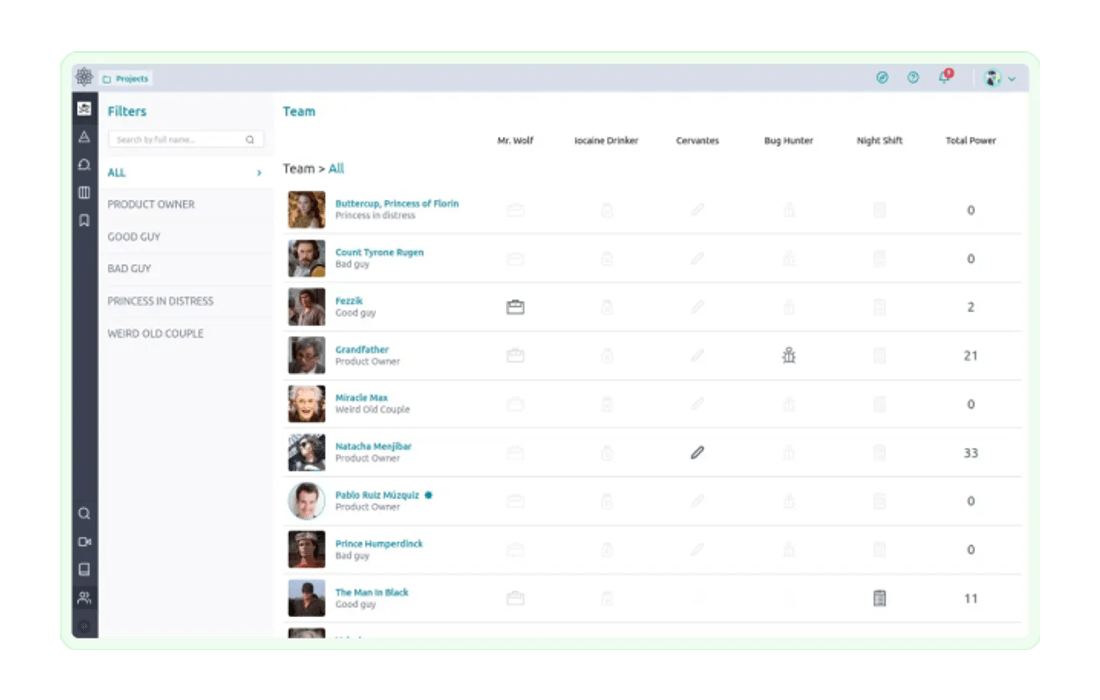
The native integration list is short: GitHub, GitLab, Bitbucket and Gogs for repositories, Slack for chat, a generic webhook system, and some coverage "partly through Zapier". Set that beside the directories ClickUp and Asana advertise in the hundreds. If your workflow needs one tool talking to eleven others, you will be writing the webhooks yourself. The other recurring criticism is speed, and it spans years rather than one bad patch: "Sometimes the website works a bit slow" in 2018, and from an Australian user in 2020, "being in AUS the servers can run slow from time to time." Taiga publishes no region list for its cloud, so distance from Europe is a real factor.
Self-hosting is a nine-container job
Self-hosting is why many teams look at Taiga at all, and it is genuinely free: I found no feature gate between the hosted product and the one you run yourself. It is also more infrastructure than "open-source Trello" suggests.
Reading the official docker-compose.yml on 1 September 2026, a standard install starts nine services: Postgres, the backend, an async worker, a RabbitMQ for that worker, the frontend, an events service, a second RabbitMQ for events, a protected-file service, and a gateway. Five named volumes come with them. The setup guide states only "docker: version >= 19.03.0+" and warns that "it's necessary to have familiarity with Docker, docker compose and Docker repositories", giving no RAM or CPU figure for the Docker route. The older source-install path does publish minimums, "At least 1GB RAM" and "At least 20GB of free storage", and 1GB is fiction for nine containers with two message brokers.
Backups are manual. The documentation hands you a shell command to dump the database out of the Postgres container, and that is the whole story. No scheduling, no restore button, no snapshot.
One licensing detail matters if you plan to modify Taiga. The backend is MPL-2.0, and the frontend has been AGPL-3.0-or-later since a relicense on 2 April 2024. Fork the frontend and offer it to users over a network and the AGPL's network clause now applies to your changes. It did not before that date, so an assumption formed in 2023 is out of date.
Getting your data in, and back out
Importers exist for Trello, GitHub and Jira, plus an Asana importer that is real but missing from the importers page and, on self-hosted installs, needs an OAuth application registered with Asana by hand. The honest summary came from Taiga Cloud Services staff in June 2025: "CSV export from Taiga has never been possible. We do offer CSV reports, but not exports. Regarding migrations from other platforms, Trello, Github and Asana should be working. It's Jira in particular that has issues."
Read that again if you are escaping Jira, because Jira is the single origin the vendor names as broken. Coming from Trello is the smoothest path, though even there the record is mixed: the Trello importer was repaired in the May 2026 release, while a bug titled "[BUG] Trello importer not showing" has sat open since 14 October 2024.
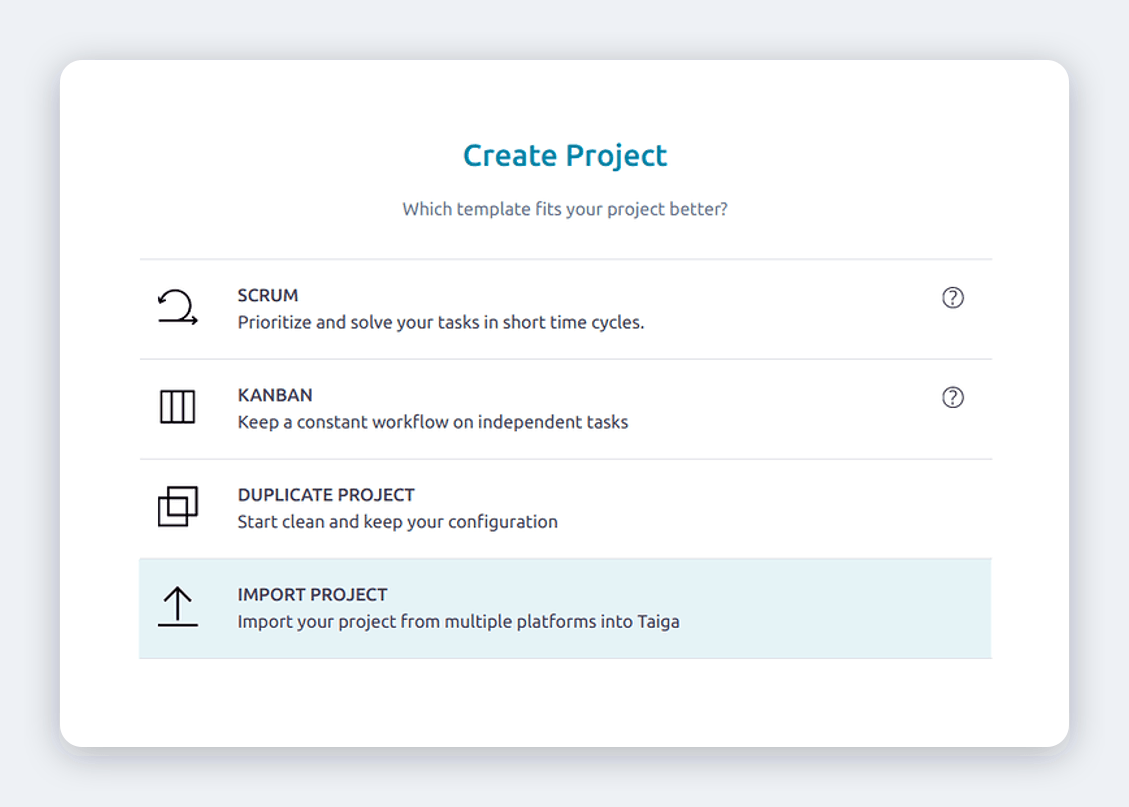
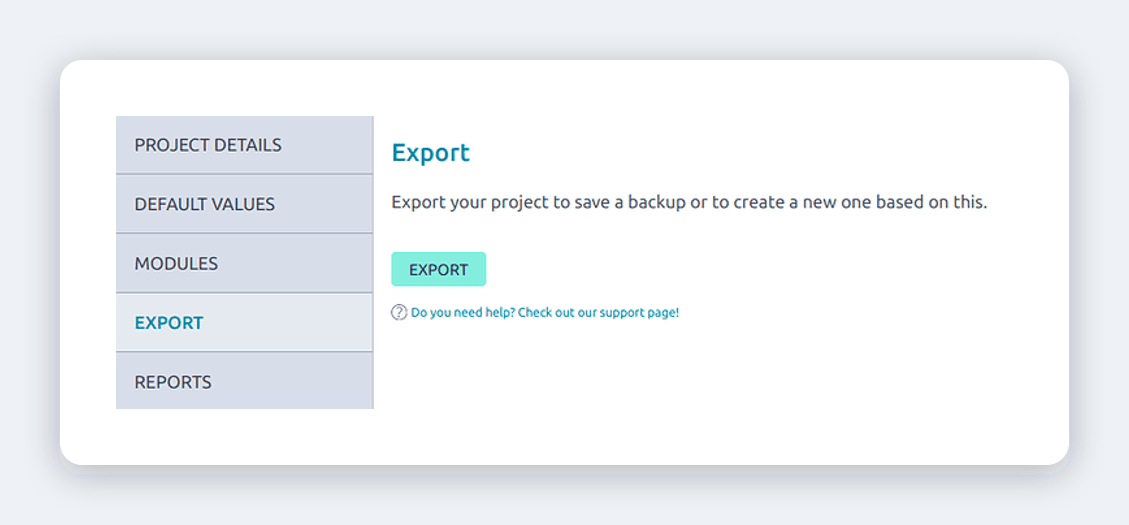
Getting out is workable but clumsy. Each project has a JSON dump under its settings, emailed to you once the server has built it, and it moves a project cleanly between Taiga instances. What it does not move is an account: forty projects means forty exports, and a whole-instance migration falls back to a raw Postgres dump. There is no spreadsheet escape hatch, since the CSV feature produces live reports rather than an export file.
Support is tiered by name and by nothing else. The plans list "Community support", "Basic support", "Premium support" and, on premise only, "Priority support with SLA". No response time is published for any paid tier. The forum is where help actually happens.
Who should use Taiga, and who should not
Use Taiga if your team is large enough that per-seat pricing has become the main line item, your attachments fit inside 3GB, and Kanban plus Scrum plus an issue tracker is the whole job. €240 a year for unlimited people beats any seat-based rival once you pass roughly fifteen users. Self-host it if someone on the team is comfortable owning nine containers and a backup cron job, and you pay nothing at all.
Skip it if you need Gantt charts, time tracking or a mobile app. Those are not roadmap gaps you can wait out on a project committing about once a week; go to ClickUp or monday.com and accept the per-seat bill as the price of that breadth. Skip it as your Jira exit too, because the Jira importer is the one Taiga itself calls broken. And if standardising a company on software whose creator has publicly moved on to another product makes you uneasy, that instinct is sound. Taiga is being kept running competently. It is not being grown.
Ready to try Taiga?
Visit the official website to see the latest plans, pricing, and special offers.
Get Started - Taiga* Affiliate link - we may earn a commission at no extra cost to you.